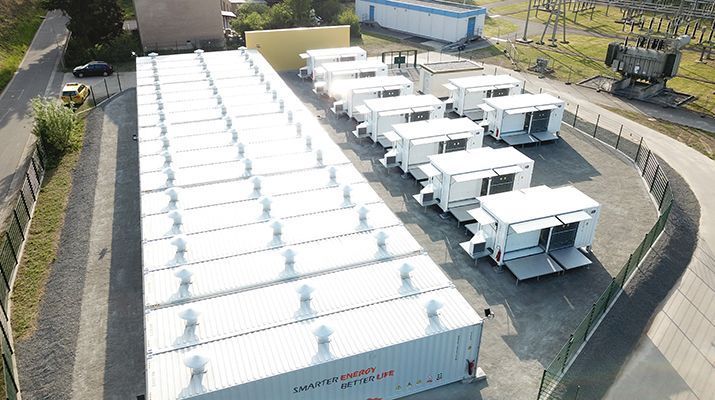
A large-scale lead-carbon battery energy storage system has gone into operation in Saxony, Germany to help regulate the frequency of the grid, the latest of several such projects in the country by consortium Upside Group.
Inverter supplier SMA announced the successful start of operations at the project, in the municipality of Bennewitz. SMA provided the “system solution” – it uses an SMA Hybrid Controller for optimised battery charging and discharging, as well as SMA Sunny Central Storage Inverters.
Standing at 16MW / 25MWh, the lead battery system is the second project Upside Group and SMA have worked together on in Germany, following the installation of another lead acid battery storage system of the same sizing and capacity in Langenreichenbach, northern Saxony. That system was completed in late 2018, with batteries from Chinese maker and system integrator Narada Power.
Upside Group uses its battery energy storage assets to play into weekly Primary Control Reserve (PCR) markets through Germany’s grid operating TSOs (transmission system operators). Providers must go through a stringent pre-qualification process, with the likes of Sonnen recently hailing its own awards of pre-qualification as a means for its residential energy storage units to play a similar role to larger facilities on the grid, for example.
Try Premium for just $1
- Full premium access for the first month at only $1
- Converts to an annual rate after 30 days unless cancelled
- Cancel anytime during the trial period
Premium Benefits
- Expert industry analysis and interviews
- Digital access to PV Tech Power journal
- Exclusive event discounts
Or get the full Premium subscription right away
Or continue reading this article for free
“In this project, we are once again placing our trust in SMA’s coordinated system solution because charging and discharging of batteries can be optimally controlled using the powerful SMA battery inverters,” Upside Group general manager Marc Reimer said of the Bennewitz project.
“As such, the large-scale storage system contributes to both grid relief in the entire region and the stabilisation of the Central European utility grid.”
Lead acid still going online despite lithium dominance
While the use of lithium-ion batteries in large-scale grid-connected energy storage systems is on the rise around the world, some providers still favour lead acid for reasons including the lower upfront cost of such systems. Upside Group was behind the deployment of Belectric’s frequency control system at Alt Daber solar farm, a 2MWh project executed in 2015, for instance. Belectric spoke about that project extensively with Energy-Storage.news at the time, including the decision to continue with lead batteries.
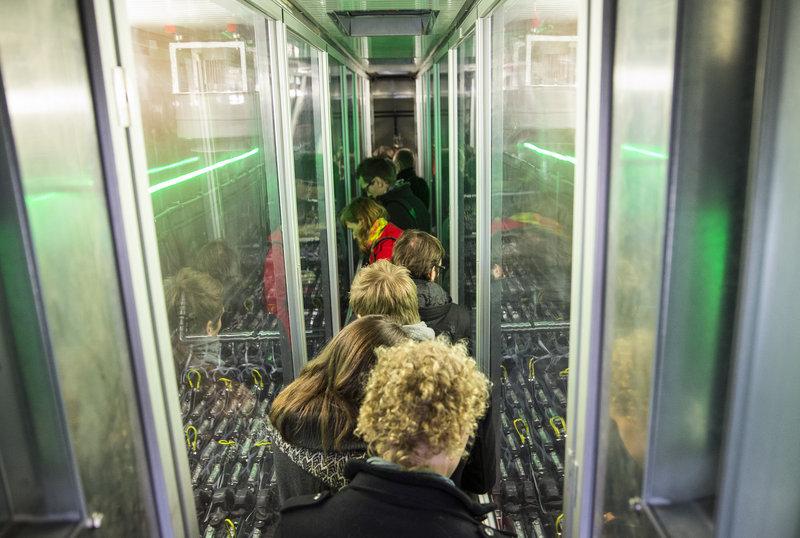
The Bennewitz project uses 18 containers using more than 10,500 individual battery cells with nine battery inverters, raised from the ground for flood protection and connected to the local utility grid. Battery provider for this project was not named, but the batteries “come from China, have a service life of 20 years and are recyclable”, SMA said. The latest project has been worked on by SMA’s subsidiary SMA Sunbelt Energy and Upside Group’s Upside Invest division.
“The large-scale battery storage system successfully provided grid support for the first time even before the system was officially commissioned,” SMA Sunbelt Energy general manager Enrique Garralaga Rojas said.
“In January, a major blackout almost occurred in Europe due to a significant drop in frequency to below 50Hz; thanks to the use of battery-storage systems such as those in Bennewitz and Langenreichenbach, a failure of the electricity supply was prevented.”