SMA and LG Chem partner on battery inverter storage solution

November 7, 2016
LinkedIn
Twitter
Reddit
Facebook
Email

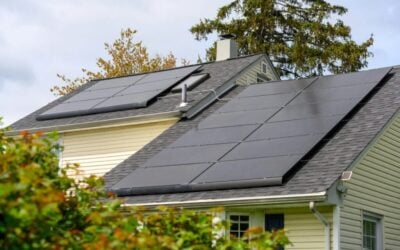
The new battery-inverter storage solution is set to see households achieve savings of up to 80%. Source: Memodo
German inverter manufacturer SMA and Korean battery maker LG Chem have teamed up to offer a residential solar storage solution in Europe and Australia from December 2016 onward.

Using SMA’s Sunny Boy Storage 2.5 battery inverters and LG’s new RESU10 (100V, 10kWh) or 7 (48V, 7kWh) batteries, the residential storage solution can be retrofitted to existing PV systems, and is set to achieve customers significant savings.

“Photovoltaic power is less expensive than the electricity rate charged by regional utility companies in many European countries for private households,” said SMA chief executive Pierre-Pascal Urbon in a statement.

“By using the new SMA/LG Chem package, private households can reduce their electricity bill by more than 80% and decouple from the trend of rising electricity prices.”

This article requires Premium SubscriptionBasic (FREE) Subscription

Try Premium for just $1

  • Full premium access for the first month at only $1
  • Converts to an annual rate after 30 days unless cancelled
  • Cancel anytime during the trial period

Premium Benefits

  • Expert industry analysis and interviews
  • Digital access to PV Tech Power journal
  • Exclusive event discounts

Or get the full Premium subscription right away

Or continue reading this article for free

“The combination of LG Chem’s RESU 400V line-up storage integrated with Sunny Boy Storage will have a great impact in the European and Australian residential storage market,” said Sung Hoon Jang, senior vice president and head of ESS at LG Chem. “We expect this new technology to become a stepping stone that will enable more people to use renewable energy at home around the globe.”

Users of the storage solution also have access to SMA’s online portal SunnyPlaces, and can monitor energy flows and savings opportunities. In addition, the system can be integrated with the Sunny Home Manager into a comprehensive energy management system if required.

The two market leaders are also planning to extend the partnership to include utility-scale storage solutions, but no further details were disclosed about this.

15 September 2026
San Diego, USA
You can expect to meet and network with all the key industry players again in 2025 from major US asset owners, operators, RTOs and ISOs, optimizers, software and analytics providers, technical consultancies, O&M technology providers and more.
15 September 2026
Berlin, Germany
Launching September 2026 in Berlin, Energy Storage Summit Germany is a new standalone event dedicated to Germany’s energy storage market. Bringing together investors, developers, policymakers, TSOs, manufacturers and optimisation specialists, the Summit explores the regulatory shifts, revenue models, financing strategies and technology innovations shaping large-scale deployment. With Germany targeting 80% renewables by 2030, it offers a focused platform to connect with the decision-makers driving the Energiewende and the future of utility-scale storage.

Read Next

March 20, 2026
A new report from the US Energy Storage Coalition (ESC) indicates that the American battery manufacturing sector surpasses 100% of US demand for energy storage systems (ESS) and modules.
March 20, 2026
Energy storage developer and system integrator Energy Vault has released its Q4 and full year 2025 financial results, showing growth credited to entering the AI infrastructure market, expanding projects in Australia and its ‘Asset Vault’ subsidiary.
March 20, 2026
Indian solar PV module manufacturer Saatvik Green Energy is to enter the energy storage market through a newly launched subsidiary.
March 20, 2026
Vena Energy has signed a long-term revenue share agreement with Danish energy trading company InCommodities for its 204MW/510MWh Bellambi Heights battery energy storage system (BESS) in Central West New South Wales, Australia.
March 20, 2026
A collaborative team of Australian scientists from CSIRO, the University of Melbourne and the Royal Melbourne Institute of Technology (RMIT) has successfully developed and tested the world’s first proof-of-concept quantum battery system.