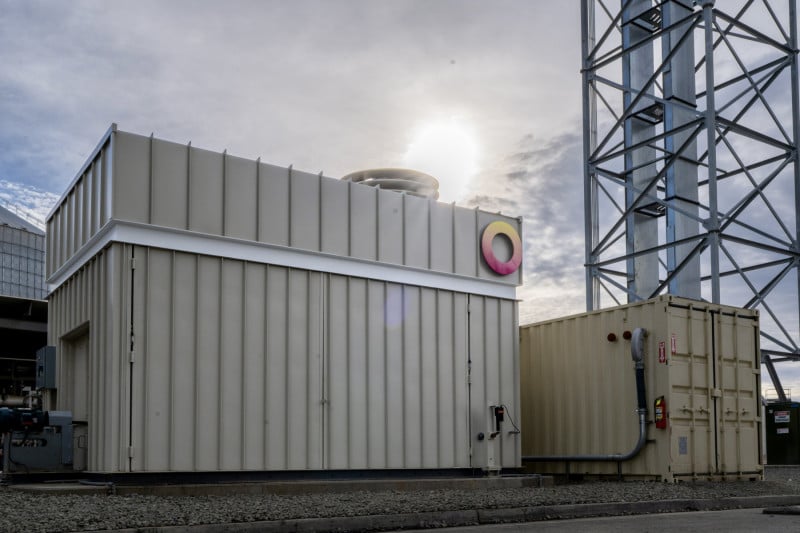
Covestro and thermal energy storage (TES) startup Rondo Energy have broken ground on a 100MWh TES system at Covestro’s Brunsbüttel chemical site in northern Germany.
US-headquartered Rondo Energy stated that the project, which will see a large-scale industrial TES system based on its Rondo Heat Battery (RHB) technology deployed, represents one of the largest industrial thermal storage deployments globally and is scheduled for commissioning by the end of 2026.
The system will supply approximately 10% of the steam requirements at the Brunsbüttel facility. The project has previously received a €75 million (US$87 million) financial backing from Breakthrough Energy Catalyst and the European Investment Bank.
At 100MWh capacity, the Brunsbüttel system matches the scale of Rondo’s California deployment, which became operational in October 2025.
Try Premium for just $1
- Full premium access for the first month at only $1
- Converts to an annual rate after 30 days unless cancelled
- Cancel anytime during the trial period
Premium Benefits
- Expert industry analysis and interviews
- Digital access to PV Tech Power journal
- Exclusive event discounts
Or get the full Premium subscription right away
Or continue reading this article for free
Thermal energy storage systems like the Rondo Heat Battery address a critical challenge in industrial operations: providing continuous high-temperature process heat from intermittent renewable energy sources.
The technology stores surplus renewable energy electricity by heating ceramic bricks to temperatures exceeding 1,000°C. When steam is required, the stored thermal energy generates emission-free steam via conventional boiler systems, replacing fossil-fuel combustion.
Dr Thorsten Dreier, chief technology officer at Covestro, described the heat battery as enabling progress toward circular economy and climate-neutral production goals.
“The heat battery is such an idea: a new technology that enables us to take another step forward on our path to a sustainable future,” Dreier stated during the groundbreaking ceremony.
The RHB technology utilises proven thermal storage principles, employing ceramic bricks as the storage medium paired with modern automation and control systems.
According to Rondo, the TES system charges during periods of surplus renewable energy electricity availability, typically 6-8 hours daily, and provides continuous heat output for industrial processes.
Steam production accounts for a major energy demand in chemical manufacturing operations, and Covestro’s Brunsbüttel site currently relies on natural gas for steam generation.
Covestro plans to assess the potential for larger-scale thermal storage deployment based on the Brunsbüttel site’s operational experience, indicating possible expansion of the technology across the company’s global manufacturing network.
The Brunsbüttel deployment joins a growing portfolio of industrial thermal storage projects across multiple sectors. Heineken recently signed agreements for a 100MWh TES to provide process heat for brewing operations in Portugal.
Heineken and Rondo Energy inked a heat purchase agreement (HPA) in early November 2025, with the project scheduled to go live in April 2027.
Industrial thermal storage adoption has accelerated as companies seek alternatives to natural gas for process heating. EDP and Rondo Energy have collaborated on industrial TES deployments that demonstrate the commercial viability of brick-based heat storage systems for large-scale industrial applications.
The technology’s expansion into international markets continues with Rondo Energy’s deployment of Southeast Asia’s first industrial heat battery, a 32MWh system for a cement factory in Thailand, which was announced as in operation in November.
Energy-Storage.news publisher Solar Media is hosting the Energy Storage Summit EU 2026 in London, UK, on 24-25 February 2026 at the InterContinental London – The O2. See the official website for more details, including agenda and speaker lists.