The Reno Planning Commission, in Nevada, US, recommended approval for a conditional-use permit for the 200MW Trego Grid energy storage project on 4 March.
The battery energy storage system (BESS) is being developed by Trego Grid, LLC, which lists Aaron Zubaty, founder and CEO of IPP Eolian Energy, Peter J. Blum, CCO of Eolian, and Stephanie Smith, former COO of Eolian, as managers. Based on this available information, Trego Grid, LLC seems to be operated by Eolian Energy.
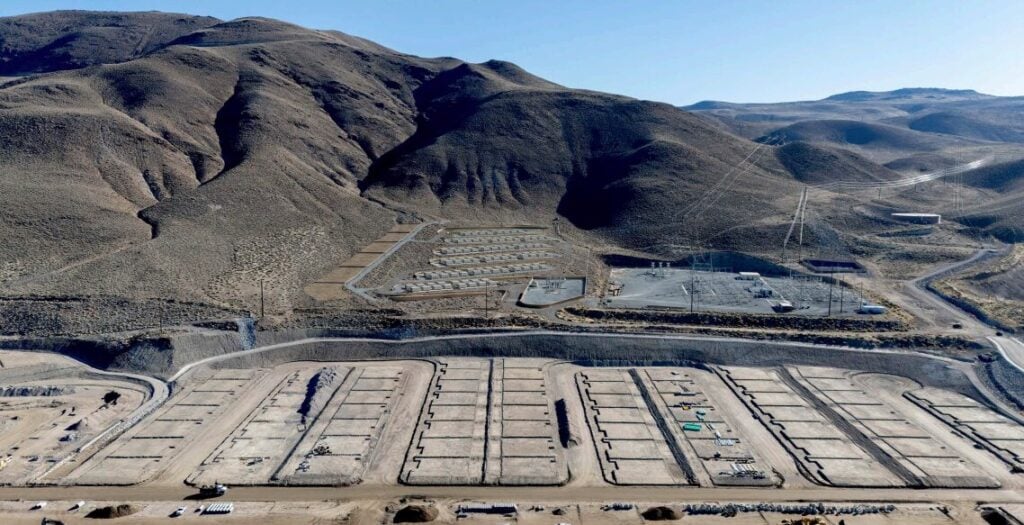
The facility will feature 256 Tesla Megapack units, which utilise lithium iron phosphate (LFP) battery cells, organised into 16 clusters, each containing 16 units.
The project includes a 120 kV connection to the nearby NV Energy Mira Loma substation through a 70-foot Point of Interconnection pole. Supporting infrastructure comprises an approximately 360 square metre control building for remote monitoring equipment, a one-acre equipment yard with substation, seven fire hydrants, and fire access roads across the site.
Try Premium for just $1
- Full premium access for the first month at only $1
- Converts to an annual rate after 30 days unless cancelled
- Cancel anytime during the trial period
Premium Benefits
- Expert industry analysis and interviews
- Digital access to PV Tech Power journal
- Exclusive event discounts
Or get the full Premium subscription right away
Or continue reading this article for free
The facility is built to function for 20 to 30 years, with options to extend its lifespan via module replacement and battery recycling.
Trego Grid uses a stepped hillside design to minimise grading and lessen visual impact. Battery unit clusters are arranged in rows that follow the natural slope, with retaining and screening walls between the rows providing both visual and noise mitigation.
These walls reach up to eight feet in height and are constructed using earth-tone materials to harmonise with the environment. The maximum fill height is around 12 feet, just two feet above the typical limit. Evergreen trees are planned along the western border to offer extra screening for the nearby residential area.
Trego Grid, LLC’s application states that Tesla Megapack technology does not require water-based cooling systems. Instead, it uses a closed-loop coolant system with fans, conserving water and lowering the risk of thermal runaway events compared to older battery storage methods.
Safety and fire protection
Each Tesla Megapack unit includes several built-in safety features such as fire detection, thermal monitoring, automatic venting, and internal fire suppression.
The self-contained design aims to prevent fires from spreading between units, with multiple sensors that can automatically activate safety mechanisms to avoid thermal runaway.
In the event of any detection, the system automatically notifies the Fire Department. Reno Fire Station 12 is situated 2.9 miles from the site with an estimated response time of six minutes. The project complies with International Fire Code requirements and Wildland Interface development standards.
The facility will be located approximately 430 feet from the nearest residential lot in the Talus Valley East subdivision, which has not yet been constructed.
An Environmental Noise Assessment found that the noise produced by air conditioning systems for battery cooling will stay within the adopted standards of 65 dBA during the day and 49 dBA at night, with a significant safety margin.
The entire site will be secured with eight-foot chain link fencing featuring earth-tone slats to blend with the surroundings. A unique local requirement mandates comprehensive feral horse management fencing due to the site’s proximity to the Virginia Range, in accordance with Reno Municipal Code provisions.
The facility will function as an unmanned installation with no daily staff or routine vehicle visits. System performance, alarms, and safety status will be continuously monitored via centralised remote systems, which will generate automated alerts and response protocols.
The only expected traffic will be occasional maintenance visits by workers when necessary. Since no personnel will be stationed on-site, sewer services are not needed; however, Truckee Meadows Water Authority (TMWA) water service will be extended to the site for irrigation and fire suppression.
Critical conditions of approval
Several important conditions must be met before the project can proceed. Trego Grid, LLC must apply for a building permit for the entire project within 18 months of approval, or the conditional use permit will become void.
Approval for annexation of the entire site must be obtained before any building permit is issued, and a boundary line adjustment is necessary to delineate the 25.2-acre project site from the larger 60.49-acre combined parcel.
A comprehensive decommissioning plan must be submitted before issuance of the building permit, addressing site restoration measures, hazardous waste compliance, and recycling and disposal procedures.
The project must utilise the specific Tesla Megapack units submitted with the application, although alternative options may be proposed, subject to the Administrator’s approval. Finally, the project requires approval from the Truckee Meadows Regional Planning Commission (TMRPC) as a Project of Regional Significance.
Notably, the site was originally incorporated into the City of Reno in 2019, with the specific aim of developing a BESS. Trego Grid, LLC has since reevaluated its requirements and expanded the project scope to include parts of an adjacent parcel to support a larger operation.
The project remains below hazardous material thresholds as mandated by Nevada law, avoiding the need for extra discretionary approvals. The facility contributes to regional grid stability and the integration of renewable energy, all while adhering to Master Plan policies related to energy facilities and electrical transmission infrastructure.
The Commission reported that the Ward 3 Neighbourhood Advisory Board was generally supportive of the project after Trego Grid, LLC, presented design details and answered questions.
Primary concerns raised included fire safety, noise impacts, wild horse interface, and project screening, all of which have been addressed through project design and conditions of approval. One written comment was received from surrounding property owners expressing support for the development.
Nevada
Nevada is not currently included in a full Regional Transmission Organisation (RTO) or Independent System Operator (ISO). Instead, it operates mostly independently of any RTO/ISO, with its power system managed by its own balancing authority, the utility NV Energy.
NV Energy is a major participant in the Western Energy Imbalance Market (WEIM), managed by the California Independent System Operator (CAISO).
WEIM expands CAISO’s real-time market to multiple states including California, Arizona, New Mexico, Texas, Oregon, Washington, Nevada, Idaho, Montana, Utah, and Wyoming, with additional regions expected to join. Participants, such as CAISO, gain economic, operational, and environmental benefits by trading energy across this extensive area in real time.
NV Energy has announced its plan to participate in CAISO’s Extended Day-Ahead Market (EDAM), aiming to better connect Reno and the entire Nevada region with the larger Western electric grid. This initiative is anticipated to go live around 2026–2027.
CAISO describes the EDAM as “a voluntary day-ahead electricity market designed to deliver significant reliability, economic, and environmental benefits to balancing areas and utilities throughout the West.”