Private Energy Partners has submitted a hybrid energy project to Australia’s environmental approval process, proposing a 780MW battery energy storage system (BESS) combined with up to 1,188MW of gas-fired generation capacity within Queensland’s Gladstone State Development Area.
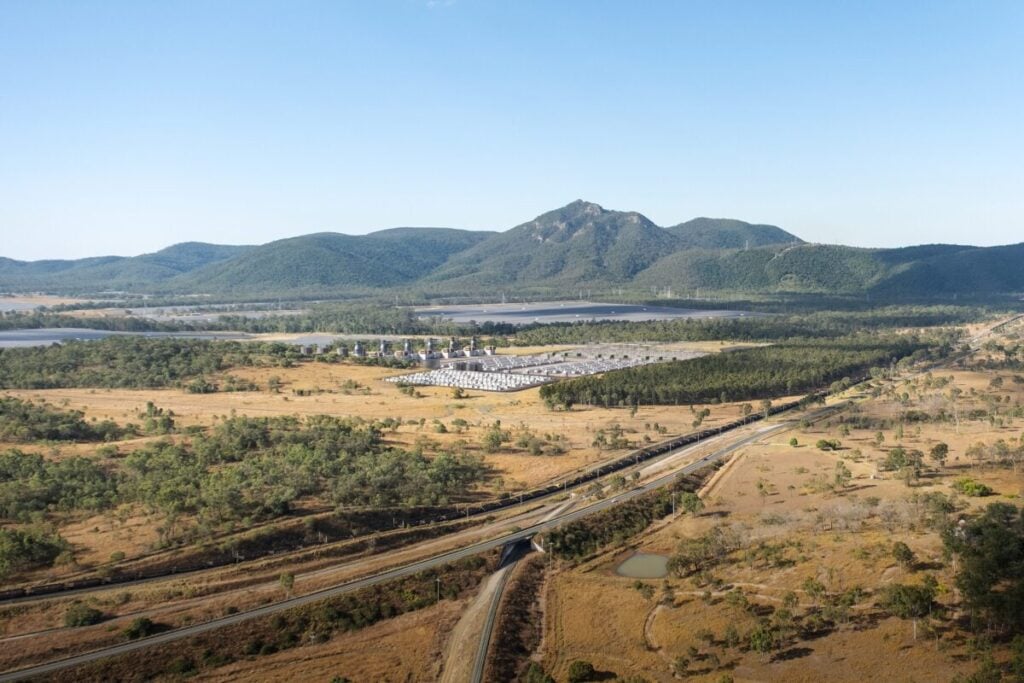
The Gladstone SDA Energy Hub, located 7km from Mount Larcom and 25km from Gladstone, aims to address forecasted inertia and generation shortfalls from the retirement of legacy thermal generation assets across the National Electricity Market (NEM).
According to the Environment Protection and Biodiversity Conservation (EPBC) Act application, the project encompasses approximately 194.58 hectares, with a disturbance footprint of 131.8 hectares primarily within two lots, while strategically avoiding 54.5 hectares to minimise environmental impacts.
The battery component would utilise industry-standard grid-scale lithium iron phosphate (LFP) batteries, regarded as one of the safest options for large-scale energy storage, capable of storing 780MW.
Try Premium for just $1
- Full premium access for the first month at only $1
- Converts to an annual rate after 30 days unless cancelled
- Cancel anytime during the trial period
Premium Benefits
- Expert industry analysis and interviews
- Digital access to PV Tech Power journal
- Exclusive event discounts
Or get the full Premium subscription right away
Or continue reading this article for free
Although the duration of the battery storage system has not been disclosed in the EPBC Act application, the project’s dedicated website states it will be up to 8-hours, meaning it would be sized at 6,240MWh.
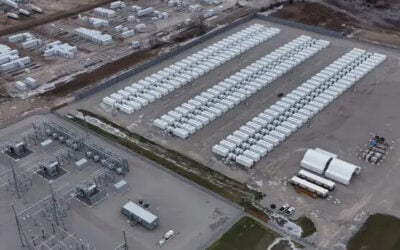
At full build-out, the system would feature 1,200 battery storage containers and 240 inverters, arranged across a 705-meter-by-405-meter pad. The LFP battery technology operates safely across wider temperature ranges and stores more energy per unit than alternative chemistries, making it suitable for rapid dispatch when network demand requires stabilisation.
The project’s gas generation component consists of six open-cycle gas turbines, each providing up to 198MW, utilising Siemens SGT5-2000E reference technology with stack heights of approximately 40.5 meters.
These turbines would connect to a natural gas supply via a 5.5km underground pipeline from the Mt Larcom interconnector, with onsite diesel storage providing dual-fuel capability and supply contingency. The facility would maintain up to 19,052 cubic meters of diesel in 5,700 cubic meter storage tanks, alongside natural gas storage within the pipeline infrastructure.
The energy hub would connect to Queensland’s transmission network through three 275kV transmission lines strung over two sets of lattice towers, running from the project’s onsite substation to Powerlink’s Larcom Creek Substation.
Preliminary design identifies approximately 15 towers with typical heights of 50 meters, though some may reach 70 meters to span existing mature vegetation along the Larcom Creek watercourse corridor without requiring clearing.
Private Energy Partners’ environmental assessment identified potential habitat for several matters of national environmental significance, including the Squatter Pigeon, Koala and Greater Glider within the broader study area.
The project is planned for approximately 25 years of operation, with potential for a 25-year extension following facility overhaul, creating sustained employment and contracting opportunities for Mount Larcom and surrounding communities throughout the operational period.
The submission to the EPBC Act comes as its pipeline continues to grow, with battery storage projects across multiple states now progressing through federal environmental assessment, totalling several gigawatt-hours of capacity.
Private Energy Partners’ Gladstone project joins other Queensland developments navigating the EPBC process, including Quinbrook’s 780MW Supernode North BESS, which recently secured approval.
Interested in Australia? Read Energy-Storage.news’ Energy Storage Summit Australia coverage and related content.