Image: LG Chem.
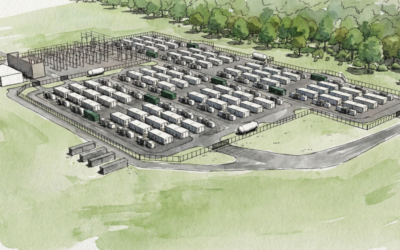
Europe’s largest energy storage battery project could conceivably also be its best looking, as these pictures show.
The two companies behind the project, which saw a large-scale energy storage system deployed in the small German village of Feldheim, also decided to call on professional street artists and invited schoolchildren to get involved with designing the outside of the system’s enclosure.
Feldheim hit world headlines around three years ago when the village pledged to go 100% renewable energy powered. The 10MW facility will be participating in Germany’s frequency regulation market, providing or absorbing power as required to keep the grid operating at 50Hz.
Side view of the battery park in Feldheim. Image: LG Chem.
Project partners Energiquelle and Enercon, both big names in Europe’s wind industry, invited 28 boys and girls aged 13 to 15 from schools in Potsdam to help design the battery housing, along with Christopher Wehr and Philipp Vogel, graffiti artists and designers from Berlin.
Try Premium for just $1
- Full premium access for the first month at only $1
- Converts to an annual rate after 30 days unless cancelled
- Cancel anytime during the trial period
Premium Benefits
- Expert industry analysis and interviews
- Digital access to PV Tech Power journal
- Exclusive event discounts
Or get the full Premium subscription right away
Or continue reading this article for free
Feldheim Regional Regulating Power Station (RRKW), as it is known, includes 3,360 battery modules by Korean provider LG Chem using control technology by Enercon. Swedish government-owned power company Vattenfall will be responsible for marketing its services.
Feldheim Regional Regulating Power Station (RRKW), with local wind turbines also in shot. Image: LG Chem.
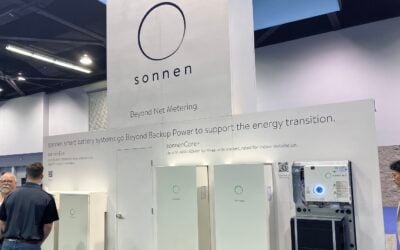
The Feldheim project is not the first instance efforts have been expended to make energy storage more aesthetically pleasing. In an entertaining video interview a couple of years ago, the head of ASD Sonnenspeicher, Wolfram Walter, said he had designed his range of home storage devices to look more interesting than the usual “sh***y boxes” that the industry was accustomed to seeing.
Enercon’s control system – less visually arresting but vital to the project nonetheless. Image: LG Chem.
Europe’s first commercial battery park makes EUR3,810 per MW in its first year of operation
In related news, Younicos announced this week that its 5MW battery park in Germany’s West Meklenberg, the first in the country to operate on a commercial basis in the frequency regulation market, passed its first successful year of operation a few days ago.
The company hosted an event attended by political and energy industry figures and revealed that the project, for regional utility WEMAG, has performed above expectations.
Younicos said WEMAG, which owns and operates the park, won each auction it participated in during the year and earned an average price of EUR3,810 per megawatt (US$4,257). The only setback the project has experienced so far is that only four out of the five megawatts have been prequalified to enter the frequency control market so far.
This lead Younicos to wonder aloud if the transmission system operator (TSO), which is itself called 50 Hertz, “was favouring traditional utilities such as its former corporate parent despite the undisputed advantages of intelligent battery storage in delivering primary frequency control power both more accurately and faster than conventional thermal generators”.