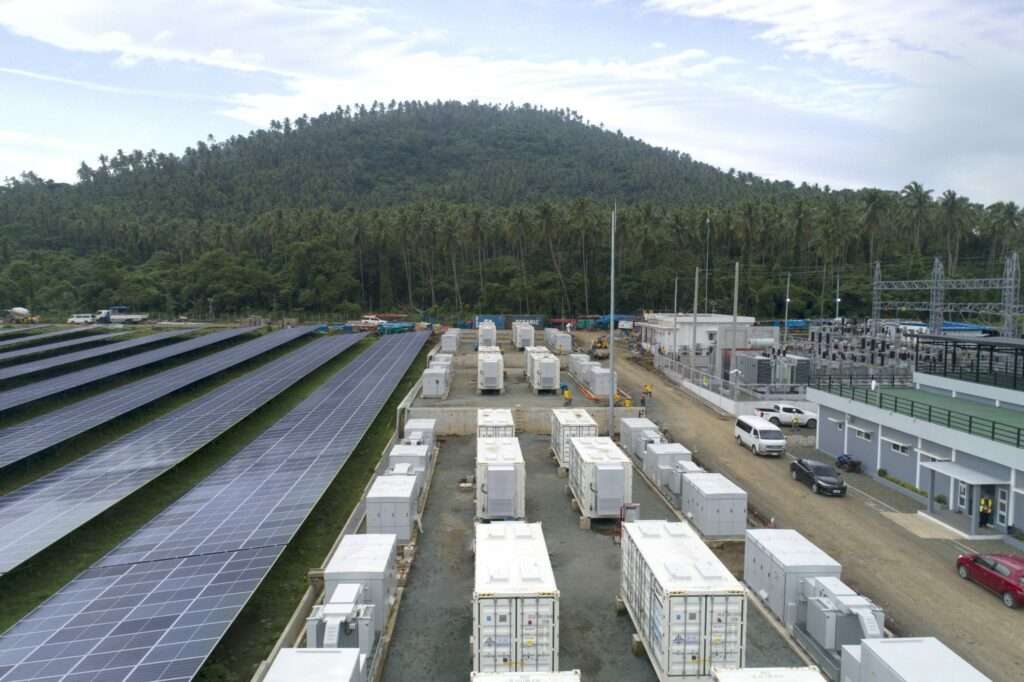
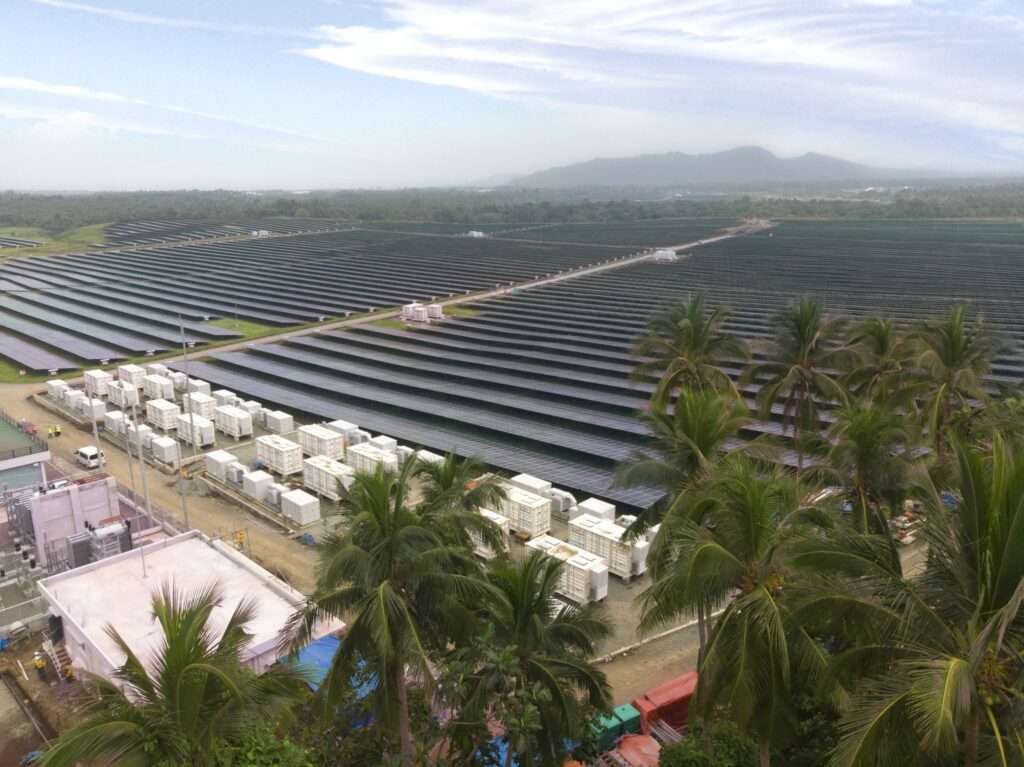
The first ever solar-plus-storage hybrid resources system in the Philippines is now in operation after energy company AC Energy (ACEN) switched on the site’s battery energy storage system (BESS).
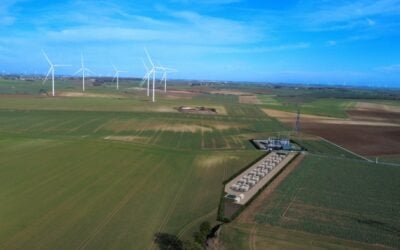
The 40MW pilot battery energy storage project in the Philippines has been switched on at the site of Alaminos Solar, a 120MW solar PV power plant in the municipality of Alaminos, Laguna, about 80km south of the country’s capital Manila.
ACEN, a publicly-listed integrated energy company with generation assets and retail electricity businesses headquartered in the Philippines and owned by holding company Ayala Group, said yesterday that the BESS has been brought online and will be used to evaluate opportunities to develop more storage across the company’s portfolio.
The BESS consists of two 20MW facilities with 1.5 hour duration each, totalling 40MW/60MWh.
Try Premium for just $1
- Full premium access for the first month at only $1
- Converts to an annual rate after 30 days unless cancelled
- Cancel anytime during the trial period
Premium Benefits
- Expert industry analysis and interviews
- Digital access to PV Tech Power journal
- Exclusive event discounts
Or get the full Premium subscription right away
Or continue reading this article for free
It was supplied by Saft, the battery manufacturer and energy storage company owned by TotalEnergies, and the BESS comprises 24 containerised units housing Saft’s 2.5MWh lithium-ion battery storage solutions.
The batteries will charge directly from the solar plant when demand is low, outputting when demand rises. It will also manage the local electricity network and provide ancillary services to the national grid.
According to ACEN’s website construction on the battery storage system began in October 2020 and development and construction required about PHP2.2 billion (US$42.8 million) investment.
Meanwhile, the site’s 120MW solar plant was brought online in June 2021 and a long-term power purchase agreement (PPA) for its output has been signed between ACEN and Ayala Land, another company in its owner’s portfolio.
It is built on the site of Ayala Land’s Sustainability Hub, which includes a woodland reserve aimed at trapping carbon and fostering biodiversity. It also has a plastic recycling facility that diverts plastic waste from landfills to be pressed into bricks and reused as building materials.
“We will be looking to increase our investments in storage as the technology increases its viability and competitiveness,” ACEN’s president and CEO Eric Francia said, adding that the company was “delighted to start the operations” of its very first battery storage project.
In October, Energy-Storage.news reported that ACEN will be piloting the use of battery storage in Vietnam, pairing a 15MW/7.5MWh BESS with a 50MWp solar power plant in a project supported with a US$2.96 million grant from the US Consulate General. ACEN is working in partnership with Vietnamese company AMI Renewables on that one.
Philippines’ rising opportunity for energy storage
Although ACEN has power generation assets internationally, including more than 1,500MW of projects in India, Australia, Indonesia and Vietnam — all of which are renewable energy systems — it has about the same amount in Philippines, of which about 80% are renewables.
ACEN is targeting carbon neutrality by 2050 and wants to reach 5,000MW of renewables capacity by 2025.
“We are taking advantage of battery storage technology’s fast response, scalability and ease of integration into our renewable projects. With the Alaminos Energy Storage project, we can harness renewable energy more effectively amidst its variability while improving the operating capabilities of the grid and ensuring high reliability,” ACEN chief development officer Jose Maria Zabaleta said.
Over the past couple of years, battery storage development in the Philippines by major energy companies has stepped up pace.
While the ACEN project is the first large-scale solar-plus-storage hybrid, Energy-Storage.news has reported on several standalone utility-scale BESS projects since contracts began to be announced and projects started to come online during 2021.
SMC Global Power Holdings, a subsidiary of Philippines holding company San Miguel Corporation, has contracted leading international energy storage players including Fluence, Wärtsilä and ABB to deliver projects in a 1,000MW BESS portfolio.
Another power generation, supply and distribution company in the country, Aboitiz Power, said in August as it announced a moratorium on new coal plants that it is deploying 69MW of BESS across two projects, one on a floating power barge (49MW) and the other at a hydroelectric power plant (20MW).