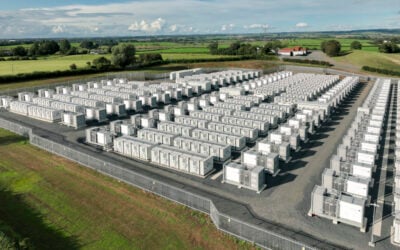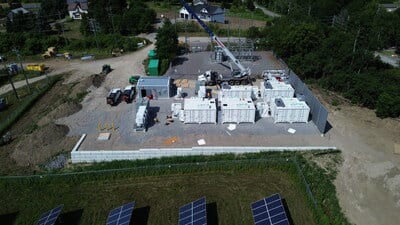
The Municipality of Shuniah in Ontario, Canada, has voted against supporting a 400MW/3.2GWh long-duration energy storage (LDES) project proposed by independent power producer (IPP) PowerBank.
PowerBank was seeking support from local officials in the form of a Municipal Support Resolution (MSR), in order to submit the project to the Ontario Independent Electricity System Operator’s (IESO’s) upcoming energy storage procurement round, known as the Long-Term 2 (LT2) RFP. A vote was held last week, the outcome of which has denied the IPP’s ambitions.
Launched earlier this year, developers wanting to be considered for contracts under the capacity portion of the LT2 RFP have until 18 December 2025 to submit proposals.
Publicly listed PowerBank Corporation was previously known as SolarBank Corporation, until a rebranding in July this year. The SolarBank name was frequently used in recent discussions.
Try Premium for just $1
- Full premium access for the first month at only $1
- Converts to an annual rate after 30 days unless cancelled
- Cancel anytime during the trial period
Premium Benefits
- Expert industry analysis and interviews
- Digital access to PV Tech Power journal
- Exclusive event discounts
Or get the full Premium subscription right away
Or continue reading this article for free
Mount Baldy BESS
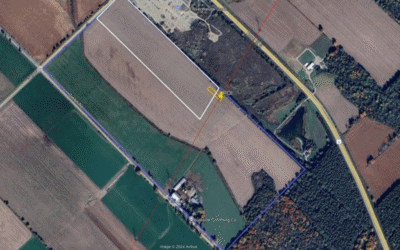
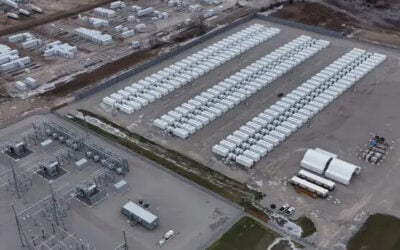
Known as the Mount Baldy 1 & 2 projects, SolarBank’s proposal for Shuniah comprises two adjacent 200MW/1,600MWh energy storage projects, utilising lithium iron phosphate (LFP) technology, connecting to the electricity grid via transmission lines owned by transmission and distribution (T&D) service provider Hydro One.
In the lead-up to the municipal vote, SolarBank held a public meeting 14 October to discuss the project, where “numerous concerns” were raised regarding the BESS.
In particular, local residents took issue with the proposed location for the project, describing it as being “perched atop an ecologically sensitive watershed” that would be impacted in the event of a fire.
Residents also expressed concerns over the project being unmanned upon commencement of commercial operations, as well as SolarBank currently having zero operational BESS. Although this is true, it’s worth noting that SolarBank has developed several solar projects across Ontario and New York State.
Additionally, SolarBank was one of the successful developers in the IESO’s inaugural storage procurement, known as the expedited long-term 1 (e-LT1) RFP. As reported by Energy-Storage.news in June 2023, the IPP secured three contracts with the IESO representing a cumulative storage capacity of 14.97MW.
In August this year, under the new PowerBank name, the company reported that it received delivery of the first EVLO battery containers for one of these projects located in Cramahe, known as SF-006.
Insufficient time
Unlike the previous LT1 procurement, MSRs are mandatory for LT2 and act as confirmation that developers have engaged with municipalities during the early planning phase.
However, receiving an MSR doesn’t supersede any permitting or zoning laws, meaning developers will still be required to obtain construction approval from local jurisdictions if they’re granted capacity contracts from the IESO.
Despite this, the Chief Administration Officer (CAO) of Shuniah, Paul Greenwood, recommended that the Municipal Council not issue an MSR for the project, or any projects, for that matter, in the December 2025 intake.
In his role as Town Planner, Greenwood concluded that there was insufficient time to conduct adequate due diligence before reaching a decision on any project submissions.
“The 18 December 2025, deadline does not provide adequate time for Administration to complete a responsible evaluation of the proposals received,” said Greenwood, as part of their recommendation to council.
“Given the breadth and complexity of the proposals received, Administration has not had sufficient time to conduct the necessary reviews or to complete a substantive validation of public engagement outcomes,” added Greenwood.
Along with SolarBank’s BESS project, another proposal for a gas peaker plant was also turned down by the council for the same reasons at the recent November 25 meeting.
With the IESO conducting capacity procurements for LT2 on an annual basis through 2029, Greenwood recommended that the council develop a structured evaluation framework for future proposals.
“This timeline provides Shuniah [with] an opportunity to develop a clear framework, obtain independent expert advice, engage with residents in a transparent and informed manner,” said the CAO.
Energy-Storage.news has reached out to SolarBank for comment on the situation and will update this article once it receives a response.