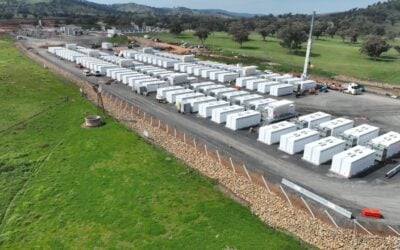
The government of Nova Scotia, Canada, has made amendments to the province’s Electricity Act with the view to accelerating the deployment of energy storage.
The amendments were introduced on Wednesday (22 March) and announced by Nova Scotia’s minister of natural resources and renewables, Tory Rushton. Under the changes, Rushton’s department will be able to direct utilities to hold competitive procurements for energy storage resources.
“We need to accelerate the use of battery storage in Nova Scotia to help us get off coal and meet our renewable electricity targets. These amendments encourage innovation and early adoption of battery technology in the province,” Rushton said.
The province still relies heavily on coal, with about half of its electricity coming from the fossil fuel, and is its single biggest source of greenhouse gas (GHG) emissions. Its renewable electricity policy target meanwhile is 80% by 2030.
Try Premium for just $1
- Full premium access for the first month at only $1
- Converts to an annual rate after 30 days unless cancelled
- Cancel anytime during the trial period
Premium Benefits
- Expert industry analysis and interviews
- Digital access to PV Tech Power journal
- Exclusive event discounts
Or get the full Premium subscription right away
Or continue reading this article for free
Vertically integrated energy company Nova Scotia Power is currently the sole entity permitted to own energy storage solutions like large-scale battery storage, with the amendments to the act enabling the Department of Natural Resources and Renewables to open up requests for proposals (RfPs) to others. Nova Scotia Power is privately owned by Emera Incorporated and regulated by the provincial government via the Nova Scotia Utility and Review Board.
Elsewhere, the provincial government has also changed the Act to allow the department to directly issue contracts for energy storage projects that can be implemented quickly, using those projects to further identify the optimal role for energy storage in Nova Scotia’s electricity system.
Rushton’s amendment, Bill 264, can be viewed here.
Industry groups quick to welcome changes
Trade association Energy Storage Canada said the changes would bring “new momentum” for storage projects, noting that the day after minister Rushton announced them, funding for various clean energy initiatives including the development of a strategy around energy storage procurement and contracting were included in the province’s budget for the fiscal year 2023-2024 as tabled in Legislature.
Energy Storage Canada executive director Justin Rangooni said Nova Scotia’s renewable energy targets and coal phase-out are achievable, “but only if the right amount of energy storage is in place well in advance of this deadline”.
“This new legislation and funding sends the right signal to industry to accelerate investment in their projects and partnerships, and to prepare them for commercial operation,” Rangooni said in a statement sent to Energy-Storage.news.
The energy storage group commissioned a report last year which set out a trajectory for Canada to achieve its target of having a net zero electricity grid by 2035 through leveraging between 8GW and 12GW of energy storage resources. Justin Rangooni blogged for this site about the report a few months ago.
Meanwhile, Canada is expected to soon introduce a tax credit similar to the US’ investment tax credit (ITC) scheme to incentivise investments in energy storage.
The Canadian Renewable Energy Association (CanREA) also welcomed the Nova Scotia legislative changes this week, after having “long advocated for the deployment of energy storage in Nova Scotia to help achieve the province’s net zero targets,” CanREA director for Atlantic Canada, Jean Habel said.
“I am pleased to see the positive steps Nova Scotia is taking toward enacting policies that will attract renewable energy investment to Canada,” Habel said.
“This move will encourage innovation and the early adoption of battery technology in the province and bolster the energy-storage sector, creating job opportunities for Nova Scotians.”