Italy-headquartered energy storage solutions provider NHOA Energy grew revenues 33% in 2023 despite a 20% industry-wide drop in prices, it said in its full-year results.
Revenues increased to €205 million (US$222 million) for the energy storage division of NHOA (New Horizons Ahead), which also has e-mobility and EV charging infrastructure divisions which account for the other 25% of group revenues.
The firm’s energy storage backlog meanwhile fell from €301 million worth of orders to €206 million while its pipeline grew 6%, from €1.043 billion to €1.110 billion.
NHOA said the 20% industry-wide fall in energy storage system prices – due to falling battery prices – was ‘too recent to generate a material positive volume impact on Backlog’. It did have an immediate negative impact on the results via lower unit prices, NHOA added.
Try Premium for just $1
- Full premium access for the first month at only $1
- Converts to an annual rate after 30 days unless cancelled
- Cancel anytime during the trial period
Premium Benefits
- Expert industry analysis and interviews
- Digital access to PV Tech Power journal
- Exclusive event discounts
Or get the full Premium subscription right away
Or continue reading this article for free
It corroborates recent data from Clean Energy Associates which said the average price of BESS for US customers fell around 20% last year, and set to fall the same amount this year.
Of the €205 million in revenue for 2023, 60% was from Asia, 28% from Australia with Latin America, North America and elsewhere making up the remaining 12%. With €194 million revenues in the first nine months of 2023, Q4 was a relatively quiet period with only an additional €11 million recognised.
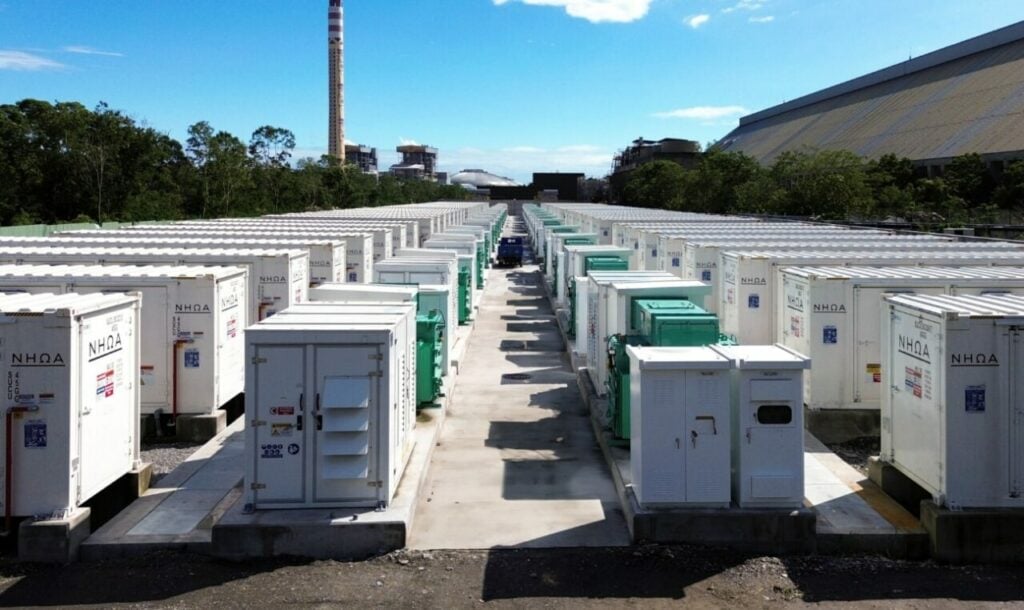
NHOA has been majority-owned by the Taiwan Cement Corporation since 2021, and has subsequently made inroads in the Taiwan’s energy storage market. In late 2023, it commissioned the country’s largest BESS project, a 311MWh system (pictured above).
Construction started on its first UK project earlier this year, 130MWh deployed across two sites for project owner Eku Energy.
Energy-Storage.news’ publisher Solar Media will host the 2nd Energy Storage Summit Asia, 9-10 July 2024 in Singapore. The event will help give clarity on this nascent, yet quickly growing market, bringing together a community of credible independent generators, policymakers, banks, funds, off-takers and technology providers. For more information, go to the website.