
Saleel Anthrathodiyil, fire protection engineer at Telgian Engineering & Consulting, discusses changes in the 2026 edition of the US National Fire Protection Association standard NFPA 855.
This is the full version of an abridged article that appeared in our free 64-page Energy Storage Report 2026, published in February and available for download from the Resources section of the website. It features articles on topics including grid-forming (GFM) technology, BESS for data centres and industry views on project financing trends.
One of the most closely watched updates in the 2026 NFPA cycle for the energy storage industry is the NFPA 855: Standard for the Installation of Stationary Energy Storage Systems. First published in 2020, NFPA 855 has quickly become a key reference for the safe deployment of batteries across residential, commercial, and utility-scale projects. Although the standard is still relatively new, each edition has added necessary refinements, and the 2026 edition is no exception.
This article highlights significant changes from the 2023 edition, explains why they matter, and outlines how the updates may affect project planning and approvals.
Try Premium for just $1
- Full premium access for the first month at only $1
- Converts to an annual rate after 30 days unless cancelled
- Cancel anytime during the trial period
Premium Benefits
- Expert industry analysis and interviews
- Digital access to PV Tech Power journal
- Exclusive event discounts
Or get the full Premium subscription right away
Or continue reading this article for free
1. Scope and applicability: More technologies listed
The first step in applying NFPA 855 is confirming whether it applies to the system. Applicability is influenced by battery chemistry and system energy capacity (kWh). Where energy ratings are small (which limits energy density), code requirements might not apply. For example, a small server room in an office building or a battery backup for a small carbon-dioxide (CO₂) skid in a Deli/bakery might be less than 20kWh for lithium-ion chemistry and less than 70kWh for valve-regulated lead-acid (VRLA) batteries, and the NFPA 855 requirements might not be applicable.
While the 2023 edition (Table 1.3) subdivided battery technologies and capacitor energy storage systems (ESS), the 2026 edition does not segregate them. Instead, it lists energy storage systems in order.
At-a-glance table
| 2023 Edition | 2026 Edition |
| Included Lead-acid, Ni-Cad, Ni-MH & Ni-Zn, Lithium-ion, Sodium nickel chloride, flow batteries, flywheel ESS, and electrochemical double-layer capacitors | Added direct limits for Hybrid supercapacitors, Iron-air, aqueous, Lithium metal, Ni-Fe, Nickel-hydrogen, Sodium sulfur, Zinc-air, aqueous, Zinc bromide, and Zinc manganese dioxide (Zn-MnO2) |
| Focus on earlier established chemistries & conservative threshold for “other” | New chemistries are named explicitly; other listed chemistry thresholds remain the same |
2. Hazard Mitigation Analysis (HMA): Now the default with more influence
One of the most significant changes in NFPA 855 (2026) is the expanded scope of the Hazard Mitigation Analysis (HMA). In the 2023 edition, an HMA was only required under certain conditions, most commonly when a project exceeded prescriptive limits (such as maximum stored energy limits in Chapter 9). If a project stayed within those limits, an HMA was often not required.
In the 2026 edition, that approach has changed. HMA is now the default expectation for most ESS installations, unless later chapters provide exceptions. For example, specific well-established chemistries, such as lead-acid and aqueous nickel-based systems, that have been around for a long time may not require an HMA in particular cases, as allowed in Chapter 9.
3. Emergency response planning and training: More structure and review
The 2023 edition required emergency planning and training, but the 2026 edition provides more direction on when and how these plans must be created and maintained.
A new section 4.3.3 adds more specific minimum requirements for an Emergency Response Plan (ERP) and training program. The ERP must address key phases, such as mitigation, preparedness, response, and recovery. It also requires an annual review of the emergency operations plan and a yearly refresher training with the authority having jurisdiction (AHJ) to be notified of this training.
4. Fire control and suppression: Updated structure and terminology
Sprinkler requirements remain in place as per section 4.9.3 (such as systems installed in accordance with NFPA 13 or equivalent). However, the 2026 edition reorganizes the topic and reframes earlier “alternate automatic fire protection” vs. “sprinkler system” language into a broader automatic fire control and suppression category and includes NFPA 13. This approach recognises the alternate suppression strategy as acceptable if approved based on the fire testing and HMA.
5. Emergency power supply systems: New requirements added
NFPA 855 (2026) introduces a new section addressing emergency power supply systems (EPSS) and stored emergency power supply systems (SEPSS). This includes:
- Critical safety systems must be supported by reliable EPSS/SEPSS power consistent with NFPA 110 or NFPA 111.
- EPSS design information must be reviewed by the Fire Protection Engineer of record and the AHJ.
6. Stricter fire safety testing requirements: UL9540A and large-scale fire testing
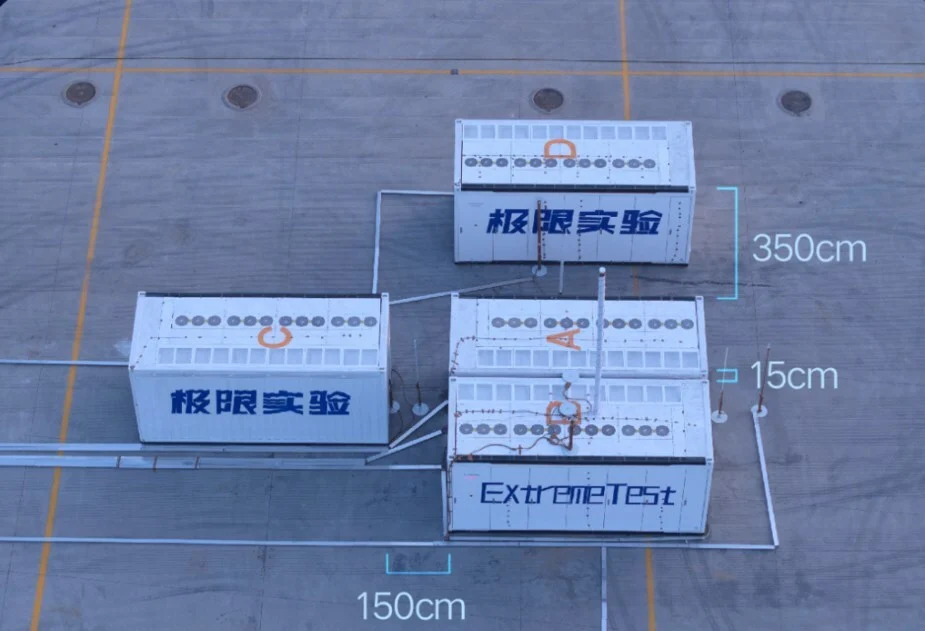
A significant headline change in the 2026 edition is the more stringent fire and explosion testing expectations. UL9540A remains a foundational test method, evaluating thermal runaway at multiple levels (cell, module, unit, and installation). The 2026 edition now explicitly requires large-scale fire testing (LSFT) alongside UL9540A testing, demonstrating systems can withstand and contain severe thermal runaway events.
UL9540A (an Underwriters Laboratories (UL) test method) forces thermal runaway at the cell, then module, unit, and installation levels, collecting data at each stage. Because UL 9540A allows testing to end early if fire propagation is contained at the module level, many battery systems are never physically tested as a complete unit. This creates a data gap for large-scale installations, which must then rely on mathematical interpolation and engineering analysis to predict fire behaviour rather than a test-based validation. The 2026 edition addresses this gap. Per section 9.2.1.2 and 9.2.1.2.1:
- Where cell thermal runaway releases flammable gases during a cell- or module-level test, an additional unit-level test should be conducted involving intentional ignition of vent gases to assess fire/deflagration hazards.
- The large-scale fire testing required should be conducted or witnessed and reported by an approved testing laboratory, characterizing gas composition and demonstrating that a fire involving one ESS unit will not propagate to an adjacent unit.
Editor’s note: The new edition of UL9540A was also released shortly after the original publication of this article, including LSFT requirements and a greater focus on system-level safety, among other changes and updates.
7. Updated technology-specific requirements and TRRP systems
The technology-specific requirements table in Chapter 9 is expanded to include the new chemistries. Also, thermal runaway propagation prevention (TRPP) systems are now defined as an “active” method and a new requirement under Section 9.7.6.6. Compliance with ASME B31.1 or ASME B31.3 should be documented as part of the UL9540 listing.
8. Storage of lithium metal or lithium-ion batteries: Still there!
Chapter 14, which addresses the storage of lithium metal and lithium-ion batteries, remains a unique section within NFPA 855. It is currently the only chapter focused specifically on battery storage. Meanwhile, NFPA 800, the forthcoming Battery Safety Code, is under development and was open for public input through 29 January 2026. Once adopted, NFPA 800 is intended to address battery hazards across the battery lifecycle, including storage, and to complement existing standards such as NFPA 855. This may eventually shift or replace the storage-specific provisions currently found in NFPA 855.
In the 2026 edition, important updates affect detection requirements for lithium-ion battery storage. Section 14.3.2.1.2 now allows early fire detection using smoke detection systems, thermal imaging fire detection, or radiant energy detection, provided they are installed in accordance with NFPA 72. This replaces the previous, more limited language that allowed primarily only air-aspirating smoke detection or radiant-energy detection. Similar updates align outdoor storage requirements to include thermal imaging alongside radiant detection.
Under NFPA 855, these detection measures are minimum requirements for applicable battery storage installations. However, the proposed NFPA 800 framework is expected to require fire detection only when needed through an HMA.
It is also important to note that many jurisdictions are still enforcing codes aligned with earlier editions of NFPA 855, including the language referenced in the 2024 International Fire Code. Where local adoption has not yet caught up, project teams should monitor amendments closely and coordinate early with the AHJ for approval and variances.
9. Involvement of a registered fire protection engineer
Chapter 3 definitions in the 2026 edition go in-depth to ensure common terms used later in the code are defined with less room for interpretation, including “fire risk assessment” and “registered design professional.” The “qualified person” definition is reworded to list knowledge and training related to specific energy storage systems.
In the 2026 edition, Annex G states that a registered design professional (fire protection engineer) experienced in fire protection engineering and in energy storage risk assessment and plant operation of the type of, or similar to, the plant under consideration should direct the risk assessment design process.
NFPA 855 continues to evolve quickly as energy storage adoption grows and real-world experience increases. The 2026 edition places greater emphasis on hazard evaluation by a qualified fire protection engineer, emergency planning, and fire testing evidence. For project teams, these updates reinforce the importance of early design coordination, documentation planning, and ongoing engagement with the AHJ.
About the Author
Saleel Anthrathodiyil is a fire protection engineer at Telgian Engineering & Consulting (TEC). Anthrathodiyil has extensive experience in smoke control design, fire and egress modelling, hazardous materials analysis, and regulatory code consulting. He specialises in performance-based fire engineering, NFPA/IBC code interpretation, and third-party inspections and testing. His experience offers a strong track record of effective collaboration with AHJ’s, enduring clear communication, timely approvals, and reduced project risk.
