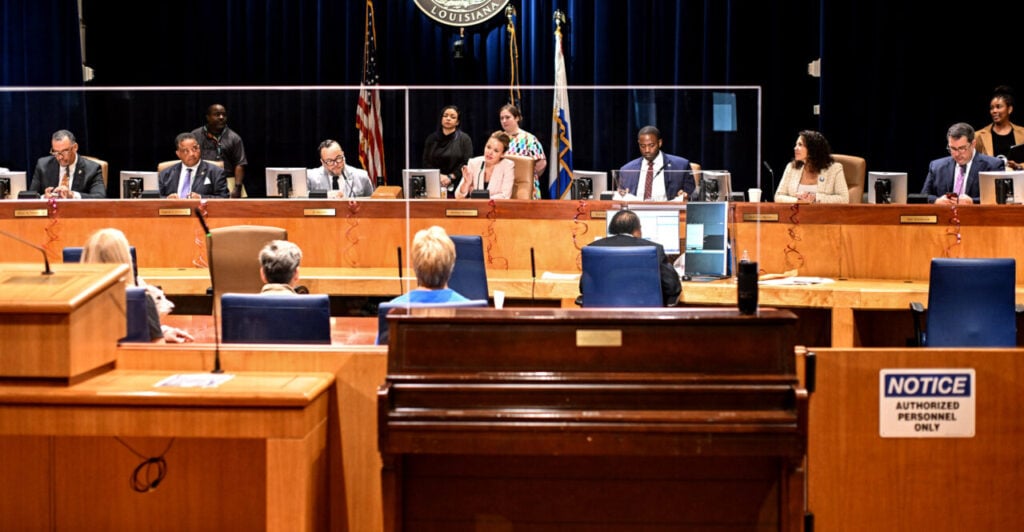
The New Orleans, Louisiana, US City Council voted unanimously to approve a US$28 million virtual power plant (VPP) programme, reportedly the first distributed energy resource (DER) programme in the city.
On 16 December, New Orleans mayor-elect Helena Moreno announced the start of the programme, which will deploy “hundreds” of solar-plus-energy storage systems (ESS) throughout the city to enhance grid reliability, sustainability, and community resilience without adding extra costs to ratepayers.
In the New Orleans Climate Change and Sustainability Committee Meeting, Moreo also claimed the programme will be the largest of its kind per capita in the country.
The mayor-elect also highlighted the steps the city has taken to strengthen its electric grid after Hurricane Ida in 2021.
Try Premium for just $1
- Full premium access for the first month at only $1
- Converts to an annual rate after 30 days unless cancelled
- Cancel anytime during the trial period
Premium Benefits
- Expert industry analysis and interviews
- Digital access to PV Tech Power journal
- Exclusive event discounts
Or get the full Premium subscription right away
Or continue reading this article for free
Because of widespread power outages caused by the hurricane, some lasting over 15 days, at least 10 deaths from heat-related conditions were reported.
ESS will be installed in homes, businesses, and community centres. The program offers upfront incentives for new batteries at these locations, along with ongoing credits that recognise the benefits these systems provide to the grid, such as reducing peak demand, storing solar energy overnight, and aiding during outages.
In the next few years, the DER programme intends to assist especially lower-income households, which have been most affected by increasing energy prices.
New Orleans residents giving public comment at the committee meeting noted the stress of not only weather-related power outages, but also rising utility bills, and how the programme could assist them in times of emergency.
The council officially approved the programme in an 18 December vote.
This will not be the first VPP in the state. Shreveport, Louisiana, is home to a VPP from energy storage company SimpliPhi Power, technology partner Heila and local utility SWEPCO, which utilises SimpliPhi’s lithium iron phosphate (LFP) ESS.
VPPs can potentially compete with traditional centralised electricity networks that depend on large power plants. As a result, many companies have created VPP programmes, often providing solar or battery systems free of charge or at a lower cost, in order to use these systems to support grid frequency and reliability.
Sunrun, NRG Energy, Haven Energy, Leap, and Enel North America were recently involved in advancing VPP programmes, in separate measures.
In an interview with Energy-Storage.news Premium, John Farrell, Co-Director of The Institute for Local Self-Reliance (ILSR), recently said of DERs,
“These programmes, like solar and storage initiatives or California’s Demand Side Grid Support (DSGS), are carving out markets where people have an opportunity to get paid on a contractual basis for providing some kind of service.”
He continued, “I do think that’s where we need to go. That, to me, solves many different problems. It addresses the issue of utilities wanting to always invest in potentially more expensive solutions. It also resolves the problem of a regulator having to constantly oversee every utility investment to ensure it’s worthwhile. It offers consumers a way to reduce their electricity bills. And what I’ve observed from some of these programmes that impress me is that a considerable number of low-income customers can participate too, because the barrier to entry is just like a smart thermostat.”
The Energy Storage Summit USA will be held from 24-25 March 2026, in Dallas, TX. It features keynote speeches and panel discussions on topics like FEOC challenges, power demand forecasting, and managing the BESS supply chain. For complete information, visit the Energy Storage Summit USA website.