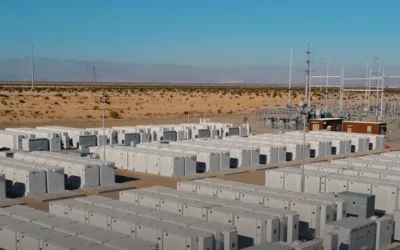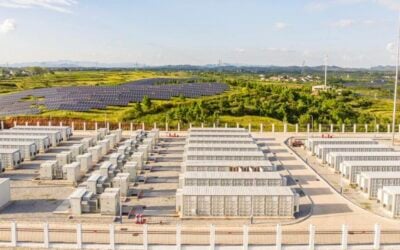
The New Jersey Board of Public Utilities has proposed a number of policies to incentivise the deployment of standalone energy storage, to help hit a 2GW target.
The US state has statutory mandates for deployment, of 600MW by the end of 2021 and 2,000MW by 2030, though only 497MW has been deployed and 420MW of that is a pumped hydro facility (as fas as the Board is aware).
But, it said, energy storage investments that would save bill-payers money often do not get built because developers “…generally can only monetise a fraction of the benefits they produce”.
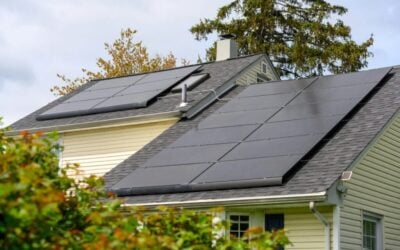
The Board is proposing to create separate energy storage programmes creating incentives for front-of-meter (FTM) and behind-the-meter (BTM) energy storage projects connected to New Jersey’s electric distribution companies (EDC).
Try Premium for just $1
- Full premium access for the first month at only $1
- Converts to an annual rate after 30 days unless cancelled
- Cancel anytime during the trial period
Premium Benefits
- Expert industry analysis and interviews
- Digital access to PV Tech Power journal
- Exclusive event discounts
Or get the full Premium subscription right away
Or continue reading this article for free
The incentives will only apply to projects going online after the programme is implemented. FTM and BTM are being grouped into two market segments; Grid Supply and Distributed/Customer Level, respectively.
At least 30% of the incentive will be in the form of a fixed annual incentive, paid in US$/kWh of energy storage capacity continent on up-time performance metrics, the Board said.
It will be established through a declining block structure to establish a market-based incentive while also providing the industry clear insights into the incentive value for energy storage resources. There will be different pricing structures for each market segment.
The remainder of the incentive programme will be a pay-for-performance mechanism.
For Grid Supply projects, payment will be based on the amount of carbon emissions abated through operation of the energy storage device. This will be calculated using the marginal carbon intensity of the wholesale electric grid (set by grid operator PJM) at the time the energy is discharged, minus the carbon intensity of the energy drawn during the charging interval.
In essence, this means the more renewable load shifting that the energy storage unit does, the more it will be paid. While energy storage units today do as much as 6GWh of load shifting a day in the California market as of February, little of this has been shifting renewables.
For the Distributed/Customer Sited segment, payment will be based on the successful injection of power into the distribution system when called upon by the EDC during certain performance
hours. A portion of the Distributed storage incentive will also be reserved for projects located in or directly serving overburdened communities.
Eligibility for the incentive programmes will be technology-neutral and based only on meeting functional
requirements in a cost-effective manner, the Board added.
The Board is also proposing that private investors be allowed to own and operate the energy storage devices, allowing them to stack revenues from multiple sources.
These would include the wholesale electricity market for Grid Supply projects and, for the Distributed segment, utilising energy storage to actively manage their energy usage to reduce electricity costs or to participate in a Distributed Energy Resource (DER) aggregation service.
The programme is designed to provide ratepayers in the state with a variety of benefits, the Board said. These include carbon savings, hosting capacity improvements and improving system resilience.