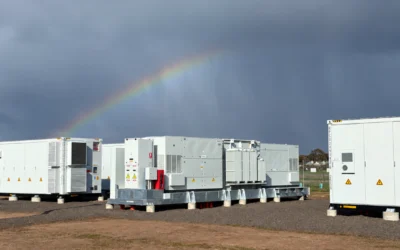
Neoen has initiated the permitting process for a 400MW/1,600MWh BESS located in Ontario, Canada, that was awarded a 20-year capacity contract by the Independent Electricity System Operator (IESO) in May of last year.
Tara BESS, formerly Grey Owl Storage, was among 10 BESS projects selected as part of the IESO’s Long-Term 1 Request for Proposals (LT1 RFP) and the second largest in terms of battery storage capacity. Rated at 411MW, Potentia Renewables and its First Nations partner Algonquins of Pikwàkanagàn, took the top spot with the Skyview 2 BESS proposal located in the Township of Edwardsburgh.
The Canadian development arm of French renewables independent power producer (IPP) Neoen is developing the project alongside land development firm Shift Solar. Unlike the other nine BESS projects, which are being developed in partnership with First Nations developers, Tara BESS has no indigenous involvement in its project ownership.
The lands proposed for the project are, however, sited within Saugeen Ojibway Nation Territory, and the Treaty area of the Chippewas of Saugeen First Nation and Chippewas of Nawash Unceded First Nation. The lands are also part of the Historic Homeland of the Metis Nation of Ontario – Region 7 communities, Neoen.
Try Premium for just $1
- Full premium access for the first month at only $1
- Converts to an annual rate after 30 days unless cancelled
- Cancel anytime during the trial period
Premium Benefits
- Expert industry analysis and interviews
- Digital access to PV Tech Power journal
- Exclusive event discounts
Or get the full Premium subscription right away
Or continue reading this article for free
Public consultation period prior to submission to regulator
In accordance with the Ontario Environmental Assessment Act, Neoen has initiated a Class Environmental Assessment for Transmission Facilities (Class EA for TF) to understand and, if needed, mitigate the effects on the surrounding area of the Tara BESS project.
Neoen is also currently gathering feedback on its preliminary design from all stakeholders, landowners and residents within the proposed vicinity of the project, but also in the broader community. The general public will have the opportunity to learn more about the project and submit feedback at an open-house event scheduled for 21 January 2025, with another anticipated during the Spring.
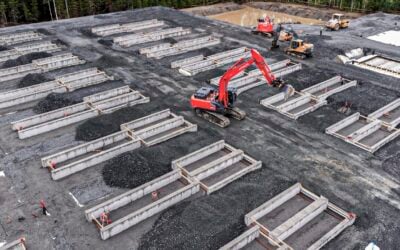
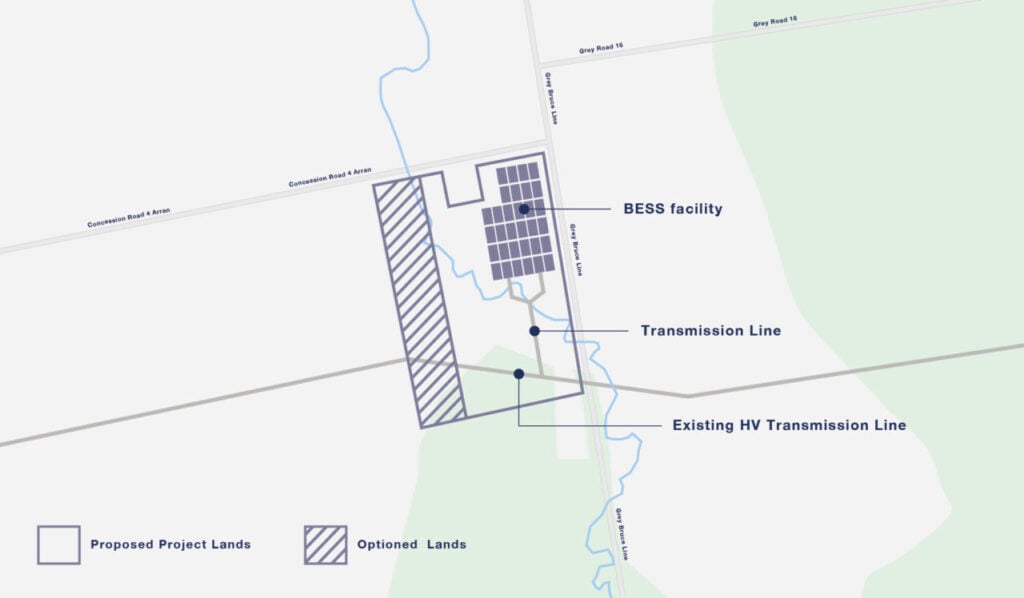
As it stands, the Tara BESS project will comprise 420 lithium-ion battery containers encompassing a 20-acre site on 39 Concession Road in Tara within the Municipality of Arran-Elderslie, Bruce County. The project is expected to connect to the grid via a 230kV transmission line owned by Hydro One that runs across the south of the proposed development.
Neoen hopes to commence construction on the project during the second quarter of next year with the start of commercial operation scheduled for the fourth quarter of 2027.
Maintaining relations with decision-makers and local communities
Neoen is also sending company representatives to local council meetings to provide decision-makers and the general public with project updates. Most recently, Neoen sent two representatives to an Arran-Elderslie council meeting last month.
During the meeting, the Neoen representatives addressed several concerns raised by council members including fire mitigation measures, whether Neoen would continue to own the project in the future, and issues related to possible flooding.
Neoen will be hoping to keep locals onside as it moves through the permitting process and avoid the backlash recently experienced by other developers elsewhere in North America. As recently covered by Energy-Storage.news, some residents of a small town in Wisconsin had to be forcibly removed from a recent question-and-answer session held by NextEra Energy Resources (NEER), for “shouting out and interrupting.”
IESO’s second long-term procurement
After months of feedback and discussions with stakeholders, the IESO is set to release the final documents for its Long-Term 2 Request for Proposals (LT2 RFP) on 27 February 2025.
This time around the IESO is splitting its procurement into two different streams, with one focusing on energy (such as solar and wind) and the other focusing on capacity from dispatchable resources such as lithium-ion storage and hydropower facilities.
The volume of energy and capacity set to be procured will surpass that of the LT1 RFP, with the IESO stating it hopes to secure up to 14TWh of new energy and 1.6GW of new dispatchable capacity.
In another move different to the first procurement, the IESO is proposing to spread this capacity across four different “windows”, corresponding with the contracted commercial operations date of the projects ranging from 2030-2033.
Although the timeline is subject to change, developers wanting to submit projects into the capacity stream will have up to 26 June 2025 to submit any questions or comments with the systems operator, with 25 September 2025 being the current deadline for final procurement submissions. The IESO has set itself a target of informing the developers of selected projects by 26 March next year.
Boralex secures financing for Ontario BESS
In related news also covered today by Energy-Storage.news, Boralex has closed on a US$172 million financing package for its 80MW/320MWh Tilbury Battery Storage project located in the Municipality of Lakeshore, Ontario.
The Quebec-based IPP, along with its development partner Walpole Island First Nation, hope to bring the project, awarded a contract in the Expedited Long-Term RFP (E-LT1 RFP) held prior to LT1, online during the final quarter of this year.