The spinout and change in ownership of Mitsubishi Power Americas’ energy storage activities into standalone unit Prevalon will make it as “nimble and fast-moving as possible,” its CEO said, while not “chasing market share for the sake of market share”.
Prevalon CEO Thomas Cornell spoke yesterday to Energy-Storage.news, following the spinout earlier this year and a change in ownership structure which means Prevalon is now jointly owned by Mitsubishi Power Americas and ‘EES’, an entity representing Prevalon senior management and ‘some outside investment’.
Energy storage business needs to ‘stand on its own’ to compete
The ownership restructure was revealed in Prevalon’s announcement of a supply deal with battery OEM Rept last week, which described ‘Prevalon as a Mitsubishi Power Americas and EES joint venture’, having called it a ‘wholly-owned subsidiary of Mitsubishi Power Americas’ when the spinout was announced.
The separation of the energy storage activities into a standalone company outside of Mitsubishi Power Americas was about helping it to keep up with the market, as Cornell explained.
Try Premium for just $1
- Full premium access for the first month at only $1
- Converts to an annual rate after 30 days unless cancelled
- Cancel anytime during the trial period
Premium Benefits
- Expert industry analysis and interviews
- Digital access to PV Tech Power journal
- Exclusive event discounts
Or get the full Premium subscription right away
Or continue reading this article for free
“In 2018, we chose three energy transition businesses to focus on – battery storage, solar development and hydrogen, and the plan was to launch, grow them and explore avenues to make them successful, which could be keeping it within Mitsubishi Power, spinning it out or even divesting it,” he said.
“We decided to rebrand the energy storage activities into Prevalon and stand it up on its own, based on its high growth rate, how quickly it needs to move and who it is competing with. The thought was to make it as nimble and fast-moving as possible to help the business.
“We’ve set up a new board with new governance and streamlined a lot of things. It will operate with a low overhead structure but still the backing of Mitsubishi Power.”
Cornell was keen to emphasise that Mitsubishi Power Americas is still heavily involved in the business and that private equity is not involved in the new ownership restructure, a type of investor with some downsides.
Cornell: “We’re not going to be chasing market share for the sake of market share. Once private equity steps in, they have high demands to grow the business and may start seeking to win projects at thin or negative margins. We want to chase projects that are viable, with customers that will value the lifecycle of the project and where we can really add value.”
“The way we’ve capitalised the business means we’re in great shape. We want to grow at a controlled rate with a five year horizon to take Prevalon to be a US$1 billion business.”
Prevalon’s strategy going forward
With a new ownership structure and increased independence from Mitsubishi Power Americas, Cornell discussed Prevalon’s technology and market approach going forward.
“We have about a dozen customers with very large portfolios, and will basically be working with them in their different markets, rather than going into new markets blind,” Cornell said.
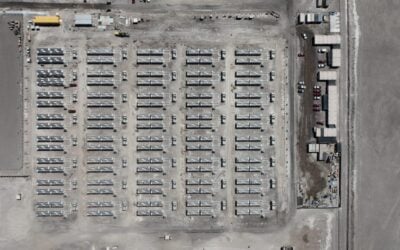
The company is executing on large-scale BESS projects in California, Idaho, Oregon, Mississippi, and the Southeast US (states undisclosed), as well as in Chile. Projects have generally moved from mostly being solar-plus-storage a few years ago to now mainly being standalone, while duration is moving beyond 4-6 hours too.
“We expect there will be more emerging energy storage markets in the Southeastern US with the benefits of direct pay for co-ops,” Cornell said, alluding to the ability of non-tax paying entities like electric co-operative utilities to monetise the Inflation Reduction Act’s tax credits by receiving direct payments from the Federal government.
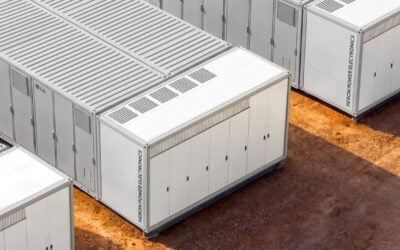
On the technology side, the company has transitioned from its ‘Emerald’ platform to its new ‘High-Density (HD) 511 Integrated Energy Storage Platform’ for which it has partnered with battery OEM Rept. Cornell explained what that meant in separate comments included in our coverage of that announcement yesterday.
Mitsubishi Power is the power solutions arm of Mitsubishi Heavy Industries (MHI), one of the four companies making up the Japanese conglomerate founded in 1870. MHI has annual revenues of around US$30 billion.