The US could see new mines and raw material production “scale up” as demand for battery energy storage systems and grid resilience increases over the next decade, according to Margaret O’Riley, battery, automotive and electrification business recruitment lead for power holding company Duke Energy Corporation.
Speaking to panelists at the Energy Storage Summit USA held by our publisher Solar Media this week, O’Riley said that raw materials would need to be a focus of federal officials over the coming years as, right now, “many of the major minerals that are used to manufacture lithium-ion batteries are not in this country”.
China is currently the global leader among countries most involved in the lithium-ion battery supply chain in 2020, controlling around about 80% of the raw material refining going on globally, according to research from Bloomberg NEF last September, which cited “huge investments” and government policy as the main driver of its mining dominance.
However, the market analysis posits that South Korea, currently ranking as the third most-involved in the supply chain, will be replaced by the US within the next four years.
Try Premium for just $1
- Full premium access for the first month at only $1
- Converts to an annual rate after 30 days unless cancelled
- Cancel anytime during the trial period
Premium Benefits
- Expert industry analysis and interviews
- Digital access to PV Tech Power journal
- Exclusive event discounts
Or get the full Premium subscription right away
Or continue reading this article for free
The next decade, it said, will see both Europe and the US try to build up their own supply chain strength to challenge Asian markets that already have capacity in both places, but warned that the US “has been slower to act on this”.
However, panelists at the summit this week heard that a combination of soaring demand for grid resilience and anti-Chinese import sentiment can only bring growth to the US’ manufacturing, mining and recycling sectors.
“Now that there’s a market for these batteries and everyone sees it’s coming,” O’Riley said, “I think you’re going to see mining production scale up, as well as reusing those batteries taking those minerals out and putting them back into new batteries. A number of companies are looking at that as well.”
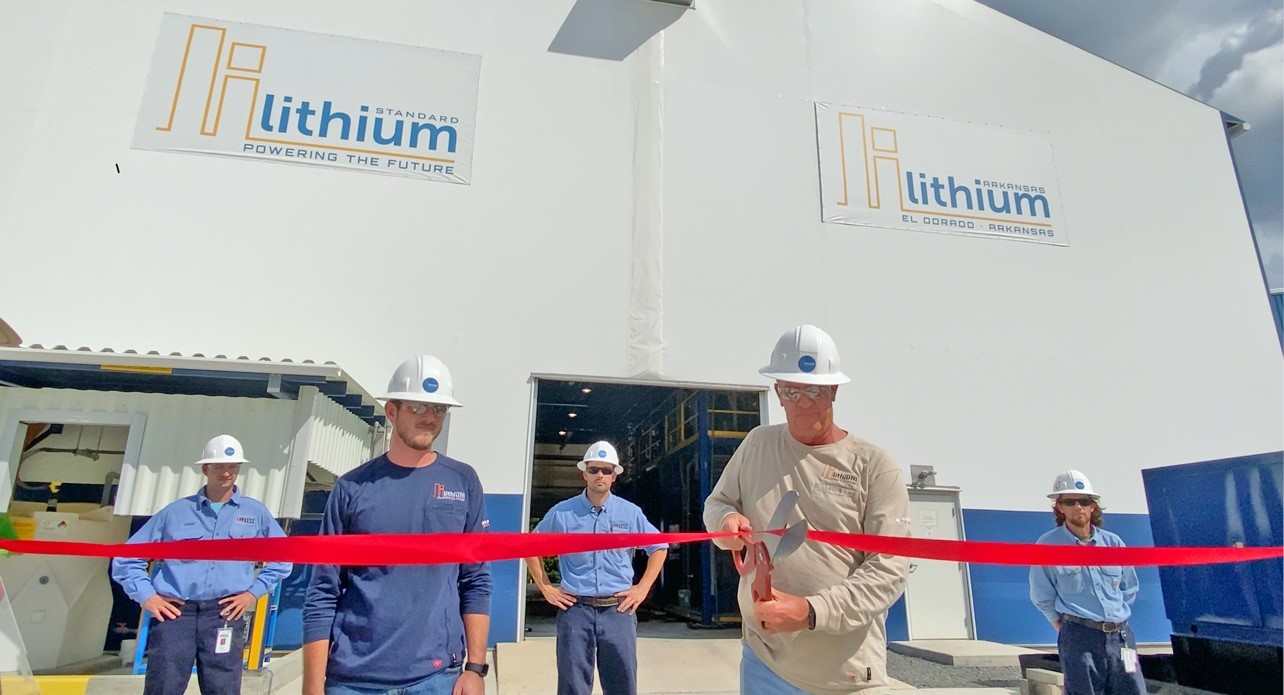
There have been some new moves to boost the US’ access to domestic raw materials in recent years. Piedmont Lithium Limited launched plans to build a lithium mine in North Carolina, the first of its kind in the US, in April 2019. A year later, the group secured a supply deal with solar, battery storage and electric vehicle specialist Tesla last September. In the same month, operations commenced at a direct extraction lithium plant in Arkansas, US, run by chemicals company Standard Lithium
At federal level, the ongoing bipartisan effort to introduce investment tax credit (ITC) incentives to accelerate the deployment of energy storage in the US could transform the industry in the same way ITCs supported the solar sector.
However, O’Riley said that raw material mining and the the supply chain as a whole “also needs to be. here to make those batteries,” adding that she believes there will be “a lot of efforts even at the federal level to help provide funding to promote their supply chain.”
The Biden administration has already kept import tariffs on solar panels introduced during Donald Trump’s presidential term in-place in a bid to promote US manufacturers, while a US$128 million funding package for research into solar panel technology was announced last week. The Department of Energy also earmarked up to US$20 million for research and development (R&D) to advance the manufacturability of mid-sized flow battery systems earlier this month.
However, when it comes to the states that are driving new demand for energy storage, Vijay Betanabhatla, associate director of research group Guidehouse Insights, said the right power price policies, need for resilience across state grids and and technology advancements in the battery sector will be key to driving growth in the US’ manufacturing capabilities.
“Prices are dropping,” he said, “not just for storage but also renewables which are enablers for the storage adoption.”
Betanabhatla said that the bipartisan effort to introduce an ITC for standalone storage, plus deployment targets in individual states are “important for the future growth of storage” but added that the recent winter storm in Texas and California wildfires have also made grid resilience a “top priority for utilities as well as the customers and that’s going to drive a lot of growth.”
“People are turning to self-generation and microgrid solutions. Storage is an important part of those solutions.”