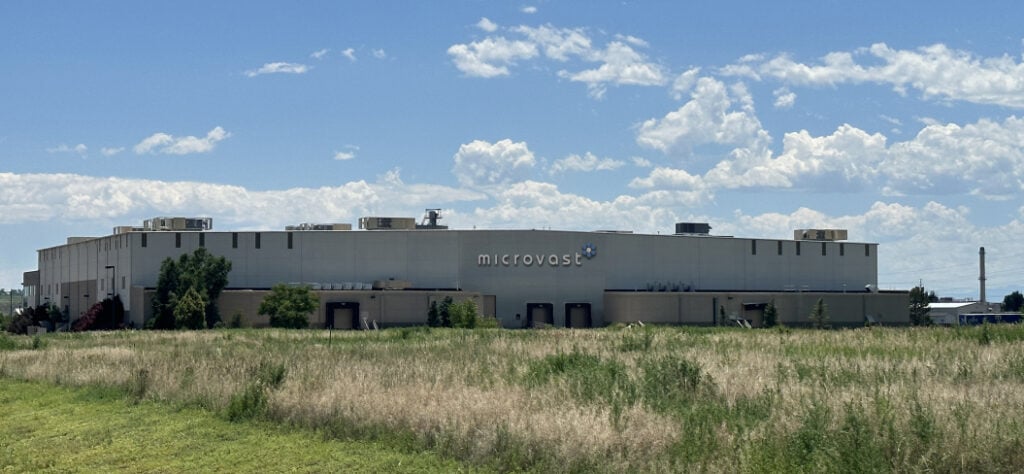
Lithium-ion battery and energy storage system (ESS) manufacturer Microvast has announced plans to set up an ESS manufacturing plant in Colorado, US, which will be operational this year.
The Nasdaq-listed company announced the expansion of its Energy division to Colorado through the new plant in the municipality of Windsor, pictured above, yesterday (11 July). Microvast already has a Energy Tech and Testing Center in the state.
“Northern Colorado has been a great home to Microvast, and we are excited to expand our operations by opening a manufacturing facility in Windsor,” said Zach Ward, president of the Microvast Energy Division.
“The Windsor facility is expected to be operational in 2023 and is poised to play a significant role in delivering superior energy storage systems (ESS) to the fast-growing, utility-scale energy storage market, while boosting the local economy and creating more jobs here in Colorado.”
Try Premium for just $1
- Full premium access for the first month at only $1
- Converts to an annual rate after 30 days unless cancelled
- Cancel anytime during the trial period
Premium Benefits
- Expert industry analysis and interviews
- Digital access to PV Tech Power journal
- Exclusive event discounts
Or get the full Premium subscription right away
Or continue reading this article for free
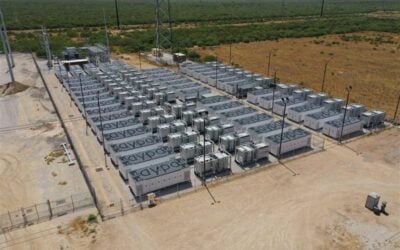
The company did not reveal the annual capacity of the manufacturing plant but said it would provide nearly 100,000 square feet of production space. It will produce its ME-4300 ESS, 20-foot battery container for which it claims an industry-leading 4.3MWh energy capacity, powered by its 53.5-Ah battery cells while will be produced in a Tennessee gigafactory, starting in Q4 this year.
Microvast said the plant will help it optimise its supply chain, reduce lead times for delivering the ESS solutions to US customers. The company is headquartered in Texas, with manufacturing plants in Tennessee, Germany and China.
Alleged links to the Chinese government have been criticised by Republican politicians in light of its applications for a Department of Energy (DOE) grant for a new plant in Kentucky, which was set to be approved only for the DOE to cancel it in May. Microvast has denied the links in a statement and fact sheet.
Colorado State Representative Mike Lynch said: “I am thrilled about the exciting expansion of Microvast in Windsor, Colorado. Microvast’s investment is significant for our state, as it will create economic growth, new jobs, and important technological advancements. Colorado is a hub for innovation, especially in clean energy. Microvast’s expansion is part of this trend, and it will have a positive impact on our local economy and inspire other companies to invest in our great state.”
The ESS factory will also help Microvast’s customers benefit from a 10% ‘domestic content’ adder to the investment tax credit (ITC), which the Inflation Reduction Act extended to standalone energy storage having previously only applied to generation or generation-plus-storage.
The domestic content adder requires a minimum of 40% of an ESS project’s products and components (calculated on cost) to be made in the US, rising to 55% in 2027, the IRS revealed in May. Since battery cells typically account for 40-50% of a project’s cost, using Microvast’s Tennessee cells alone would most likely make a system qualify, but its full ESS product with in-house cells makes it a certainty.
However, some sources believe the cost disclosure of an ESS that appears to be needed to file for the domestic content adder may prove problematic for the industry, although there are varying views on this as reported in our article last week on the topic (Premium access).
Other companies which will be building both lithium-ion cells and containerised ESS solutions using those cells in the US are Turkish firm Pomega and US outfit Kore Power.