
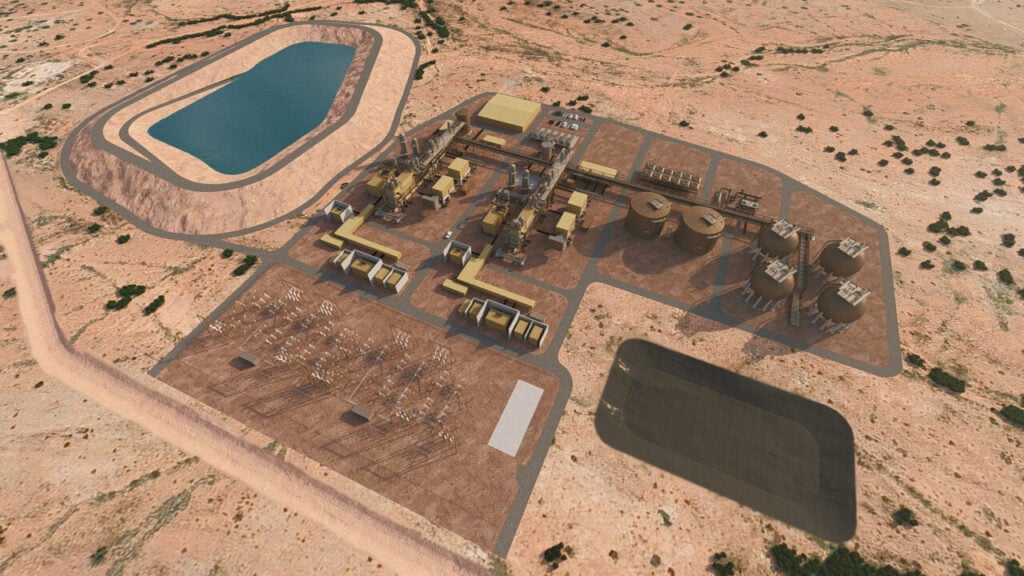
European energy independence is achievable if long-duration energy storage is factored into the mix, writes Oonagh O’Grady of Hydrostor.
Europe is at a crossroads. For decades, the region has been laser-focused on developing energy policies that meet multiple priorities – liberating itself from dependence on Russian gas and seizing the economic opportunities provided by its budding renewables industry, while simultaneously furthering its lofty decarbonisation goals.
However, despite this history of ambitious policymaking, Europe remains structurally exposed to volatile global fuel markets, currently importing nearly two-thirds of its energy according to official European Union (EU) statistics and leaning heavily on traditional fuels. This dependency is an economic liability and a geopolitical risk.
During the 2022 energy crisis, the supply of Russian gas to Europe was cut by over 80%, causing electricity and gas prices to surge 15-fold, compared to early 2021, according to the IMF.
Try Premium for just $1
- Full premium access for the first month at only $1
- Converts to an annual rate after 30 days unless cancelled
- Cancel anytime during the trial period
Premium Benefits
- Expert industry analysis and interviews
- Digital access to PV Tech Power journal
- Exclusive event discounts
Or get the full Premium subscription right away
Or continue reading this article for free
This shock highlighted the urgent need to diversify energy sources and work towards energy independence by incorporating more renewables into the electricity generation mix.
While the EU’s ambition to source over 40% of its energy from renewables by 2030 is achievable, integrating intermittent wind and solar at scale is a formidable challenge, as recently seen by mass outages in Spain and Portugal. If the region wants to make this goal a reality, energy storage is non-negotiable – particularly long-duration energy storage (LDES).
But without informed system planning and market signals that consider longer-duration storage, Europe risks overbuilding short-duration batteries that cannot resolve the full scope of system imbalances. The result? Overbuild of other resources to meet critical flexibility needs, reliance on energy imported from other countries with opposing priorities, and higher electricity prices.
The role of energy storage in filling the flexibility gap
The European Parliament flagged looming flexibility shortfalls on the grid, with projections showing that storage requirements will triple by 2050. Short-duration batteries alone cannot close this gap. Long-duration energy storage (LDES) complements, rather than replaces, short-duration solutions.
Without parallel deployment, Europe will fall back on thermal gas assets to bridge flexibility gaps as it has before, deepening its exposure to geopolitical risk, commodity price volatility, and risking system reliability. LDES, and particularly intraday LDES, is the critical link, covering the 8–24-hour range between short-duration (4–8 hour) and ultra-long solutions – and it’s ready to deliver today.
Technologies such as pumped hydro energy storage (PHES) and advanced compressed air energy storage (A-CAES) can reduce curtailment and provide firm capacity during extended periods of low solar and wind production, maximising the utilisation of generation capacity already on the grid.
These technologies can also deliver essential grid services, like synchronous inertia and black start capability, that have underpinned system stability for decades. These capabilities enable the retirement of thermal plants without compromising reliability. Recent outages in Spain and Portugal have shown us how critical it is to maintain these capabilities as we continue to update the grid.
Strategic investment in LDES today will secure resource adequacy for tomorrow and prevent stranded thermal assets as Europe accelerates its integration of renewables. EU-wide deployment of these solutions could significantly reduce the associated costs with grid expansion and curtailment, which are expected to be upwards of €100 billion (US$116.41 billion) by 2040, according to a 2024 Joint Research Centre of the European Commission report.
Ambition alone won’t deliver these outcomes. Europe needs a policy framework that converts ambition into action.
Policy recommendations to turn ambition into action
To meet its multiple priorities and unlock significant benefits, Europe must first adopt robust duration-aware system modelling. Advanced models should forecast future system needs, differentiate between short- and long-duration storage, associated costs and benefits, and asset lifetimes to determine an effective mix of technologies. These models must also directly inform procurement strategies.
In the UK, system modelling led Ofgem to increase the minimum duration requirement for eligible projects for the LDES cap and floor programme, which was developed to incentivise the buildout of storage resources with durations from six to eight hours of continuous power at the resources’ rated maximum output. In addition, policymakers have already started discussing the need to increase the minimum duration target, based on evolving system needs.
The need for this programme was driven by models that showed longer-duration storage is an essential component of a least-cost portfolio for meeting flexibility needs and reducing reliance on traditional fuel backup during prolonged low-renewable output periods. The scheme now targets between 2.7GW and 7.7GW of LDES capacity (up to 61GWh) by 2035 on the UK grid.
Second, policymakers should establish substantive investment signals with appropriate procurement timelines to accommodate LDES technologies. Setting duration-specific targets, such as 8+ hours, and developing transparent, multi-round procurement schedules open to diverse technologies will create competition to develop low-cost resources and confidence for developers and investors regarding financial feasibility for developing these projects.
The New South Wales Electricity Infrastructure Roadmap in Australia provides a strong example of this approach. Targeting 2GW of LDES by 2030 and 42GWh by 2034, it retains the definition of long-duration storage as 8+ hours to ensure substantive system benefits and the adoption of cost-effective solutions. It also introduces a transparent, multi-round tender process to attract diverse technologies.
So far, successful projects have included the 800MW (12GWh) Phoenix pumped storage project by ACEN Australia and the 200MW (1.6GWh) Silver City advanced compressed air project by Hydrostor. These competitive tenders, aligned with a 10-year procurement schedule, have already secured more than 40% of the 2030 target, creating strong investment signals and confidence for developers and financiers.
Third, Europe needs long-term revenue-certainty mechanisms. Markets do not currently value LDES appropriately for the system-wide benefits they provide, like grid stability, capacity adequacy, ancillary services, and firming of intermittent renewables. Out-of-market mechanisms, such as cap-and-floor or contracts for difference (CfD), proven in Australia and California, can ensure revenue adequacy for these projects.
Crucially, these mechanisms should reflect avoided system costs, including transmission, not merely energy price spreads, recognising the full value these solutions deliver in terms of grid stability and reliability.
The UK’s LDES cap-and-floor programme is an illustrative example. Introduced in 2025, it ensures projects receive a guaranteed minimum revenue (floor) to cover debt and operating costs, while revenues above a set cap are shared with consumers. The scheme offers 25-year contracts to unlock investment in significant capacities of large, long-duration storage assets.
Similarly, in Australia, New South Wales uses long-term energy service agreements (LTESAs) to provide an option-based revenue floor during periods of low wholesale prices, requiring profit-sharing when revenues exceed a threshold. LTESAs typically run for 20-40 years for storage projects and have successfully attracted diverse technologies.
The EU must look to these programmes for guidance.
Act now to achieve energy independence and save billions
Europe’s energy independence and system stability depend on embedding LDES into its market architecture now. The upcoming flexibility needs assessment process offers the perfect framework to implement recommendations for deploying these solutions across EU Member States. Strategic planning and investment today will prevent stranded assets, accelerate the integration of renewables, and save billions.
Policymakers must seize this moment and embed LDES into their energy strategies. The future of Europe’s system reliability and energy independence depends on it.
About the Author
Oonagh O’Grady is Vice President of International Origination at Hydrostor, a global developer and operator of advanced compressed air energy storage (A-CAES) technology, which provides long-duration energy storage capacity of more than 8 hours. With 20 years of experience in energy and infrastructure, she brings expertise in low-carbon technologies, policy, and strategic development.