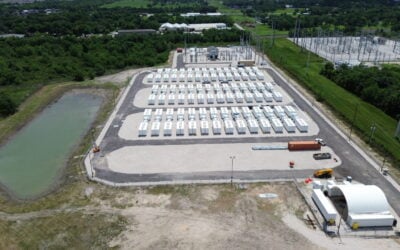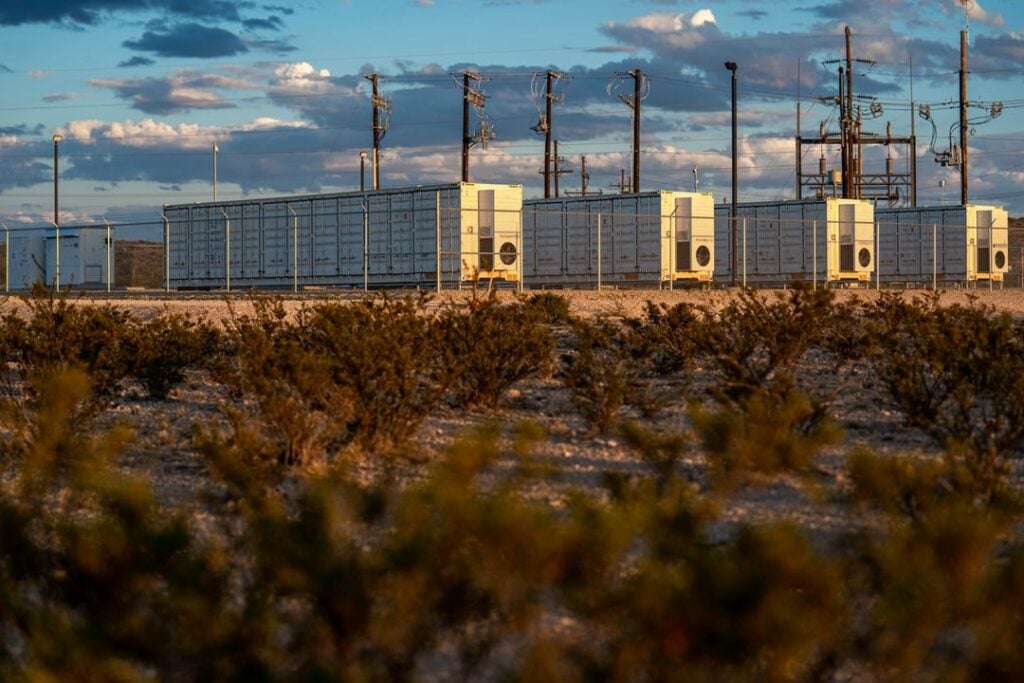
Battery energy storage system (BESS) developer Jupiter Power has closed a US$174.6 million portfolio debt financing for its six projects totalling 650MWh of storage in the ERCOT market in Texas.
The financing was provided through a Term Loan and LC Facility from KeyBank National Association, a bank based in Cleveland, Ohio, and goes towards Jupiter’s six standalone, front-of-meter BESS projects in the Lone Star State.
Four of the six projects are already operational, the most recent being the Flower Valley II which entered commercial operations earlier this month. That was the first of three 200MWh projects in the portfolio to go online, with the Crossett (200MW) and Swoose II (100MW) sites currently in the commissioning phase.
The previous three, which went online in June last year, were all under 9.9MW with 15-20MWh of storage. ERCOT has a more streamlined regulatory process for projects under 10MW.
Try Premium for just $1
- Full premium access for the first month at only $1
- Converts to an annual rate after 30 days unless cancelled
- Cancel anytime during the trial period
Premium Benefits
- Expert industry analysis and interviews
- Digital access to PV Tech Power journal
- Exclusive event discounts
Or get the full Premium subscription right away
Or continue reading this article for free
Jupiter’s BESS projects are supported by the company’s strategies to maximise revenues. It said its market operations team uses “unparalleled forecasting expertise, analytics, and intellectual properties to optimise day ahead and real time revenues.”
“When we started developing these projects in 2018, nothing like them had been built. The financing of these complex assets provides third party validation of Jupiter’s strategy. We greatly appreciate KeyBank’s support and trust as we execute on our growing pipeline of energy storage assets,” said Bruce Thompson, CFO of Jupiter Power.
BESS projects in the ERCOT market have recently begun to increase in size and duration as the sector increasingly makes money from wholesale energy trading and arbitrage, driven by increased volatility form the huge onset of renewable energy, particularly wind.
The market has historically been driven by the two big frequency response services, fast frequency response (FFR) and responsive reserve service (RRS), but storage gets around half of revenues from its energy according to UK-based energy storage investor Gore Street Capital. It recently entered the ERCOT market with the acquisition of seven 10MW-or-less projects but has identified targets of a similar size to Jupiter’s recent projects.
Jupiter’s strategy in Texas has been to start developing projects without contracts in place in order to deliver capacity to the grid or ancillary services. This is especially feasible in the ERCOT market because it is a totally deregulated market with no standby capacity procured centrally by the grid operator (like Resource Adequacy in the California ISO market or Capacity Market auctions in the UK). BESS projects’ ‘capacity’ revenues come from selling energy directly to utilities as and when needed.
The company is backed by EnCap Investments L.P., Yorktown Partners, and Mercuria Energy. Norton Rose Fulbright & Husch Blackwell advised Jupiter on the debt financing.