Idemitsu Kosan, Japan’s biggest petroleum producer, has launched an energy storage business and announced its first lithium battery project.
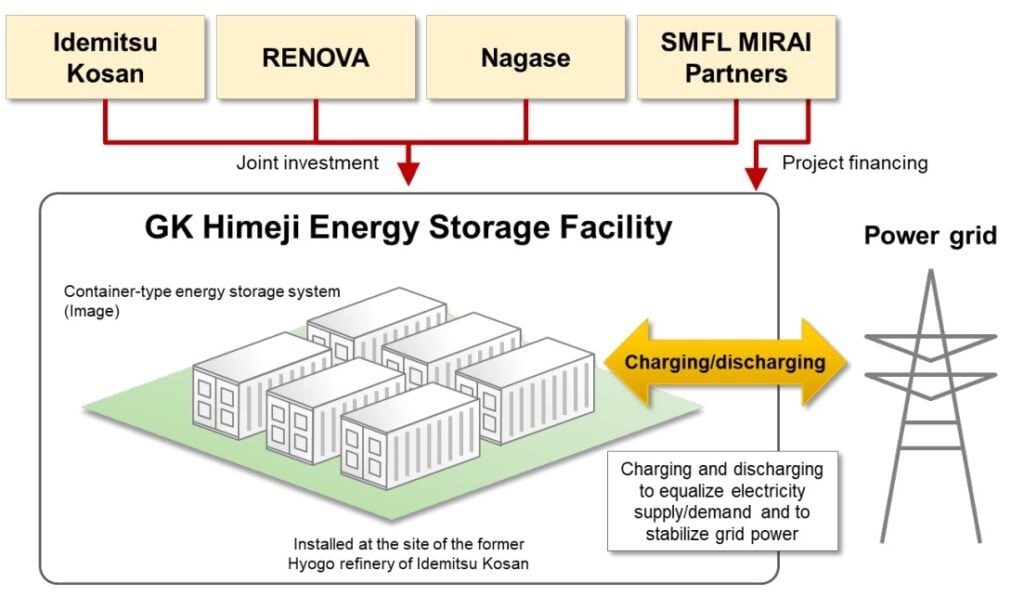
The company is in the joint venture (JV) Himeji Energy Storage Facility together with SMFL Mirau Partners, a subsidiary of Sumitomo Mitsui Finance and Leasing Corp, chemicals trading firm NAGASE and renewable energy developer RENOVA Inc.
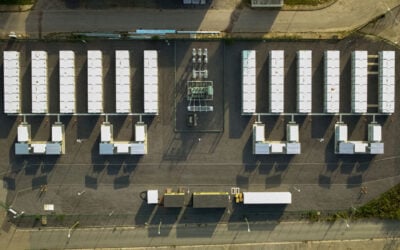
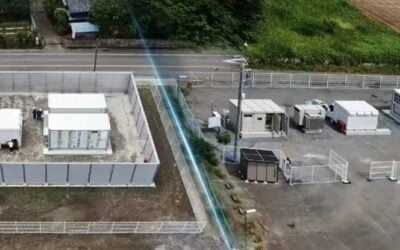
The partners have jointly invested in the business and their first project will be a 15MW/48MWh lithium-ion battery energy storage system (BESS) asset in the coastal region of Himeji, in Hyogo Prefecture, just southwest of the major cities of Osaka and Kobe.
RENOVA said the launch came after a financing deal was agreed with SMFL Mirai in June. Construction on the BESS facility is set to begin during this month, with the start of commercial operations expected in October 2025.
Try Premium for just $1
- Full premium access for the first month at only $1
- Converts to an annual rate after 30 days unless cancelled
- Cancel anytime during the trial period
Premium Benefits
- Expert industry analysis and interviews
- Digital access to PV Tech Power journal
- Exclusive event discounts
Or get the full Premium subscription right away
Or continue reading this article for free
Idemitsu Kosan will play a leading role in the JV. Holding the biggest stake at 51%, the fossil fuel major will also operate the energy storage facility and be responsible for trading its stored energy in the power market, as well as handling maintenance duties.
The project will also be built on Idemitsu Kosan-owned land, on the site of one of its former refineries.
The company is targeting carbon neutrality by 2050, in line with Japan’s net zero emissions policy goal. Alongside corporate pledges on “low carbon petroleum” and transforming its refineries and centres into so-called “Carbon Neutral Transformation (CNX) Centers”, and other adaptations of its core business, the company is also aiming to hold a bigger stake in batteries for electric vehicles (EVs) and stationary energy storage as well as in renewable energy.
Idemitsu will develop decarbonised power sources and attempt to lower emissions from existing thermal power sources, but will also engage in activities to control and integrate variable renewable energy (VRE) using battery storage, according to a message on the company’s website from managing executive officer Soichi Kobayashi.
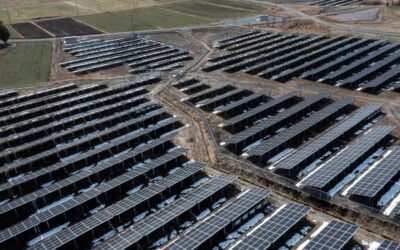
The company has already developed solar PV with energy storage in the US, most recently with its subsidiary Idemitsu Renewables signing a power purchase agreement (PPA) with community energy supplier Sonoma Clean Power for an 84MWp solar, 38MW/152MWh BESS plant in California in early June.
Idemitsu is also an investor in the vanadium flow battery space, having backed Australian company Vecco Group, which is developing vanadium redox flow battery (VRFB) electrolyte production facilities and recently ordered a VRFB from another Japanese company, Sumitomo Electric.
The Hyogo project marks the latest step into the domestic battery storage market for a major player in the Japanese corporate world. Many of Japan’s major players in its energy sector have invested in grid-scale battery storage abroad, but have mostly waited until recent changes to the regulatory and policy environment that opened up the market within the country.
The country’s first energy trades from BESS assets were made in June by developer Pacifico Energy, marking the opening up of the JPEX spot power market following regulatory changes.
As with Pacifico Energy’s projects, Himeji Energy Storage Facility will receive government subsidies towards the capital cost of equipment. This is through an initiative of the Ministry of Economy, Trade and Industry (METI) to promote the use of distributed energy resources with batteries or electrolysis.
A few days ago, NGK Insulators said it has received an order for a 69MWh, 6-hour duration battery storage system based on its sodium-sulfur (NAS) battery technology for an energy trading project with utility Sala Energy in Japan’s Shizuoka Prefecture.
Energy-Storage.news Premium subscribers can read our recent feature interview with Pacifico Energy head of energy storage Mahdi Behrangrad here.