A new national plan to regulate planning procedures and permitting for energy storage facilities looks likely to be adopted in Israel.
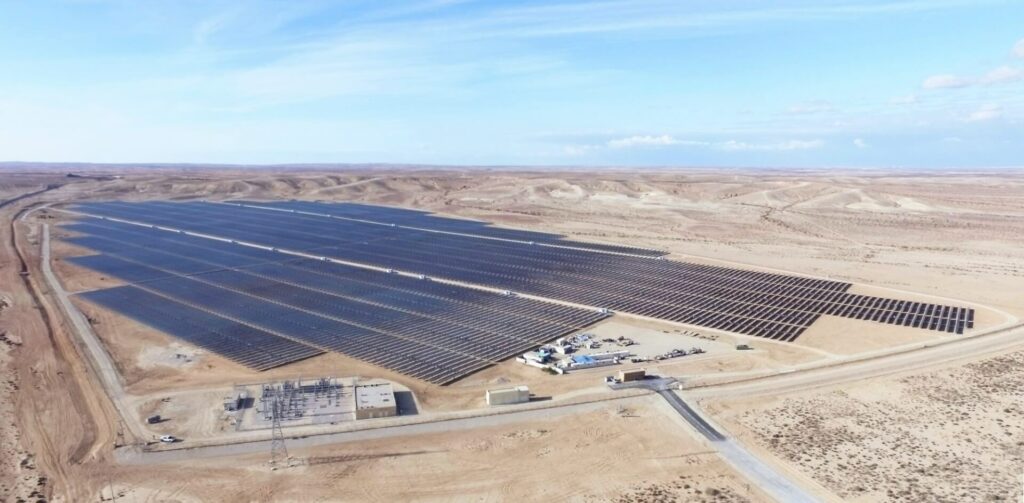
Created through a sub-committee of the National Planning and Construction Council together with the Ministry of Energy and Infrastructure, the plan would enable the development of energy storage at solar PV plants, as well as for residential use.
It would also regulate the deployment of energy storage at vehicle fueling stations to help buffer the grid from spikes in demand when multiple electric vehicles (EVs) charge at once, the Ministry said in a statement last week (9 August).
While details of the master plan, TMA, appear to have not been disclosed, the strategy has been developed to support Israel in deploying sufficiency energy storage to integrate rising shares of renewable energy – mostly from solar – onto its grid.
Try Premium for just $1
- Full premium access for the first month at only $1
- Converts to an annual rate after 30 days unless cancelled
- Cancel anytime during the trial period
Premium Benefits
- Expert industry analysis and interviews
- Digital access to PV Tech Power journal
- Exclusive event discounts
Or get the full Premium subscription right away
Or continue reading this article for free
A draft of the TMA was submitted for government approval earlier this year, around the same time the Ministry of Energy and Infrastructure said it would also be promoting a programme to develop and construct four separate 200MW/800MWh battery energy storage system (BESS) assets in Israel’s northern Gilboa mountain region.
As mentioned in our coverage yesterday of Sungrow’s 127MWh BESS supply deal in Israel to EDF Renewables, Israel is targeting getting to 30% renewable energy on its grid by 2030. This is made more challenging than in some other countries due to its status as an ‘energy island’, without interconnection to neighbours that would allow cross-border renewable energy imports.
The share of renewables currently stands at about 10%, and the future buildout is expected to largely comprise new solar PV, which will account for about all but 4% of that 30% share.
The government has identified energy storage as an effective means to enable that trajectory. Studies from about three years ago from the national Electricity Authority (PUA), modelled a need for about 8GWh of storage, although more recent figures from the Israeli Green Energy Association put that at closer to a likely 10GWh of required storage.
While the government has played its part to date in stimulating demand for energy storage, most notably through a couple of rounds of tenders for solar PV capacity paired with 4-hour duration battery storage, adoption of the TMA national plan would enable a wider rollout.
TMA includes principles for planning storage facilities, the locations at which construction should be permitted, and instructions on how to assess environmental impact.
Dorit Hochner, Ministry of Energy and Infrastructure planning director, said the plan would set out the preferred locations for new energy storage, as well as recommendations on layout and construction characteristics, and would also make recommendations to remove barriers to deployment.
The responsible sub-committee recommended last week that the National Council for Planning approve the national plan.