Hydrostor in search for sites to develop CAES projects in Australia

By Conor Ryan
August 10, 2017
LinkedIn
Twitter
Reddit
Facebook
Email
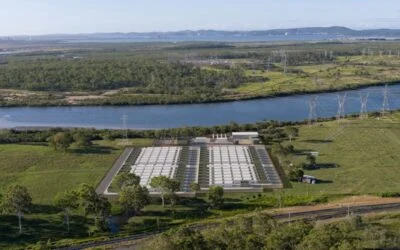
The Hydrostor Terra(TM) solution supports power system security that can help oversee system reliability as variable renewable electricity (VRE) generators, like wind and solar, increases and thermal generators are retired. Image: Hydrostor

Compressed Air Energy Storage (CAES) company Hydrostor announced Tuesday that it has sought the services of Australian global infrastructure firm AECOM to support its entry into the market.

AECOM’s Australia team will assist Hydrostor’s early-stage development efforts across the National Electricity Market (NEM). This work includes market assessments and site identification for the deployment of the Hydrostor Terra solutions in Queensland, New South Wales, Victoria and South Australia.

The Hydrostor Terra(TM) solution supports power system security that can help oversee system reliability as variable renewable electricity (VRE) generators, like wind and solar, increases and thermal generators are retired.

Terra(TM) can be deployed at any site within proximity to a body of water, including inner-city and urban areas, or by using a surface pond as part of a closed loop system.

This article requires Premium SubscriptionBasic (FREE) Subscription

Try Premium for just $1

  • Full premium access for the first month at only $1
  • Converts to an annual rate after 30 days unless cancelled
  • Cancel anytime during the trial period

Premium Benefits

  • Expert industry analysis and interviews
  • Digital access to PV Tech Power journal
  • Exclusive event discounts

Or get the full Premium subscription right away

Or continue reading this article for free

Curtis VanWalleghem, CEO of Hydrostor, said: “Hydrostor’s entry into the Australian market changes the conversation on cost effective, emission-free alternatives to fossil-fuel generation and limited storage technologies.

“Hydrostor Terra(TM) beats natural gas to deliver essential services and dispatchable capacity, while offering longer duration and longer life storage of 30+ years versus batteries, at half the cost. Terra’s sizing and siting flexibility also offers significant advantages over pumped hydro.”
17 March 2026
Sydney, Australia
As we move into 2026, Australia is seeing real movement in emerging as a global ‘green’ superpower, with energy storage at the heart of this. This Summit will explore in-depth the ‘exponential growth of a unique market’, providing a meeting place for investors and developers’ appetite to do business. The second edition will shine a greater spotlight on behind-the-meter developments, with the distribution network being responsible for a large capacity of total energy storage in Australia. Understanding connection issues, the urgency of transitioning to net zero, optimal financial structures, and the industry developments in 2026 and beyond.

Read Next

January 23, 2026
Palmer Renewable Energy has submitted a referral under the EPBC Act for a 200MW solar-plus-storage project near Collie, Western Australia.
January 23, 2026
Australian mining giant Fortescue has claimed to have secured large-scale battery storage at pricing levels not previously seen in Australia, according to CEO Dino Otranto.
January 22, 2026
Engie has acquired a 30% equity stake in the Hazelwood battery energy storage system (BESS) in Victoria, Australia.
January 21, 2026
Sahand Karimi and Henry Swisher of OptiGrid examine the two primary metrics used to evaluate the performance of battery storage trading: normalised revenue and percentage of perfect capture rate.
January 20, 2026
Global infrastructure investor I Squared Capital has launched ANZA Power, a next-generation independent power producer (IPP) in Australia and New Zealand.