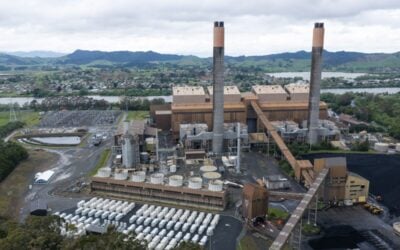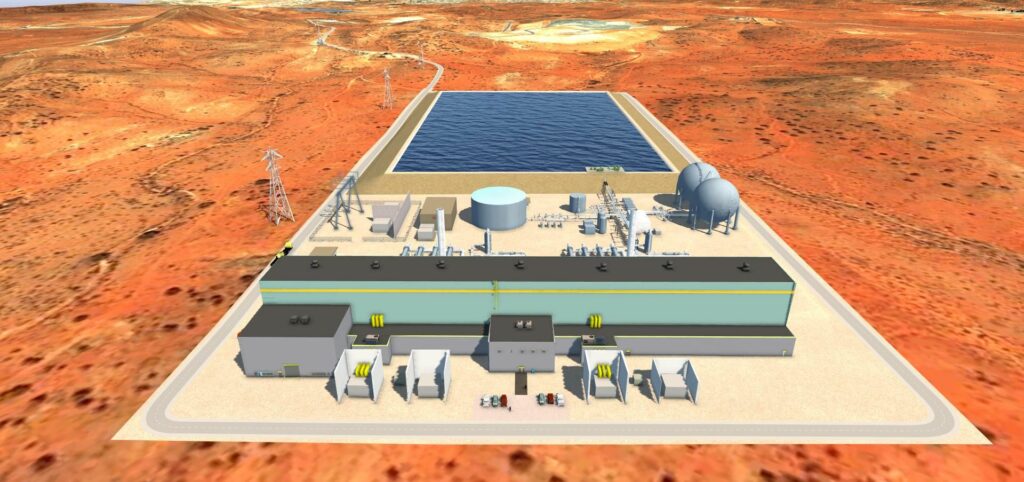
Advanced compressed air energy storage (A-CAES) technology firm Hydrostor has signed a binding agreement with mining firm Perilya to progress the construction of a project in New South Wales, Australia.
The pair announced the binding agreement to ‘leverage the existing mining assets at Perilya’s Potosi Mine in Broken Hill to support the construction of the Silver City Energy Storage (SCES) Project’ last week (28 September). The mine’s mineral deposits are primarily silver, zinc and lead.
Specifically, the agreement includes access to property transactions and existing mine infrastructure, the provision of construction support services and supports the continued and longer-term operation of the Potosi Mine during and after Silver City project is being built, Hydrostor said.
Silver City is being designed for an energy storage capacity of 200MW/1,600MWh, equating to 8 hours of duration, with 250MWh set aside to provide backup power to the town of Broken Hill having been chosen by regional transmission system operator (TSO) Transgrid to do so last year.
Try Premium for just $1
- Full premium access for the first month at only $1
- Converts to an annual rate after 30 days unless cancelled
- Cancel anytime during the trial period
Premium Benefits
- Expert industry analysis and interviews
- Digital access to PV Tech Power journal
- Exclusive event discounts
Or get the full Premium subscription right away
Or continue reading this article for free
The mine has several features which make it a good site for the Canada-based firm’s A-CAES technology, including very hard and impermeable rock, existing underground mine development witha cavern at 600m of depth, and existing mine support infrastructure.
Paul Rasmussen, Hydrostor’s Vice-President of Integration said: “By leveraging the existing mine investment and infrastructure, this partnership enables us to improve project delivery timeframe, since we can build the underground air storage cavern much faster, with reduced setup costs and a better understanding of the geology at site”.
The Silver City project won AU$45 million (US$29 million) in funding from the Australian Renewable Energy Agency (ARENA) this time last year.
The project is expected to reach financial close by late 2023 after which construction can start, although the firm has not communicated an expected completion date. Its total cost is pegged at AU$652 million (US$420 million).
The company is also developing two large-scale projects in California, including a 500MW/4,000MWh one in Kern County which recently suffered a minor setback when Hydrostor revealed it was in the process of assessing alternative locations and delivery dates.
That project’s completion could move from 2028 to 2030, though the Canada-headquartered firm said it remained fully committed to the project, which secured an offtake deal with a utility for part of its capacity in January 2023.