
Steam is essential to many industrial processes, and thermal energy storage is a solution to mitigate its emissions and reduce costs, writes Martin Schichtel, CEO of Kraftblock.
In the chemical sector, energy prices and supply reliability are even more critical than in most other industries. Steam is at the core of nearly every production process, and its cost significantly affects the final product price.
This makes the shift to renewable energy anything but straightforward: customers are unwilling to pay a green premium, leaving the industry caught between rising carbon prices and the seemingly more expensive path to decarbonisation.
Thermal energy storage (TES) is emerging as a promising alternative, offering a stable and scalable approach to electrifying steam production while mitigating exposure to high electricity prices.
Try Premium for just $1
- Full premium access for the first month at only $1
- Converts to an annual rate after 30 days unless cancelled
- Cancel anytime during the trial period
Premium Benefits
- Expert industry analysis and interviews
- Digital access to PV Tech Power journal
- Exclusive event discounts
Or get the full Premium subscription right away
Or continue reading this article for free
Using electricity – but only when prices are low
Biomass is not always available in sufficient quantities and is costly, and in the chemical sector, green or blue hydrogen is not a practical option for process heat. This makes electricity the most realistic alternative to replace a fossil fuel boiler. Electricity can be very cost-effective, particularly when generated from renewable sources. The key to making it commercially viable is to use it only during low-cost periods and avoid peak prices.
Thermal energy storages (TES) offers the flexibility required for this approach. These systems convert low-cost electricity into high-temperature heat, which can be stored for later use. They can also integrate surplus energy from on-site PV or wind installations.
Compared with battery storage, thermal energy storage offers several advantages for heat applications, including high efficiency when delivering thermal output and significantly lower costs than lithium-ion solutions.
Storage durations range from hours to days. Stored heat can be discharged through a waste-heat boiler to generate steam on demand, enabling operators to overcome periods of high electricity prices or low renewable generation. Since charging power is decoupled from steam demand, operators can schedule electricity use during the most favourable price periods.
Flexibility – from temperature to demand power
Steam is the backbone of chemical industry processes, powering drying, heating reactors, distillation columns, and high-temperature crackers. Just as steam is inherently versatile, any new system must offer the same degree of flexibility, integrating seamlessly without disrupting existing operations.
A high-temperature storage solution can store heat at up to 1,300°C and release it across a wide temperature range, from low to very high. By using a waste heat boiler, steam properties can be precisely adapted to the process or network requirements. This approach not only supports extreme process conditions but also ensures exceptional energy density, significantly reducing the number of storage units required.
Positioning the waste heat boiler at the end of the storage system creates a single interface with the existing steam network. It can be operated in parallel with conventional boilers for hybrid fossil-fired and electrified use cases, or in fully electrified setups with the legacy boiler serving as backup. This design strengthens energy supply resilience while enabling a cost-effective transition.
‘Block by Block’: a safe and resilient transition
Modular thermal energy storage systems consist of multiple units that can charge and discharge independently, allowing flexible integration into existing steam networks.
This modularity enables companies to decarbonise their steam demand step by step while taking advantage of periods with low or even negative electricity prices to optimise operating costs.
Companies can begin by decarbonising a portion of their steam network and scale up over time by adding units, increasing the share of clean steam delivered. As the penetration of renewable energy increases, bringing with it more volatile prices and generation, the benefits of thermal energy storage in lowering operating costs become even more pronounced.
Modularity for process-specific heat delivery
Each unit consists of dedicated modules for charging, storage, and discharge. These modules are adaptable in terms of power input, storage capacity, output temperature, and heat transfer medium. Initially, thermal energy storages stores and discharges hot air; if not used directly, the heat can be transferred via a module to steam, thermal oil, or water.
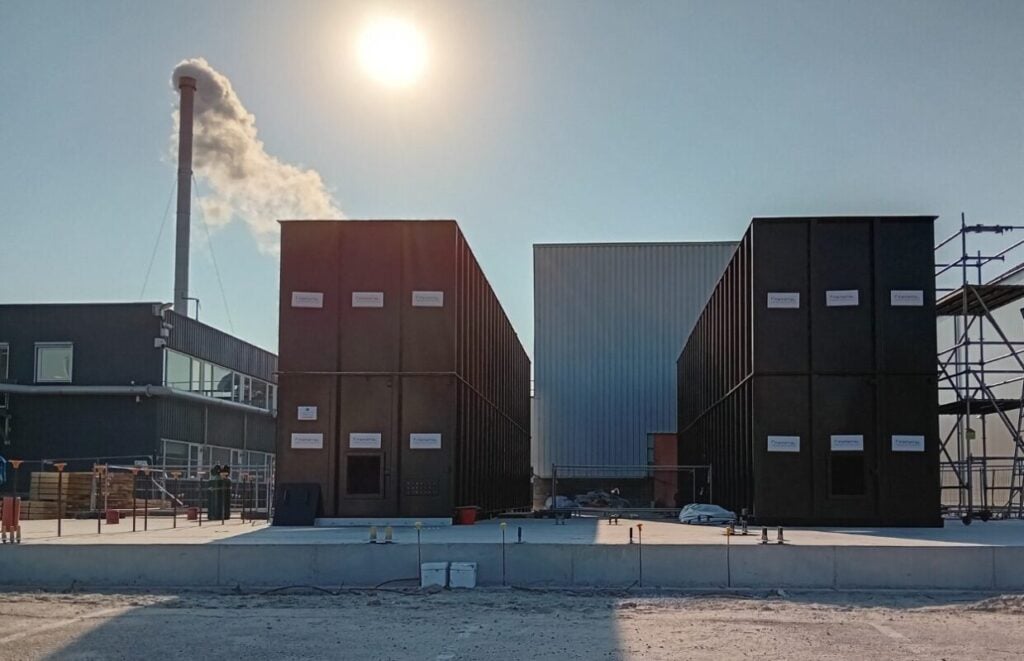
For example, a project in the Netherlands involving Eneco and PepsiCo applies high-temperature thermal energy storage to supply 300°C thermal oil for frying potato chips. This site is expected to become one of the world’s largest commercial high-temperature storage system, with an initial capacity of 70MWh and an expansion to 150MWh. The system can easily be configured for steam generation by exchanging only a single component. The shift to renewable energy will eliminate 51% of Scope 1 emissions in the first phase, and up to 98% in later stages.
Such flexibility enables chemical producers to replace fossil fuels across a wide range of processes. Hot air can support drying and combustion-air preheating, while thermal oil can replace fossil-heated loops used in the production of phthalates, polymers, paints, and other materials with minimal changes to existing piping infrastructure.
Toward sustainable chemical production
The adaptability and cost efficiency of high-temperature thermal energy storage position it as a cornerstone of the chemical industry’s energy transition. By mitigating challenges associated with variable renewable energy supply and grid constraints, thermal energy storages makes green steam and sustainable process heat a tangible reality.
The example above demonstrates a practical pathway toward low-carbon heat. The project is supported by the German Federal Ministry for Economic Affairs and Energy within the Renewable Energy Solutions Programme of the German Energy Solutions Initiative.
About the author
Martin Schichtel is CEO and co-founder of Kraftblock, a developer of thermal battery technology designed to offer long-duration energy storage, established in 2014. He has a background in material science, product development, and IP strategy.