Hithium has become the latest overseas player to seek to onshore production of battery energy storage system (BESS) equipment and components in the US.
The Xiamen, China-headquartered company, focused on the stationary energy storage sector, announced last week (12 July) that it is investing an initial US$100 million into a facility in the Texas city of Mesquite.
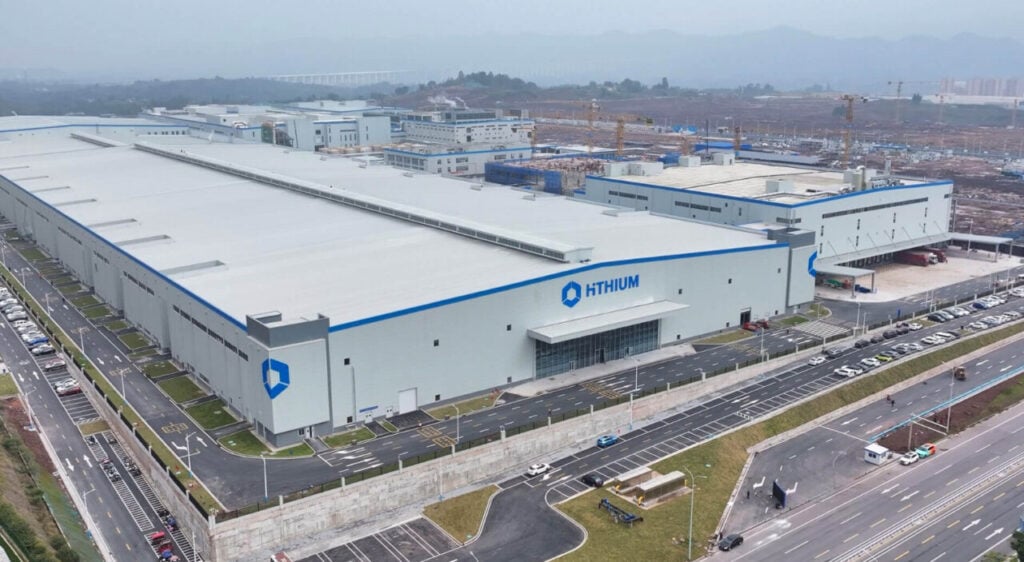
Hithium said the factory, which will produce battery modules and complete systems for the BESS market, will occupy 483,874 square feet and have a 10GWh annual production capacity. It did not reveal the split between module and systems manufacturing capacity in its release.
The development was welcomed by Mesquite mayor Daniel Alemán, Jr. The mayor said that the city was proud to be selected as the first US manufacturing location for “a global company in the clean energy industry,” and that it was “an exciting development for our community.”
Try Premium for just $1
- Full premium access for the first month at only $1
- Converts to an annual rate after 30 days unless cancelled
- Cancel anytime during the trial period
Premium Benefits
- Expert industry analysis and interviews
- Digital access to PV Tech Power journal
- Exclusive event discounts
Or get the full Premium subscription right away
Or continue reading this article for free
Hithium did not give an expected operation date for the factory but did say that the project would create 141 manufacturing jobs ‘in five years’.
Carrot and stick incentives for localising BESS and battery manufacturing to the US
The announcement comes amidst a swathe of moves by the US to incentivise companies to set up manufacturing of clean energy technology, including battery cells and BESS assembly, to the US.
The ‘carrot’ of these are the investment tax credit (ITC) ‘domestic content’ 10% bonus for BESS projects that use a minimum portion of domestically-manufactured content, and a production tax credit (called 45x) that pays US$35 and US$10 per kWh of battery cell and module (respectively) capacity manufactured domestically.
The ‘stick’ meanwhile includes increased tariffs on battery imports from China and the looming threat of company-specific action.
The 45x credit is by far the more substantial of the two ‘carrots’ so most firm announcements and plans have been around cell and module manufacturing, rather than BESS assembly as in the case of Hithium.
Another Chinese company, Gotion, has already started producing BESS in the US, while the largest BESS integrator, Fluence, is planning to onshore some manufacturing too.
PV and BESS manufacturer Canadian Solar, also based in China, told Energy-Storage.news in a recent interview that localising energy storage manufacturing was much more complex than for PV (Premium access).