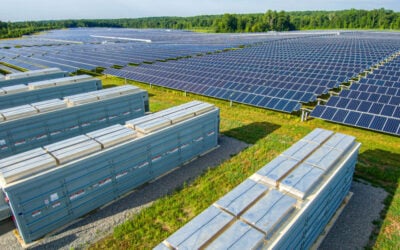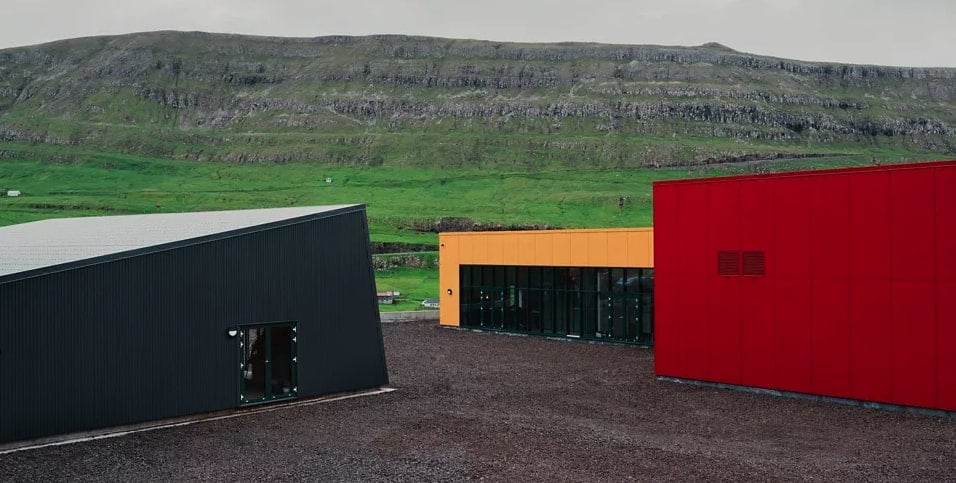
Hitachi Energy has installed a 6.25MW/7.5MWh battery energy storage system (BESS) in the Faroe Islands for utility SEV, with substantial benefits to a connected wind farm.
The energy solutions arm of the large Japanese conglomerate announced the completion of the 1.2-hour project, the largest in the North Atlantic archipelago, last week (1 February).
SEV contracted Hitachi Energy to provide the BESS project back in 2021, reported by Energy-Storage.news at the time. The firm provided its e-meshTM PowerStoreTM BESS enclosure for the project.
The project is mainly to provide what Hitachi described as ‘backup power’ to the 6.3MW Porkeri Wind Farm on the archipelago’s southernmost island, Suðuroy, with SEV noting several benefits.
Try Premium for just $1
- Full premium access for the first month at only $1
- Converts to an annual rate after 30 days unless cancelled
- Cancel anytime during the trial period
Premium Benefits
- Expert industry analysis and interviews
- Digital access to PV Tech Power journal
- Exclusive event discounts
Or get the full Premium subscription right away
Or continue reading this article for free
Frequency variations have ‘significantly improved’, the utility said, and the BESS increased the utilisation of the wind farm from 38% to 77% within the first three months of operation.
SEV also noted that since the BESS went online, the utility has had several days with 100% renewable energy on the island of Suðuroy, and that it has been able to take its thermal plant there temporarily offline.
The utility has plans to integrate more BESS projects in the island archipelago, which is an overseas territory of Denmark comprising 18 major islands. It lies roughly equidistance between the UK, Iceland Norway. SEV is targeting 100% sustainable energy by 2030.
“Wind energy will play a really important role and will provide most of the energy in the upcoming years and to balance the system based predominantly on wind energy is quite hard,” an SEV source said in a corporate video from Hitachi Energy.
“We need these huge energy storage systems to balance the system over weeks,” they added.
Hitachi Energy was formed through the acquisition of ABB’s power grids business by Hitachi. It announced last week its JV entity Linxon was targeting 1GW of BESS deployments in Texas in partnership with local developer Available Power. Projects it has recently completed solo include new turbine technology at a pumped hydro plant in Austria and a battery storage system in Switzerland.