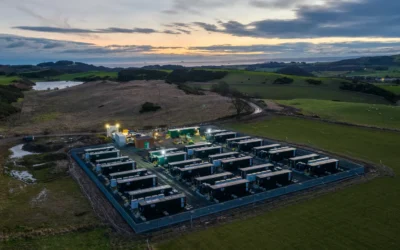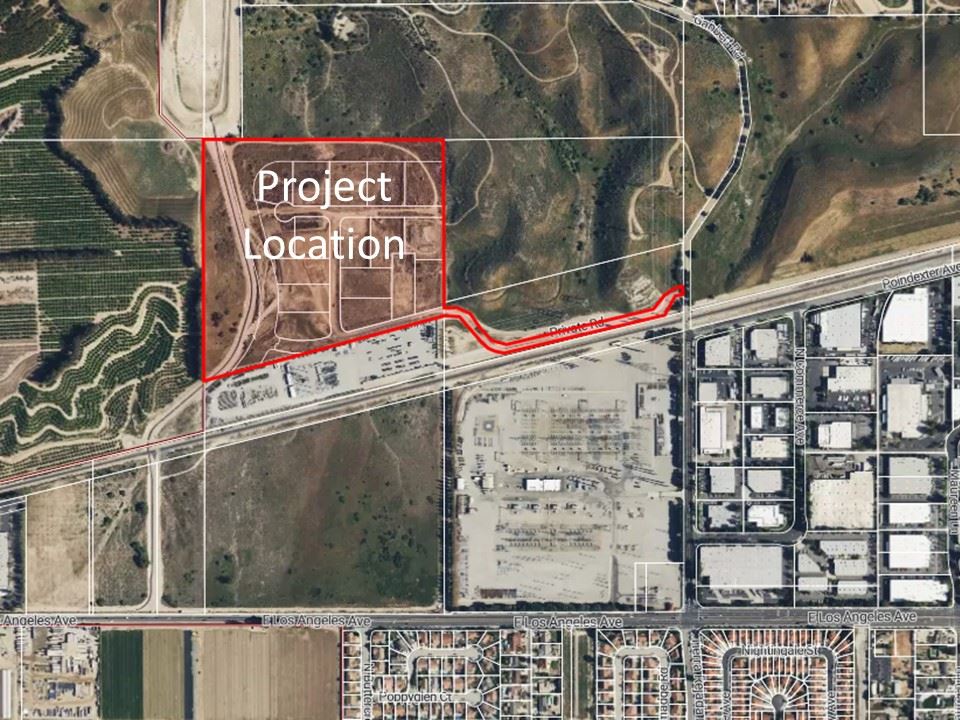
Hecate Energy’s proposal to construct a 600MW/2,400MWh standalone BESS in the City of Moorpark, California, has experienced a major setback.
City officials unanimously rejected a recent proposal from the Chicago, Illinois-based developer at a meeting on 18 September 2024.
The proposal from Hecate asked officials at Moorpark City Council to amend a particular industrial zoning law currently preventing the developer from obtaining a Conditional Use Permit (CUP) for its Gwent Energy Storage project due to Hecate planning to house the batteries outside rather than inside a building.
‘Enhanced screening process’ for BESS installations
Hecate purchased the proposed land for the project through its Hecate Grid Gwent Land, LLC subsidiary, from Burns Pacific Construction, Inc. early in 2023.
Try Premium for just $1
- Full premium access for the first month at only $1
- Converts to an annual rate after 30 days unless cancelled
- Cancel anytime during the trial period
Premium Benefits
- Expert industry analysis and interviews
- Digital access to PV Tech Power journal
- Exclusive event discounts
Or get the full Premium subscription right away
Or continue reading this article for free
Although the majority of BESS facilities nowadays are located outdoors within containers, laws in Moorpark stipulate that BESS facilities are only permitted if located inside a building – an amendment which was added to the city’s industrial zoning laws in June 2023.
Officials were first made aware of Hecate’s plans to develop the Gwent project outdoors after the independent power producer (IPP) submitted Conditional Use Permit (CUP), Tentative Parcel Map and Development Agreement Amendment applications with the City in March 2024.
Hecate’s recent proposal with Moorpark Council asked officials to consider making an amendment to the cities zoning laws where BESS projects would be considered through an “enhanced screening process” on a case-by-case basis – allowing developers to submit plans for outdoor BESS facilities with Moorpark Council, who would then decide whether to approve the plans or not.
Indoor warehouse-style BESS facilities
In its presentation to Moorpark City Council, Hecate outlined the drawbacks of an indoor warehouse-style BESS facility that included issues surrounding the lack of battery separation, issues with emergency response access as well as the need for greater cooling and a larger overall project footprint.
During the recent meeting, representatives for Hecate described Moorpark’s BESS zoning laws as not only restrictive, but also a “one-size fits all policy with no flexibility,” introducing undue risk that wasn’t in line with industry “best practice”.
Moorpark City Manager, Troy Brown, stated that Hecate could still pursue development of the project as long as the proposal complied with local zoning regulations. Alternatively, Hecate could wait 12 months to resubmit its zoning amendment proposal.
However, during the meeting, Senior Director of Development at Hecate, James Damon, stated that developing the project indoors would be financially infeasible for the company.
Hecate currently holds a California Independent System Operator (CAISO) queue position for the Gwent project (queue no. 2090) covering 465MW of storage capacity connecting to the grid via Southern California Edison’s (SCE’s) Moorpark 230kV substation.
According to the queue, the project is due online in January 2033, however, it’s unclear what will happen to the project following the recent rejection.
San Diego plans for temporary moratorium rejected
Elsewhere in California, the Board of Supervisors for San Diego County have voted against a county-wide moratorium on new BESS facilities.
The temporary moratorium had previously been suggested during the board’s July 2024 meeting when officials decided to adopt new standards for BESS facilities, as reported by Energy-Storage.news.
At its September meeting, instead of enacting a moratorium, the board made a handful of small additions to the permitting process that focused on the inclusion of technical studies prepared by a fire protection engineer for each BESS application.
Supervisor Jim Desmond, who made a motion during the September meeting to enact a moratorium on BESS facilities and didn’t vote in favour of the new measures, once again expressed his concerns surrounding the safety of BESS facilities.
Desmond made reference to BESS fires in San Diego County, including a recent one at a 30MW/120MWh San Diego Gas & Electric (SDG&E)-owned facility in Escondido, California. As reported by Energy-Storage.news, expert Nick Warner, founding principal at Energy Safety Response Group (ESRG) described the fire as being “by all accounts well-managed by Escondido Fire and SDG&E and their personnel”.