The mayor of a town in Germany has allocated land at a former nuclear power plant site for a 120MW/280MWh BESS, after the government rejected plans to use it for storing nuclear waste.
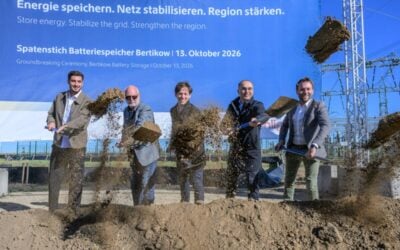
Beverungen mayor Hubertus Grimm announced the allocation of land to municipal utility and distribution network operator (DNO) Westphalia Weser for the ‘Würgassen storage park’ project last week (19 March).
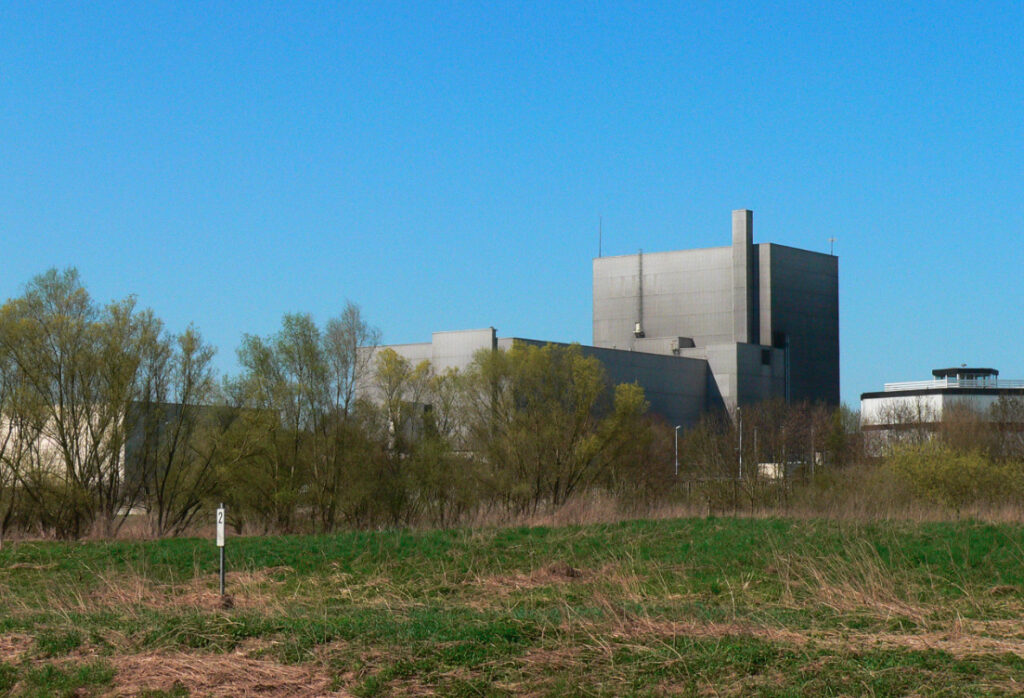
The site, in the state of North Rhine-Westphalia (NRW), houses the former Würgassen nuclear power plant which was decommissioned in 1994 but still stands today. The site will allow the BESS to utilise existing grid infrastructure including a transformer and power lines.
Though not stated, that infrastructure should also include a grid interconnection point, which can often take years or even decades to obtain for greenfield projects.
Try Premium for just $1
- Full premium access for the first month at only $1
- Converts to an annual rate after 30 days unless cancelled
- Cancel anytime during the trial period
Premium Benefits
- Expert industry analysis and interviews
- Digital access to PV Tech Power journal
- Exclusive event discounts
Or get the full Premium subscription right away
Or continue reading this article for free
Westphalia Weser will invest €92 million (US$100 million) in the project, which should come online in H2 2026. Mayor Grimm explained that the decision comes after the state rejected alternative plans for the site.
“At the end of 2023, the Federal Environment Ministry fortunately rejected plans for a central storage facility for low- and medium-level radioactive nuclear waste in Würgassen. With a future-oriented project that supports the energy transition comes into focus, we live up to our role as one of the four energy locations named in the NRW regional plan,” he said.
The project will increase the stability of the grid’s energy supply, the Westphalia Weser’s announcement said.
It was described as a pilot project but at 120MW/280MWh it would be one of the largest BESS projects in Germany. Systems of 235MWh and 200MWh are currently being built by utility and generator RWE and developer BW Storage respectively, while another developer Kyon Energy said construction on a 275MWh one will start in 2024.
Several 300MW/600MWh projects are being planned by developer and system integrator Kyon Energy, which was acquired by investors Brookfield and NIC at the start of the year.
Germany had around 1GW/1GWh of front-of-meter grid-scale energy storage online as of end-2023 and, according to a recent report from consultancy GEEC, that could increase to 50GW by 2037. The market picked up in 2022 and 2023 after several years of stagnant grid-scale deployments.
A major development this year saw the government release an Electricity Storage Strategy, which ‘put storage on the political agenda for the first time’ according to Lars Stephan, senior manager of policy and market development for BESS integrator Fluence on LinkedIn.