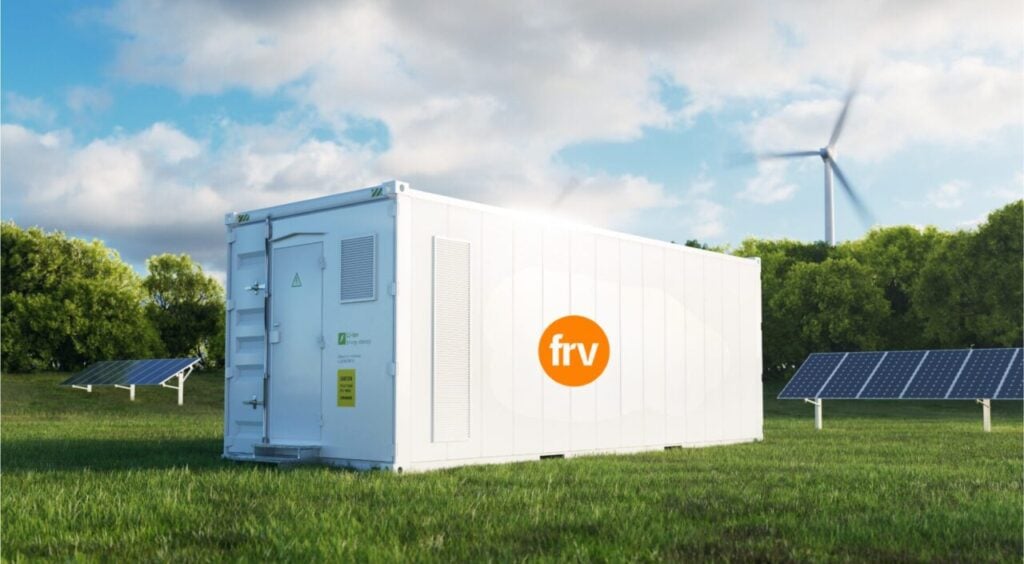
International developer Fotowatio Renewable Ventures (FRV) has unveiled plans for a 1.2GW/5GWh portfolio of battery energy storage system (BESS) projects in Spain.
The developer said the projects would reach ‘ready to build’ status in 2026 and 2027, and combine standalone BESS and solar-plus-storage facilities, hybridised with some of its Spanish PV projects.
FRV said the portfolio was at an advanced stage of development and would roll out across four main regions in Spain: Extremadura, Andalusia, Catalonia and Cantabria.
Extremadura is FRV’s main focus for its BESS expansion in Spain, with hybridisation planned at two of its separate solar sites in the region – the San Serván 220 complex, which will be co-located with a 56MW/225MWh BESS and the Solanilla PV plant, which will be paired with an 18MW/72MWh battery. Both projects are to be shovel-ready in the first quarter of this year.
Try Premium for just $1
- Full premium access for the first month at only $1
- Converts to an annual rate after 30 days unless cancelled
- Cancel anytime during the trial period
Premium Benefits
- Expert industry analysis and interviews
- Digital access to PV Tech Power journal
- Exclusive event discounts
Or get the full Premium subscription right away
Or continue reading this article for free
Further hybridisation is planned in the region at FRV’s cluster of PV projects at Carmonita – Carmonita Ministerio (320MW/1,360MWh), Carmonita Sur (80MW/400MWh), Carmonita Norte (91MW/455MWh) and Carmonita IV (40MW/200MWh) – and 111MW/495MWh at San Serván 400, a cluster of three PV projects totalling 150MW.
In Andalusia, FRV plans to hybridise its Alcores projects in Seville to incorporate 57MW/285MWh of battery energy storage. In Catalonia, 334MW/1,336MWh are planned across six battery storage facilities located in different areas across the provinces of Barcelona, Girona, and Tarragona. Meanwhile, Cantabria will host the Santander BESS Camarreal project, a 50 MW/200MWh storage system in the municipality of Camargo, with construction scheduled to begin in the second quarter of 2026.
A catalyst for FRV’s BESS rollout is Spain’s Royal Decree 997/2025, passed in late 2025 in response to Spain’s April power blackout. Enquiries in the aftermath of the outage highlighted a number of vulnerabilities in Spain’s increasingly renewables-dominated electricity system, including a lack of battery energy storage to cope with volatility. In response, as reported on our sister website, PV Tech, a central provision of the royal decree was to make it easier to add energy storage to the grid, with prioritisation given to hybridisation of batteries with operational renewable energy assets.
“The combination of hybrid projects and stand-alone storage systems will allow us to maximise the performance of our infrastructure, provide greater flexibility to the electricity system, and ensure a more stable and resilient supply,” said Fernando Salinas, managing director of FRV Iberia.
“This strategy reflects our vision to lead the energy transition through advanced technological solutions that not only optimise the use of energy resources but also strengthen our contribution to the development of a more sustainable and efficient energy model.”