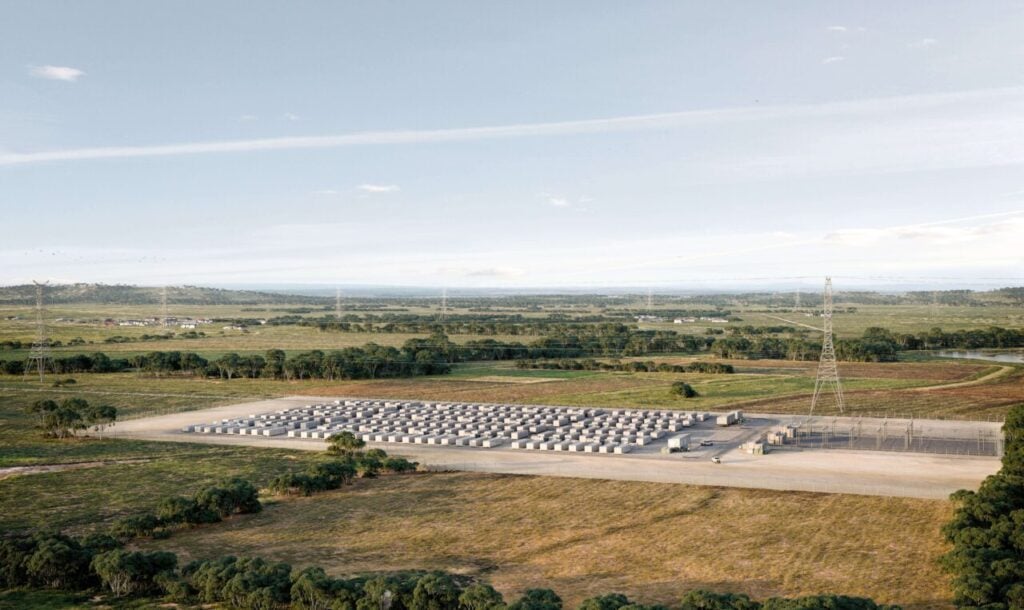
Equis Australia, the regional entity of Singapore-headquartered renewables investor and developer Equis, claims it has secured New South Wales’ first merchant BESS debt financing for a 500MWh battery energy storage system (BESS) in Australia.
The company said it had reached financial close and started construction on the 250MW/500MWh 2-hour duration Calala BESS, which it deemed ‘instrumental’ for the state.
The BESS will be located in Tamworth, in the northeast of New South Wales. The system will be 5.8km southeast of the city centre and is expected to be operational by 2027.
Equis secured an AU$260 million (US$163 million) non-recourse senior debt financing package from Westpac, Societe Generale and Sumitomo Mitsui Banking Corporation for the Calala BESS.
Try Premium for just $1
- Full premium access for the first month at only $1
- Converts to an annual rate after 30 days unless cancelled
- Cancel anytime during the trial period
Premium Benefits
- Expert industry analysis and interviews
- Digital access to PV Tech Power journal
- Exclusive event discounts
Or get the full Premium subscription right away
Or continue reading this article for free
David Russell, co-founder and managing director at Equis, hailed the project as “instrumental in supporting New South Wales’ renewable energy targets” and confirmed it will provide firming and frequency support services to the National Electricity Market (NEM).
The Calala BESS is structured as two independent projects, 100MW and 150MW, each with 2 hours of storage capacity.
The 100MW/200MWh segment of the battery is backed by a long-term offtake agreement with Smartest Energy for its entire capacity. Meanwhile, the 150MW/300MWh portion of the battery will operate as a merchant BESS using Autobidder, Tesla’s real-time trading and control platform.
Equis has confirmed that the Autobidder agreement will include both a revenue share and a minimum revenue guarantee.
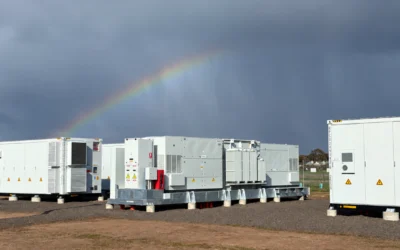
The two systems will use Tesla Megapacks, a solution that has been used in multiple Australia BESS sites, such as Edify Energy’s 370MWh Koorangie BESS in Victoria and Neoen’s 560MW/2,240MWh Collie BESS in Western Australia.
Mahesh Reddy, managing director and head of Equis Australia, revealed that Consolidated Power Projects will deliver balance of plant (BoP) engineering, procurement, and construction (EPC). At the same time, the transmission system operator Transgrid will complete the connection into the Tamworth Substation.
Through a Voluntary Planning Agreement (VPA), Calala BESS will contribute AU$2 million to the Tamworth Regional Council. Equis said it will continue working closely with the council throughout the asset life cycle to develop initiatives to support the Tamworth community.
Equis expands Australian BESS operations
Equis has a significant presence within the Australian energy storage market, namely through the development of one of the country’s largest BESS: the Melbourne Renewable Energy Hub in Victoria.
This hub will feature a 1,200MW/2,400MWh 2-hour duration BESS. It is being developed alongside the Australian renewables engineering, design and construction group Syncline Energy.
Equis originally announced plans for the project in November 2022, saying that the BESS would have multiple connection points to the NEM that allow it to perform various functions. It is also designed to support the development of Victoria’s renewable energy zones (REZ), areas that are designated for renewable energy developments throughout the state.
Equis is also pursuing the development of the 200MW/800MWh Lower Wonga (Woolooga) BESS in Queensland and the similarly sized Koolunga BESS in South Australia.