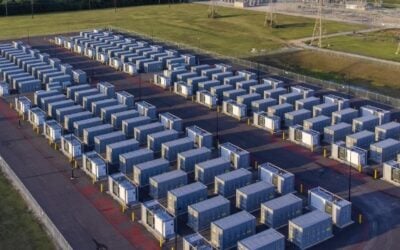
UK battery energy storage systems (BESS) are growing in capacity, increasing from the 50MW template a few years ago to major infrastructure projects since the cap on nationally significant infrastructure projects (NSIP) was removed.
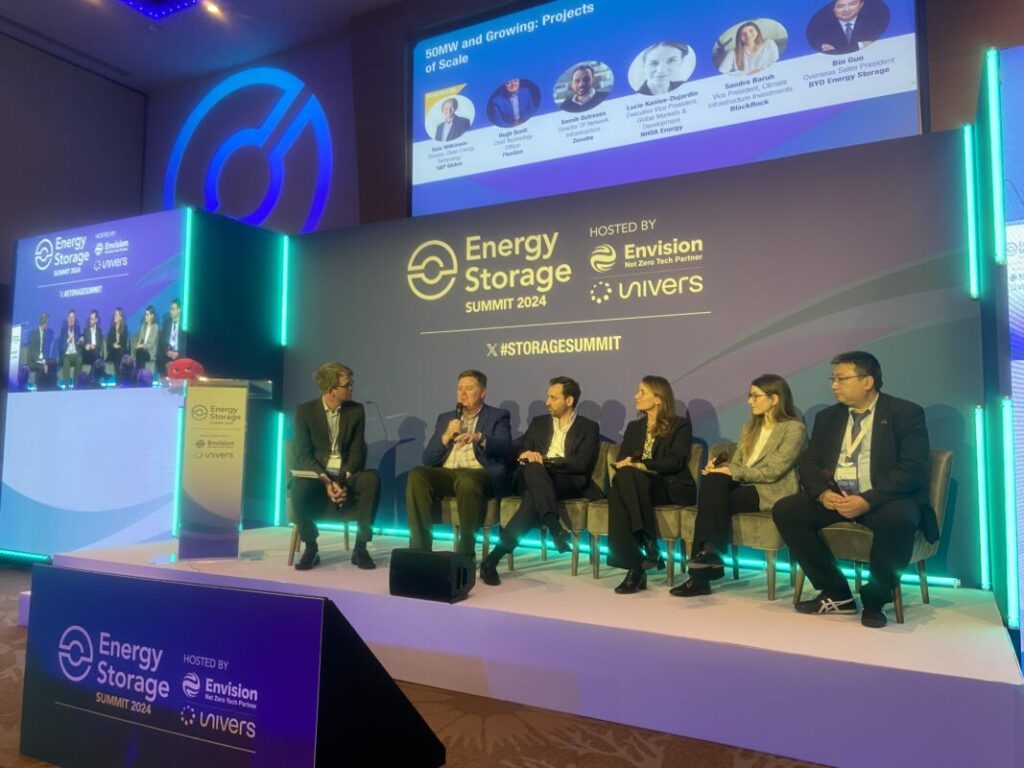
The implications of larger projects and their revenue streams and grid connection issues were discussed on the ‘50MW and Growing: Projects of Scale‘ panel at the Energy Storage Summit EU 2024 in London this week (20 and 21 February).
Semih Oztreves, director of network infrastructure at BESS developer-operator Zenobē, said that economies of scale, improved supply chain, and the lack of difference in revenue streams regarding how many megawatts a developer deployed drove the increase in project size.
Hugh Scott, chief technology officer of US-headquartered system integrator FlexGen, added: “I think from a physical size standpoint, there is no limit on a big project. Some customers are even asking for augmenting the size of their BESS projects.”
Try Premium for just $1
- Full premium access for the first month at only $1
- Converts to an annual rate after 30 days unless cancelled
- Cancel anytime during the trial period
Premium Benefits
- Expert industry analysis and interviews
- Digital access to PV Tech Power journal
- Exclusive event discounts
Or get the full Premium subscription right away
Or continue reading this article for free
But Oztreves said there is a “sweet spot” in terms of project size, which is “somewhere probably between 200-500MW”.
“As the size gets bigger, the balance of plant challenges, and the amount of work you need to carry out to have a clear layout become much more challenging and costly,” he added.
Adding extra comments about the increase in BESS size, Lucie Kanius-Dujardin, executive VP global markets and development at EV infrastructure and BESS provider NHOA Energy, said developers have to manage project degradation and deploy a project in an optimised way. Therefore, not every developer can go for projects with a large capacity.
Speaking of the workforce of managing a project, she said that it remained “almost the same number” regardless of the capacity.
According to Sam Wilkinson, director of clean energy technology at S&P Global, who was also the moderator of the panel discussion, 30% of planned energy storage projects in Europe are 300MW or larger.
Revenue streams and grid connection
Sandra Baruh, vice president of climate infrastructure investments at investment firm BlackRock, said when considering investing in BESS projects, the projects’ ability to generate long-term cash flow is important.
“The revenue streams will be similar within a specific market regardless of the size of the projects. So the answer (of changes in revenue streams for a project growing in size) is dependent on the market. There are some markets today which are more mature than others. So we plan to invest in markets where we can contract a portion of the cash flow for projects,” she said.
The panellists also discussed how scaling projects could impact the availability of grid connections.
Oztreves said: “I think from a network standpoint, whether 200MW or 500MW, it doesn’t make a huge difference. Right now, the reason for a lot of grid connections being delayed is the lack of capacity and also no resources to deliver the grid connection.”