Developer Elgin Energy has secured grid connection approval from the Australian Energy Market Operator (AEMO) for a 150MW solar-plus-storage site in Victoria.
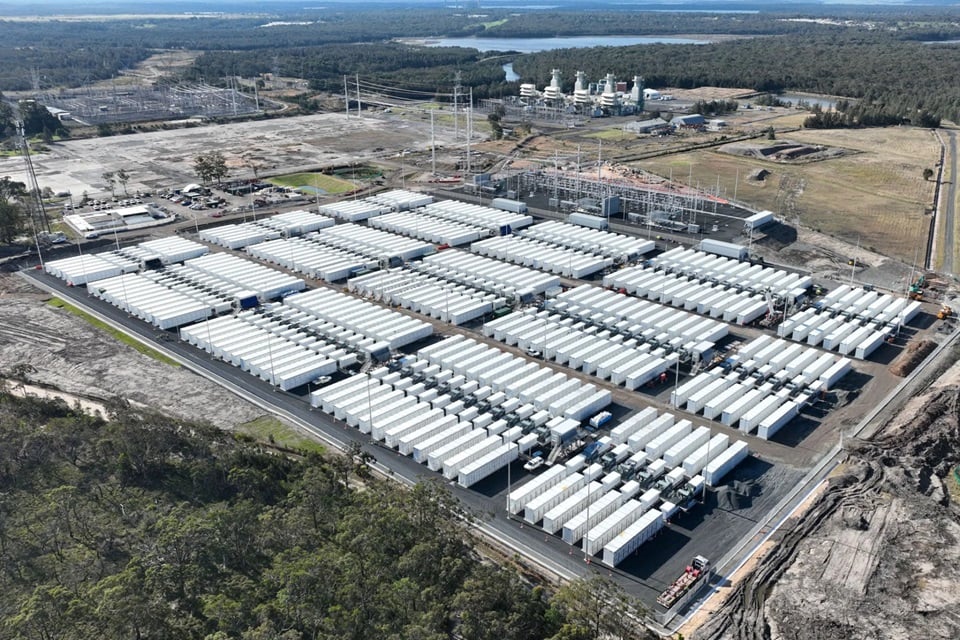
The 150MW Elaine solar-plus-storage project, situated in the Central Highlands region of Victoria, will include a 125MW/250MWh 2-hour battery energy storage system (BESS) and be connected to the National Electricity Market (NEM).
Elgin revealed it has received the 5.3.4A letter for the solar-plus-storage site from AEMO’s, which grants the approval of performance standards and the System Strength Impact Assessment, as outlined in Clause 5.3.4A of the organisation’s National Electricity Rules.
Tim Averill, managing director at Elgin Energy, revealed that the project is one of the largest hybrid renewable energy facilities in its portfolio.
Try Premium for just $1
- Full premium access for the first month at only $1
- Converts to an annual rate after 30 days unless cancelled
- Cancel anytime during the trial period
Premium Benefits
- Expert industry analysis and interviews
- Digital access to PV Tech Power journal
- Exclusive event discounts
Or get the full Premium subscription right away
Or continue reading this article for free
“Elaine is one of our largest hybrid developments to date and reflects our long-term commitment to delivering clean, stable and scalable renewable energy solutions,” Averill said.
The developer has stated that the project will feature approximately 230,000 solar PV modules. This setup will be part of a fully integrated solution that includes the Hybrid Power Plant Manager from the German manufacturer SMA, along with Sunny Central PV inverters and Sunny Central Storage grid-forming battery inverters.
John Alexander, vice-president of large-scale and projects at SMA Australia, said the project will provide “critical network services for a secure and resilient energy future.”
Indeed, the project aims to mitigate system strength charges, provide synthetic inertia, fast frequency response, and other essential grid services, enhancing the stability and resilience of the electricity network as Australia increases its renewable energy integration.
Construction on the Elaine solar-plus-storage project is expected to begin sometime next year, with a targeted commercial operations date of 2027.
Earlier this year, the Victoria government selected Elgin Energy’s 330MW Barwon Solar Farm to have its development approval fast-tracked.
The project is larger than the Elaine site, with 300MW of solar PV generation coupled with a co-located 250MW/500MWh BESS. The BESS will include approximately 136 inverters built on concrete foundations.
The solar-plus-storage site, which was successful in the first Capacity Investment Scheme (CIS) tender last year, will be located in the Little River region of Victoria, 44km southwest of Melbourne’s Central Business District.
Australia: the world’s toughest grid codes
As Energy-Storage.news has reported over the previous few months, Australia has some of the hardest grid code certification processes encompassed within AEMO’s Generator Performance Standard (GPS).
Tom Best, COO of Eku Energy, a standalone developer, owner, and operator of BESS, said to ESN Premium that the process developers in Australia must undergo to connect to the transmission grid and access the NEM’s Frequency Control Ancillary Services (FCAS) and energy trading markets is “incredibly rigorous.”
Best added that it is also one of the longest and most expensive grid compliance regimes of any of the markets Eku Energy works in.
Indeed, this perspective echoes the sentiments of Akaysha Energy, whose CEO, Nick Carter, told Energy-Storage.news in 2024 that the GPS approval for its flagship Waratah Super Battery in New South Wales took more than a year.
AEMO’s technicians put plants through “all manner of scenarios and ultimately push the plant or the model of that plant, until breaking point,” which requires project designers to undertake a “huge number of studies,” Best added.
After that, the process is documented in a GPS, which then needs to be agreed upon by the Network Service Provider (NSP) and AEMO before the market operator finally sends the 5.3.4A letter of compliance.
However, even upon receiving the 5.3.4A letter, the process does not finish here. Since the GPS is developed based on modelling, any modifications made during the construction phase, such as changes in plant design, cabling configurations, or other factors that affect its electrical characteristics, must be updated through a process known as R1. The R1 process is still required for the Elaine solar-plus-storage site.
A GPS can be granted to a project; however, the R1 process showcases that the project can meet or exceed its performance standards to AEMO and the network service providers. If this is not shown, the GPS can be revoked.
You can find out more about the grid connection process in Australia here.