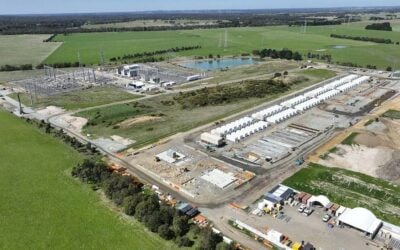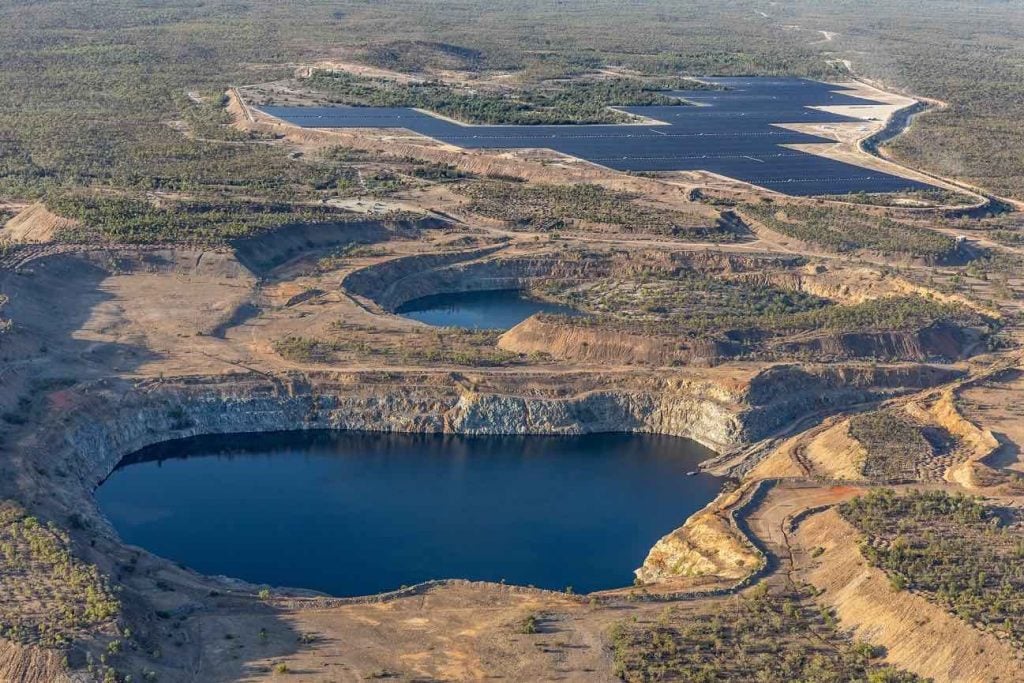
A large-scale renewable energy hub in Queensland, Australia, which will include a 16-hour duration pumped hydro plant has been acquired by Copenhagen Infrastructure Partners (CIP).
CIP made the agreement to acquire the various clean energy projects at Bowen Renewable Energy Hub from local developers Bowen River Utilies and Renewable Energy Partners. Bowen River Utilities has claimed it will be North Australia’s “largest renewable baseload energy project”.
Co-located solar PV, wind and a hydrogen electrolyser will be deployed along with a 750MW pumped hydro energy storage (PHES) plant with 16-hours storage duration (equivalent to 12,000MWh).
Values for the planned solar PV and wind capacity and output of the electrolyser were not given, but according to Bowen River Utilities the hub will total 1,400MW of generation capacity.
Try Premium for just $1
- Full premium access for the first month at only $1
- Converts to an annual rate after 30 days unless cancelled
- Cancel anytime during the trial period
Premium Benefits
- Expert industry analysis and interviews
- Digital access to PV Tech Power journal
- Exclusive event discounts
Or get the full Premium subscription right away
Or continue reading this article for free
CIP intends to rename the hub Capricornia Energy Hub. The investor, perhaps best known for its activities in offshore wind energy, but with a broad interest in other renewable and clean energy technologies, is acquiring the hub development on behalf of its €7 billion (US$7.45 billion) CI IV fund, one of 10 funds in CIP’s portfolio.
Originally planned to be co-located with a new dam development, that is no longer the case and the site will host energy facilities only, CIP said today.
“We are excited about adding pumped hydro to CIP’s existing pipeline of onshore wind and battery energy storage in Queensland which we consider one of the best places in Australia to invest in clean energy,” CIP Australia head Jørn Hammer said.
Queensland’s government has made major moves to accelerate the transition to renewables and away from fossil fuels in the past few months. It perhaps has a pressing need, with Queensland’s economy the most carbon-intensive of Australia’s states and territories.
The Queensland 2022-2023 State Budget announced in June included AU$48 million (US$32.4 million) funding into feasibility studies for two large-scale PHES projects, before a couple of weeks later the government of State Premier Annastacia Palaszczuk said it would help fund a “blitz” of battery energy storage system (BESS) projects.
At present, the state is at about the 21% renewable energy mark, but in September, Palaszczuk’s administration committed to a policy target of 70% renewables by 2032 and 90% emissions reduction by 2035.
Along with deploying about 22GW of new renewable energy capacity, achieving those goals will require considerable upgrades to the transmission network, dubbed by Palaszczuk’s Labor Party as the creation of a “SuperGrid” and the conversion of coal power plants to renewables hubs.
Part of facilitating the AU$62 billion climate crisis mitigation and economic activity driving package will include the creation and adoption of a strategy on energy storage, the state government has said.
The Queensland government-owned power company CS Energy signed a Memorandum of Understanding (MoU) with the CIP-acquired Bowen/Capricornia project earlier this year.
CS Energy’s main business is supplying energy to large industrial customers and government entities and the company is exploring options to contract for power from the renewables, storage and hydrogen hub via a power purchase agreement (PPA).
The power company could also get involved with equity funding and project operations at the site, CIP said.
This project provides an opportunity to further diversify our portfolio so that we have a balanced mix of energy sources to support our customers’ requirements and Queensland’s energy needs. “Pumped hydro energy storage is widely recognised as a crucial technology in Australia’s energy transformation because it can provide fast response power and is complementary to wind and solar,” CS Energy CEO Andrew Bills said.
Energy-Storage.news’ publisher Solar Media will host the 1st Energy Storage Summit Asia, 11-12 July 2023 in Singapore. The event will help give clarity on this nascent, yet quickly growing market, bringing together a community of credible independent generators, policymakers, banks, funds, off-takers and technology providers. For more information, go to the website.