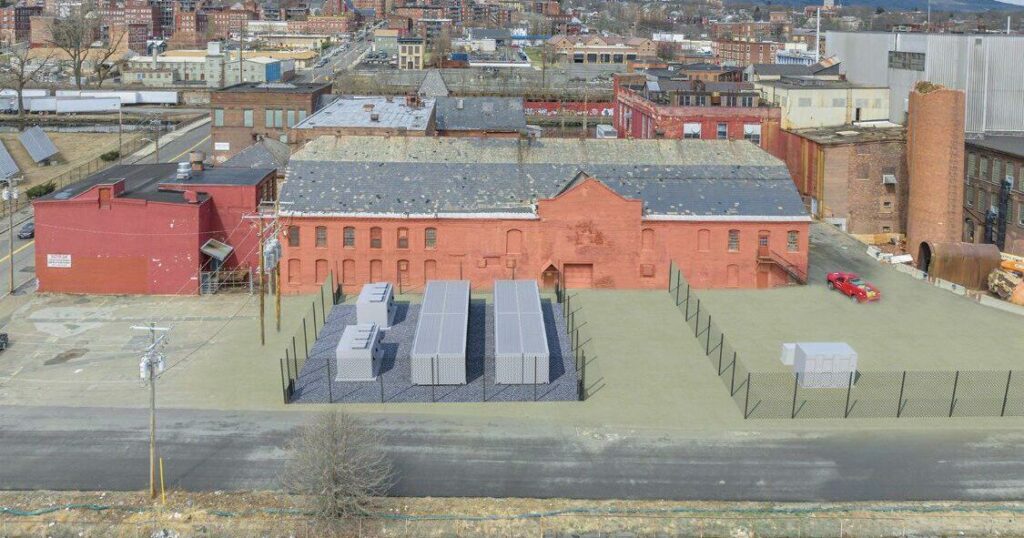
Energy storage solutions provider Convergent Energy + Power willy supply Massachusetts utility Holyoke Gas & Electric (HG&E) with a 5MW/15MWh battery energy storage system (BESS).
Convergent announced the plans to provide the municipally-owned utility with the BESS on 14 April. The project is expected to stabilise costs for HG&E customers in the context of rising energy prices and should come online in 2023.
The developer will own and operate the BESS using its proprietary energy storage intelligence platform, PEAK IQ. Convergent said the BESS will dispatch at strategic times, storing energy when it is cheapest and cleanest and discharging energy to displace the most expensive and carbon-intensive periods.
Convergent describes itself as “one of the original players in the energy storage sectors” with over US$400m invested in projects to-date across North America. It recently brought two similarly-sized BESS projects online in California for investor-owned utility Southern California Edison (SCE).
Try Premium for just $1
- Full premium access for the first month at only $1
- Converts to an annual rate after 30 days unless cancelled
- Cancel anytime during the trial period
Premium Benefits
- Expert industry analysis and interviews
- Digital access to PV Tech Power journal
- Exclusive event discounts
Or get the full Premium subscription right away
Or continue reading this article for free
The northeast US state’s Solar Massachusett’s Renewable Target (SMART) programme incentivises households to invest in residential or community solar and has helped drive the colocated storage market and recent storage news in the state has mostly been around colocated projects.
This includes Nexamp’s community solar being commissioned last month, a Blackrock-owned developer buying six projects totalling 88MWh of storage and Italy-headquartered NOAH’s 10MWh system delivered in Bellingham. Convergent’s project appears to be a standalone site with no mention of colocated solar.
The New England state enacted House Bill 4857 in August 2018 which directed the Massachusetts Department of Energy Resources to set an energy storage target of 1,000 MWh by 2025. It is currently about a third of the way according to the state government’s website.
The state’s three electricity utilities which operate the grid, National Grid, Eversource and Unitil, report storage deployments every February (National Grid is part of the UK grid operator).
As of February 2022, National Grid had deployed 329MWh, Eversource had deployed 20MW/44MWh while Unitil had deployed 2.12MW/4.23MWh. National Grid’s pipeline totals 666MW/843MWh, Eversource has 127MW/175MWh planned, while Unitil aims to deploy 18.14MW/85.04MWh.