Construction kicks off on 400MWh Merredin Big Battery in Western Australia

August 6, 2025
LinkedIn
Twitter
Reddit
Facebook
Email

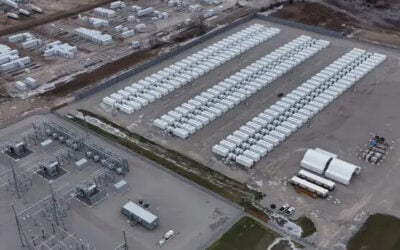
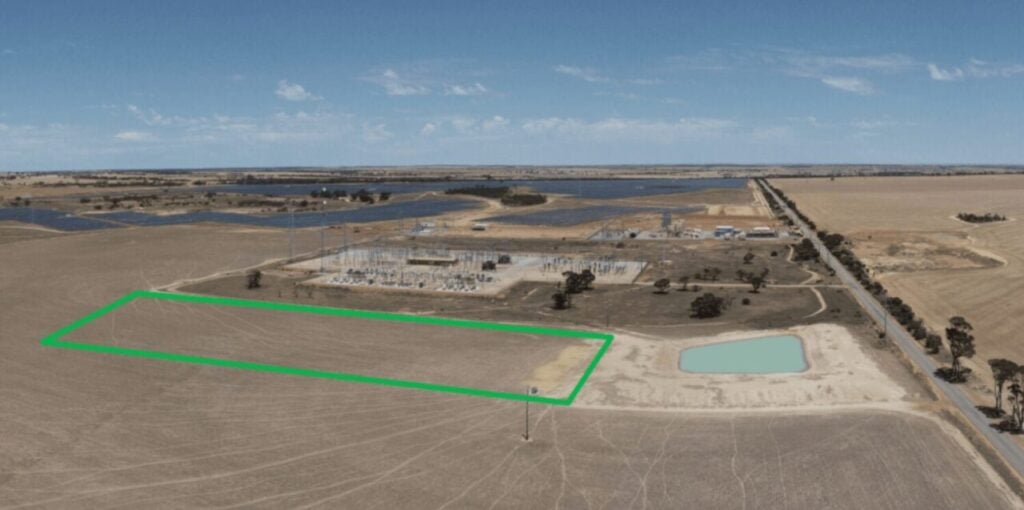
Construction has officially started on the 100MW/400MWh 4-hour duration Merredin battery energy storage system (BESS) in Western Australia.

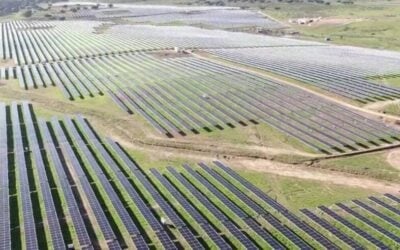
The Meredin Big Battery is being pursued via a partnership between Atmos Renewables and Nomad Energy. It is set to be built adjacent to the 132MW Merredin solar PV power plant being developed by Risen Energy.

The project developers achieved financial close on the BESS in early July 2025, and is Atmos Renewables’ first greenfield development to enter the construction phase.

The battery storage project, located approximately 7.5km southwest of Merredin, along the 650km Muja to Kalgoorlie 220kV transmission line, is expected to be commissioned in October 2026.

This article requires Premium SubscriptionBasic (FREE) Subscription

Try Premium for just $1

  • Full premium access for the first month at only $1
  • Converts to an annual rate after 30 days unless cancelled
  • Cancel anytime during the trial period

Premium Benefits

  • Expert industry analysis and interviews
  • Digital access to PV Tech Power journal
  • Exclusive event discounts

Or get the full Premium subscription right away

Or continue reading this article for free

It will be connected to the South West Interconnected System (SWIS), the main electricity grid for the southwest of the state, including the capital, Perth, and operate in the Wholesale Electricity Market (WEM), the primary market for generators and retailers in the state.

Construction company, GenusPlus Group, was awarded a contract to build the 400MWh Merredin BESS in June.

Renewable energy developer Nomad Energy first identified the potential for the Merredin BESS in 2022, with close proximity to key energy infrastructure in the state. Nomad partnered with Atmos Renewables to support the development of the BESS.

As reported by Energy-Storage.news earlier this year, the Merredin BESS was one of the projects successful in Western Australia’s first Capacity Investment Scheme (CIS) tender, which was announced in March.

Amber-Jade Sanderson, the Western Australia minister for energy and decarbonisation, hailed the project, stating that it will add to the state’s “energy armoury” and help stabilise Western Australia’s electricity grid.

“The Merredin Big Battery will add to our energy armoury, which includes state-owned batteries in Kwinana and Collie, and the Neoen battery also in Collie,” Sanderson said.

“Together with new transmission lines, wind, solar, and gas generation where needed, they are important elements of the energy grid of the future.”

It is worth noting that the Merredin BESS developers have established a voluntary community benefit fund to provide financial support for community-based initiatives, projects and events.

Once operational, AU$20,000 (US$12,950) a year will be available through the Merredin Battery Community Legacy Fund, continuing over the project’s estimated 25-year life.

Our publisher, Solar Media, will host the Battery Asset Management Summit Australia 2025 on 26-27 August in Sydney. You can get 20% off your ticket using the code ESN20 at checkout.

17 March 2026
Sydney, Australia
As we move into 2026, Australia is seeing real movement in emerging as a global ‘green’ superpower, with energy storage at the heart of this. This Summit will explore in-depth the ‘exponential growth of a unique market’, providing a meeting place for investors and developers’ appetite to do business. The second edition will shine a greater spotlight on behind-the-meter developments, with the distribution network being responsible for a large capacity of total energy storage in Australia. Understanding connection issues, the urgency of transitioning to net zero, optimal financial structures, and the industry developments in 2026 and beyond.
9 June 2026
Stuttgart, Germany
Held alongside The Battery Show Europe, Energy Storage Summit provides a focused platform to understand the policies, revenue models and deployment conditions shaping Germany’s utility-scale storage boom. With contributions from TSOs, banks, developers and optimisers, the Summit explores regulation, merchant strategies, financing, grid tariffs and project delivery in a market forecast to integrate 24GW of storage by 2037.
15 September 2026
San Diego, USA
You can expect to meet and network with all the key industry players again in 2025 from major US asset owners, operators, RTOs and ISOs, optimizers, software and analytics providers, technical consultancies, O&M technology providers and more.
15 September 2026
Berlin, Germany
Launching September 2026 in Berlin, Energy Storage Summit Germany is a new standalone event dedicated to Germany’s energy storage market. Bringing together investors, developers, policymakers, TSOs, manufacturers and optimisation specialists, the Summit explores the regulatory shifts, revenue models, financing strategies and technology innovations shaping large-scale deployment. With Germany targeting 80% renewables by 2030, it offers a focused platform to connect with the decision-makers driving the Energiewende and the future of utility-scale storage.

Read Next

February 26, 2026
Large-scale renewable energy power plant developers in the Philippines have been instructed to integrate energy storage into their proposed facilities.
February 26, 2026
MGA Thermal has secured AU$3.25 million in funding from ARENA to conduct up to five FEED studies for its thermal energy storage technology.
February 25, 2026
Experts at the ongoing Energy Storage Summit 2026 have cautioned against treating co-located storage as a “silver bullet” to prop up commercially underperforming solar assets.
February 25, 2026
In this Energy-Storage.news roundup, FlexGen updates its EMS, LandGate launches a BESS site selection tool, ON.energy and Shoals target AI data centres, and Sunrun has a successful season of dispatching energy with PG&E.
Premium
February 25, 2026
In an interview with Energy-Storage.news Premium, Jay Jayasuriya, Principal at Sendero Consulting, argues that AI data centres are “convenient scapegoats” for grid failures