
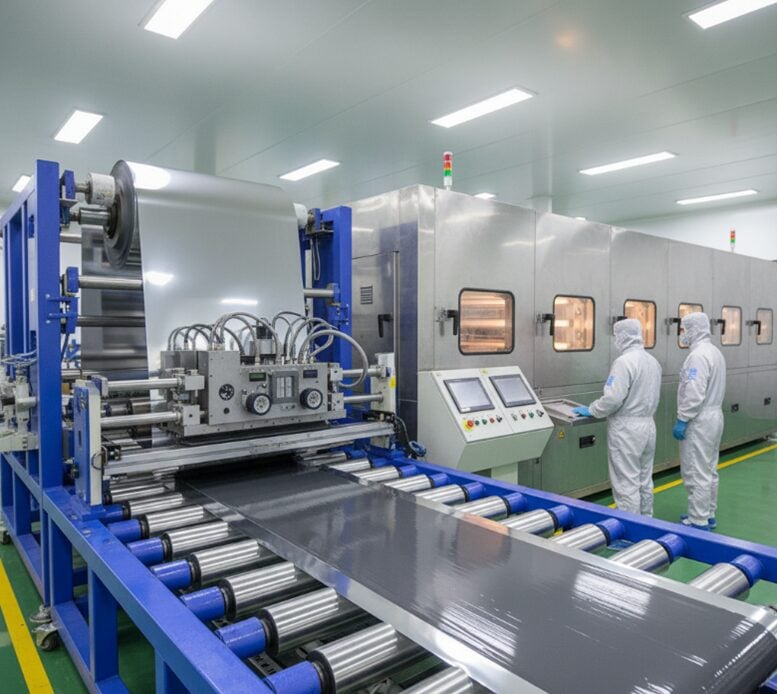
Jon Begona Alvarez and Beñat Murua Ugartemendia from Kiwa PI Berlin on why quality assurance is the foundation of long-term success, from solar PV to battery storage.
Globally, project developers and independent power producers (IPPs) are increasingly deploying standalone and integrated utility-scale battery energy storage systems (BESS) into their PV projects. However, a critical question remains: are buyers applying the same quality assurance (QA) requirements to batteries as they do to other key components in BESS and PV projects?
Given the substantial investment associated with these BESS assets, the QA scope of work should encompass all components: battery cells, the integration of BESS containers, and all related equipment, including the power conversion system (PCS).
QA allowances in contracts
Similar to PV module QA management programmes, the first and most critical step in ensuring quality during BESS procurement is the development and clear definition of technical and quality specifications within the purchase agreement. In many cases, there are discrepancies between what buyers assume to be standard QA practices and what manufacturers actually allow.
Try Premium for just $1
- Full premium access for the first month at only $1
- Converts to an annual rate after 30 days unless cancelled
- Cancel anytime during the trial period
Premium Benefits
- Expert industry analysis and interviews
- Digital access to PV Tech Power journal
- Exclusive event discounts
Or get the full Premium subscription right away
Or continue reading this article for free
All third-party QA allowances and checkpoints must be established and agreed upon with BESS suppliers during the contract negotiation phase.
In the following examples, we’ll illustrate some recent quality control findings that necessitate stricter quality requirements and contractual third-party QA allowances in order to achieve long-term reliability and performance.
Implementing quality controls: cell manufacturing
High-volume production of precision components, such as battery cells, shares significant parallels with photovoltaic (PV) cell manufacturing. Both industries operate in environments characterised by high-throughput processes, chemical processing, and extremely tight quality tolerances.
As highlighted in prior discussions on PV cell manufacturing, inadequate process controls and weak quality management systems often manifest as factory-level defects identified during audits. These findings underscore the critical importance of robust quality assurance frameworks in any high-volume energy component production.
Battery cell quality escapes
For battery cell manufacturing, a quality control plan establishes the necessary measures to be implemented to ensure compliance with the desired performance specifications. To be effective, these quality controls must be explicitly defined within the equipment purchase agreement, making them contractually enforceable and ensuring accountability throughout the production process.
For example, a common manufacturing process step resulting in audit findings from battery cell factory audits performed by Kiwa PI Berlin, occurs during the electrode coating process. In this step, the electrode active material compounds, including lithium and graphite, are mixed into a delicate slurry, which is then coated onto the electrode foils. In addition to many other slurry properties, slurry viscosity should be tightly controlled during production.
Several recent cases exposed during both factory audits and production oversight activity have revealed significant deviations between the required viscosity range and the actual viscosity values. In some cases, these deviations exceeded 40% beyond allowable tolerance range. This is a dramatic example, where Incoming Quality Control and/or mixing ratios in the process standard operating procedures (SOPs) were not followed.
The immediate downstream effects of out-of-specification viscosity can be broad, including uneven slurry quality, coating defects, drying issues, and more. Ultimately, all of these effects result in poor electrode quality. If electrodes of poor quality make it into the final cell, it can lead to poor cell performance at best (including reduced capacity, efficiency, and reliability) and field safety risks at worst.
A cell with inadequate electrode application may pass short-term routine tests, such as statistical end-of-line performance and capacity checks. Nevertheless, this defect often manifests during real-world, long-duration cycling tests, potentially jeopardising the project’s operational profitability and safety.
BESS production
BESS assembly production oversight supervises the entire manufacturing line while the battery modules, rack, and system are being produced. For this purpose, quality assurance engineers are deployed in the factory during production to ensure that all required material, process, and production controls are not only applied, but applied correctly.
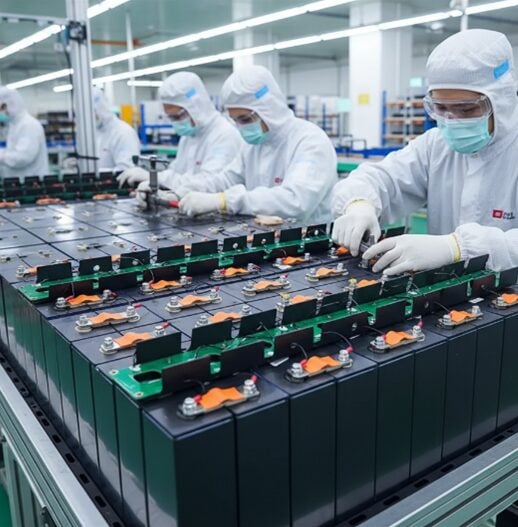
In several factories, after installing the connection busbar, Kiwa PI Berlin has found thatcontact resistance is not regularly measured between the copper busbar and module terminals. This can lead to excessive contact resistance and associated localised overheating, contributing to early degradation and to thermal events due to excess overheating in worst cases. Uneven degradation in some cells can impair the performance of the entire battery system, reducing the operational capacity of something far greater than the individual cell itself.
To avoid scenarios like the above, it is essential to proceed with a pre-production factory audit, that will ensure manufacturing equipment and the facilities’ readiness to proceed with mass production. In addition to this, it is necessary to carry out rigorous production supervision to ensure that the necessary control points – in this case, contact resistance measurement are properly addressed during equipment mass production.
The value of QA advisory for BESS projects
Unplanned shutdowns, repairs, and restarts of operational assets are not merely technical setbacks but represent significant financial and operational risks that can undermine long-term performance. Addressing these challenges requires more than reactive measures: it demands a proactive, expedited quality assurance process embedded throughout the asset lifecycle.
Furthermore, the potential costs and liabilities associated with equipment unavailability must be anticipated and integrated into contractual frameworks to protect stakeholders.
Viewing QA and contractual support as a strategic investment rather than an operational expense is essential. This approach not only minimises risk but also ensures sustained reliability, maximises asset value, and strengthens competitive advantage in increasingly demanding markets.
About the Authors
Jon Begona Alvarez is head of sales, and Beñat Murua Ugartemendia is senior project manager at Kiwa PI Berlin. Kiwa PI Berlin is a global technical advisor, risk manager and quality assurance provider for photovoltaic power plants and equipment. Kiwa PI Berlin provides comprehensive contracting support to help customers define the necessary technical and quality specifications, focusing on safeguarding project integrity, project bankability, and quality compliance, safeguarding project integrity and asset longevity.