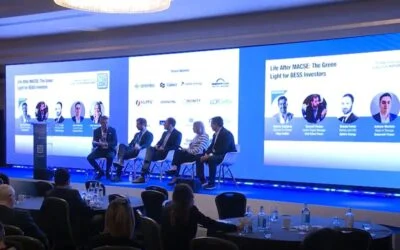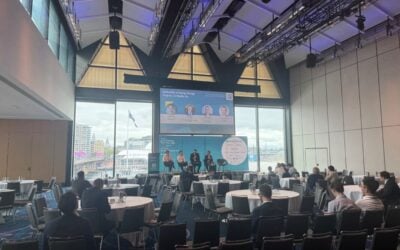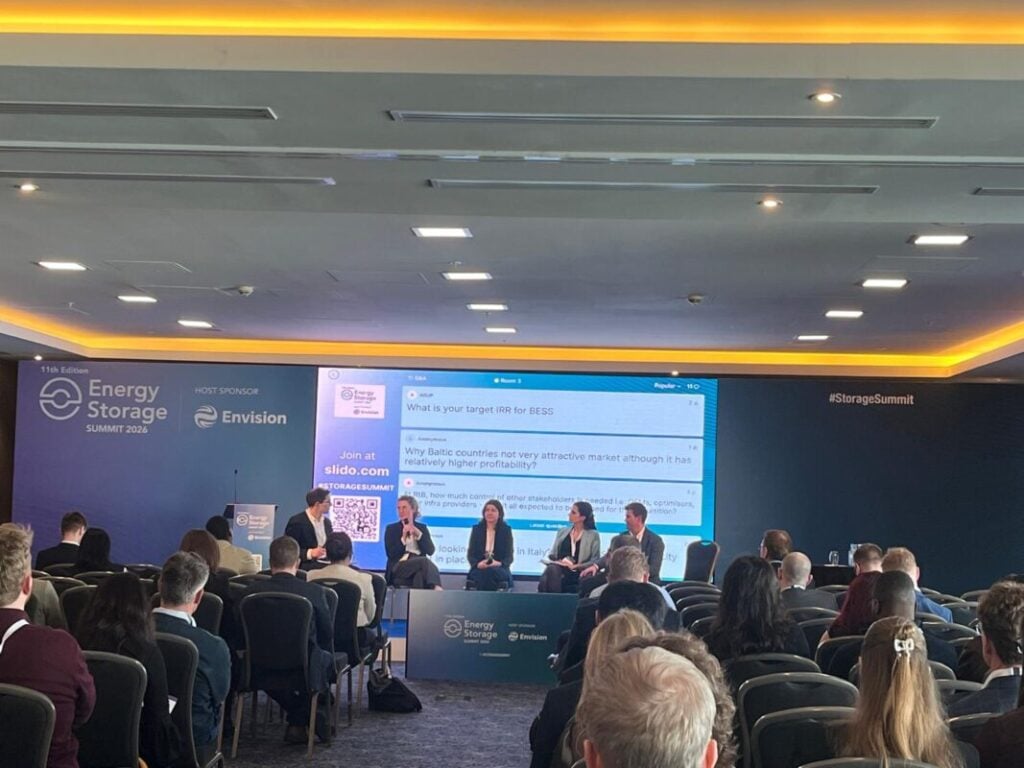
Panellists discussed M&A in large-scale BESS on the ‘M&A Market: How Attractive Is BESS Right Now?’ panel discussion at the Energy Storage Summit 2026 today (24 February).
“Storage is the hottest renewables market. Countries have these renewable targets, and you need resiliency, mainly through batteries, to make that happen,” said James Taggart, head of corporate development at UK BESS platform Eelpower Energy. The company was formed via a consortium between developer Eelpower, investor Equitix and the UK’s National Wealth Fund.
The two-day conference is hosted by our publisher Solar Media, part of Informa Markets, and is in its 11th year.
However, he said that prices on the construction side are increasing, presenting a challenge to investment. “BESS prices are coming down, but anything involving local labour, like EPC and grid, is going up.”
Try Premium for just $1
- Full premium access for the first month at only $1
- Converts to an annual rate after 30 days unless cancelled
- Cancel anytime during the trial period
Premium Benefits
- Expert industry analysis and interviews
- Digital access to PV Tech Power journal
- Exclusive event discounts
Or get the full Premium subscription right away
Or continue reading this article for free
In the UK, deal-making for development portfolios has slowed somewhat while the grid connection queue undergoes a substantial reform. One panellist said this was a temporary blip.
“I don’t think the slowdown in M&A in the UK says anything about the asset class,” said Ariane Brunel, investment director at investment services and financing firm Triple Point. She had already discussed key industry themes and challenges in a Q&A with Energy-Storage.news in the lead-up to the event, which you can read here.
A delegate in the audience then asked a question around operational project M&A versus development portfolios.
“There haven’t been that many operational asset sales, so people don’t quite know what to look at,” said Heather Offord, investment director at Australia-headquartered owner-operator Eku Energy. “It’s often newer players looking for that kind of deal, as they don’t want risks like construction risk.”
Eku, part of infrastructure firm Macquarie, has established a large presence in the Australian market, as well as smaller footholds in the UK and New Zealand.
Nadiya Vargola, head of BESS business development at power firm Alpiq, similarly said that there weren’t enough operational assets in Continental Europe for a track record in operational M&A. The firm deploys its own BESS projects, including one recently commissioned in Finland and one acquired in-development in France. But it also provides tolls to other operators, including a recent one in Germany with owner-operator Eco Stor.
“We have a diverse enough portfolio to be comfortable taking on all the merchant risk,” she added, in response to a question around tolls and revenue contracts and whether they need to be in place for a project sale.
Panellists agreed that bigger projects made sense for M&A, particularly around ready-to-build (RTB) stage. “Big projects, big problems, small projects, big problems,” Taggart said.