
California’s rapid adoption of energy storage has been a major success, but market participation is complex and competitive, write Matt Drazenovich of TWAICE and Chris Swanson of Fullmark Energy.
For nearly two decades, California has served as a proving ground for carbon-reducing technology. As one of the earliest adopters of large-scale energy storage, the state demonstrated that batteries could be distributed, dispatched, and monetised across multiple grid services simultaneously.
To support this shift, the California Independent System Operator (CAISO) created a set of operating rules designed to ensure these resources could be reliably called upon under real-world grid conditions.
Today, CAISO is the largest storage market in the United States. Yet for many independent power producers (IPPs), operating battery storage facilities in CAISO has become increasingly challenging. Lean engineering teams must manage complex market rules, continuous availability requirements, and intensifying competition.
Try Premium for just $1
- Full premium access for the first month at only $1
- Converts to an annual rate after 30 days unless cancelled
- Cancel anytime during the trial period
Premium Benefits
- Expert industry analysis and interviews
- Digital access to PV Tech Power journal
- Exclusive event discounts
Or get the full Premium subscription right away
Or continue reading this article for free
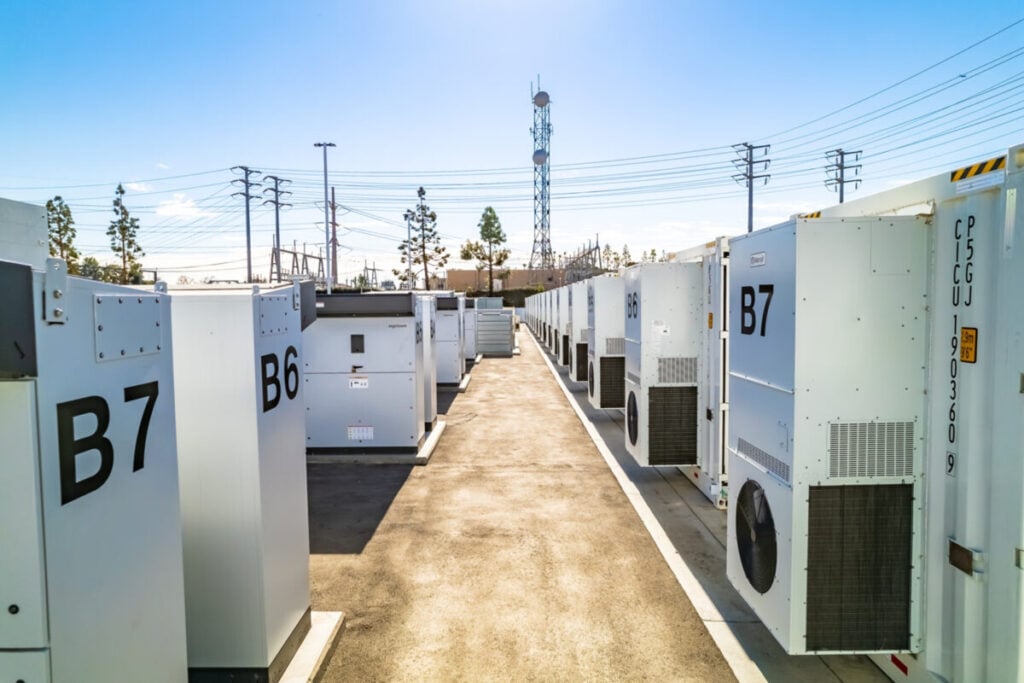
In this article, we tell the story of Johanna BESS, a 20MW/80MWh battery storage project in Santa Ana, California, owned and operated by Fullmark Energy. Commissioned in 2021, Johanna demonstrates how a lean, specialised team can use data and analytics to operate BESS assets profitably in a rapidly evolving CAISO regulatory and market environment.
Meeting market requirements
In CAISO, battery projects may participate in the Resource Adequacy (RA) market, where they contract to provide capacity to load-serving entities. To qualify for these capacity payments, batteries must be capable of discharging at their full committed power for four continuous hours.
Since these payments are critical to project economics, BESS assets like Johanna are designed around this requirement, and lenders expect ongoing compliance.
The challenge is that lithium-ion battery performance changes dynamically. Charging and discharging involve chemical processes that generate heat, which cannot be measured directly. State of Charge (SoC) is estimated using sensor data from thousands of cells.
Over time, measurement errors, temperature differences, and cell variations accumulate, making it difficult to determine actual usable energy. Standard energy management systems (EMS) estimate SoC by measuring ‘current in’ versus ‘current out,’ with simplified temperature adjustments. While sufficient for basic control and safety, this approach cannot predict true operational capability under real-world conditions.
IPPs like Fullmark use specialised analytics software to predict true SoC and inform bidding decisions. The software confirms whether systems have enough usable energy to meet market obligations before delivery windows.
For example, if Johanna’s capacity is reduced, the software alerts Fullmark’s team to avoid over-bidding and potential penalties.
Maintaining compliance
CAISO’s market rules require continuous visibility into exact capacity because frequent testing is impractical.
RA assets must offer their contracted capacity into the market, and those that cannot meet commitments face financial penalties. Fullmark uses real-time analytics to monitor Johanna’s physical capability. When degradation or limitations reduce capacity, the software alerts operators to address root causes through maintenance or optimisation. This automation reduces manual effort, allows for more focused maintenance during planned downtime, and helps maintain compliance with market requirements.
Real-time adjustments
CAISO’s markets require resources to respond to dispatch instructions throughout the day. Battery operators must manage the relationship between submitted operating parameters and actual asset capabilities, accounting for temperature effects, cell imbalances, and degradation.
Johanna’s analytics software calculates ‘True SoC’ by analysing internal battery physics and efficiency in real-time. This enables Fullmark to proactively update operating parameters as a standard process. For resources providing ancillary services, the software continuously validates telemetry data quality, identifying issues such as stuck sensors or data gaps before they trigger compliance problems.
No more easy money
Compared to other regions, CAISO’s early, scaled adoption of BESS has led to clear participation rules and increased competition. Consequently, along with evolving market dynamics, profit margins have narrowed for IPPs who aren’t ready to perform.
As ancillary service prices have converged, it has become even more critical to be precise in bid optimisation and dispatch performance. In a saturated market like CAISO, incremental profit comes from operating closer to physical and contractual limits.
For example, confidently bidding a battery down to 2% during a price spike (made possible by analytics insights like True SoC), or actively riding the maximum power output during a heatwave while remaining within the warranty temperature limits, are necessary to capture the value of a BESS. If BESS operators want to increase their margins, they must see past the limitations of onsite controls to deliver more energy faster.
Achieving this level of agility cannot be done with generic battery data and default assumptions. Too many buffers and restrictions exist at both the market and site levels to truly maximise the revenue potential of most systems. Advanced battery storage analytics software, trained on the real-life history of the plant, helps Johanna’s operators safely realise additional revenue opportunities without compromising battery health or regulatory compliance.
Advanced software makes battery storage even more profitable
California’s combination of high renewable energy penetration, exposure to weather-driven outages, and storage-friendly policies has made it especially well-suited for utility-scale storage. However, for IPPs to succeed in CAISO, they must juggle constant availability requirements, complex market rules, and financial risk across multiple revenue streams.
Johanna demonstrates how advanced battery analytics software, like TWAICE, can complement onsite controls, market optimisation tools, and operator expertise to help IPPs meet CAISO’s demanding availability rules while maximising asset value.
What started with a single 20MW/80MWh BESS facility has since expanded to Fullmark Energy’s entire 290MWh BESS portfolio in Southern California. As CAISO and other markets continue to mature, profitable BESS operations at scale will increasingly depend on advanced analytics that turn data into operational insights.
About the Authors
Matt Drazenovich is a technical solution engineer at TWAICE, where he helps companies maximise the lifespan and safety of their batteries through advanced predictive analytics software. A veteran of the energy sector, Matt’s career spans from the early days of Tesla, where he worked on battery systems for the Model S and Model 3, to designing powertrains for mobility leaders like Lyft.
Chris Swanson is director, performance engineering at Fullmark Energy, where he leads asset management, operations, and performance optimisation for battery energy storage systems. With nearly two decades of experience spanning engineering, project development, and commissioning, he has guided battery storage projects across design, implementation, and operations. Chris specialises in performance metrics, partner engagement, and advancing next-generation battery storage capabilities.
Energy Storage Summit USA 2026 will be held from 24-25 March 2026, in Dallas, TX. It features keynote speeches and panel discussions on topics like FEOC challenges, power demand forecasting, and managing the BESS supply chain. ESN Premium subscribers can get an exclusive discount on ticket prices. For complete information, visit the Energy Storage Summit USA website.