Some 2,000 residential battery systems in Belgium have been aggregated into a virtual power plant (VPP) and are providing balancing services to transmission system operator Elia.
More than 2,000 households in Flanders, the northern half of the country, have been helping to maintain grid stability with their home batteries as part of a project by Elia and local firms Smart E-Grid, a VPP solutions provider, and Opteco which installs home energy systems.
As part of the project, Elia launched a market model where consumers can match their consumption with energy production. Participants need a home battery and a smart meter to participate. An intermediary, not specified but most likely Smart-E Grid, is aggregating all the batteries into one portfolio to provide grid balancing services.
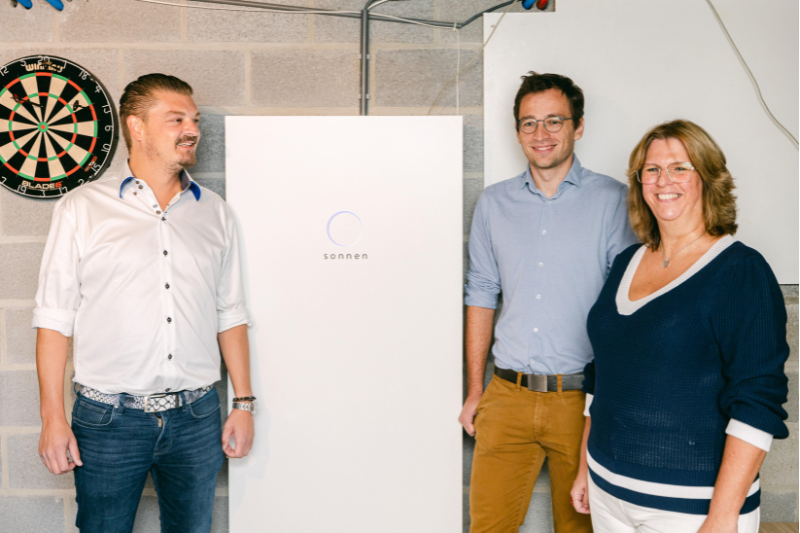
Although not mentioned in a press release, a system from German home energy storage and VPP company sonnen sonnen was pictured, indicating some of its batteries are participating. Elia said that Opteco installed the batteries which are participating in the VPP project.
Try Premium for just $1
- Full premium access for the first month at only $1
- Converts to an annual rate after 30 days unless cancelled
- Cancel anytime during the trial period
Premium Benefits
- Expert industry analysis and interviews
- Digital access to PV Tech Power journal
- Exclusive event discounts
Or get the full Premium subscription right away
Or continue reading this article for free
The aim is to have over 3,000 batteries participating by the end of the year and around 6MW of available power, which would cover 15% of Belgium’s daily grid balancing service needs (26MW). The figures equate to 2kW per home battery, which is on the low side.
The VPP programme is large within the context of the European market while a few announcements out of the US have seen much larger numbers.
Utility Rocky Mountain Power’s (RMP) collaboration with sonnen and solar contractor ES Solar in Idaho and Utah expects to have 35MWh of grid-connected battery capacity by the end of the year, while a project between Tesla and California utility PG&E saw up to 16.5MW discharged by 2,500 customers in a single day.
Guidehouse Insights recently estimated that annual deployments of distributed energy storage aggregated into VPPs could reach 3GW by 2030.