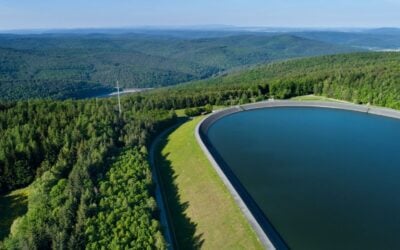
The Australian government-backed Clean Energy Finance Corporation (CEFC) has committed AU$125 million (US$92.12 million) to help build grid infrastructure for a 2GW pumped hydro project with 175 hours of storage duration.
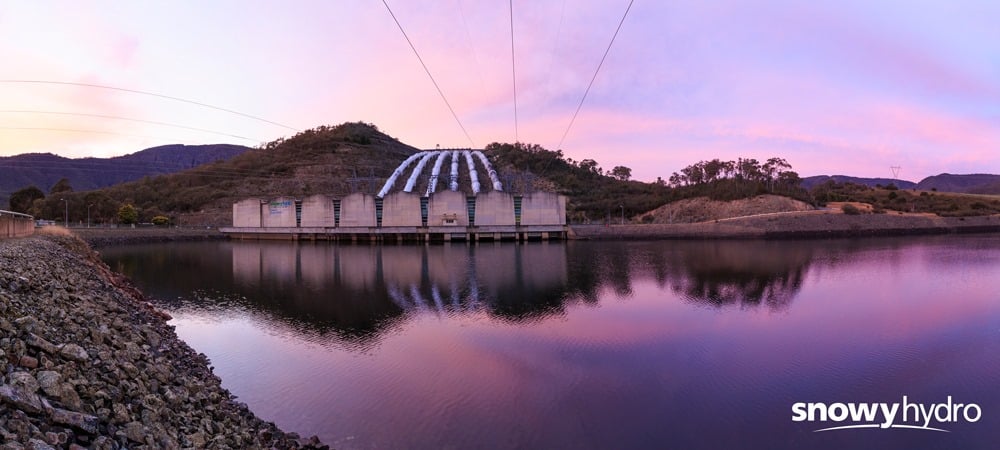
Utility company Snowy Hydro, one of the top five largest energy retailers in the country, is developing Snowy 2.0, an expansion of its Snowy Scheme network of power stations in New South Wales (NSW) that already includes Australia’s largest pumped hydro plant.
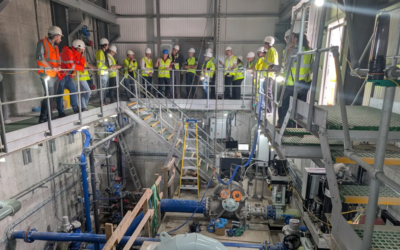
The expansion will include 27km of tunnels linking two reservoirs, with an underground pumped hydro power station around 800 metres below the surface. Its planned output of 2GW and capacity of 350GWh will nearly double the Snowy Scheme’s existing generation capacity, with excess electricity on the system used to pump water back through Snowy 2.0’s reversible turbines at times of low demand.
The project has been identified by the Australian Energy Market Operator (AEMO) as a critical project for NSW in its Integrated System Plan (ISP), which was published at the beginning of July, setting out a roadmap for meeting the long-term goals of the National Electricity Market (NEM). The pumped hydro scheme will enable the increase in value of both existing and new renewable energy resources.
Try Premium for just $1
- Full premium access for the first month at only $1
- Converts to an annual rate after 30 days unless cancelled
- Cancel anytime during the trial period
Premium Benefits
- Expert industry analysis and interviews
- Digital access to PV Tech Power journal
- Exclusive event discounts
Or get the full Premium subscription right away
Or continue reading this article for free
While Snowy Hydro has committed to financing most of the expected AU$5.1 billion cost from its own balance sheet, the Australian government has committed AU$1.38 billion towards the project in its capacity as a shareholder and work has been underway since early 2019.
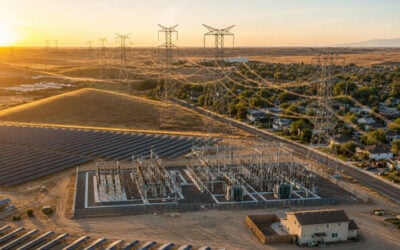
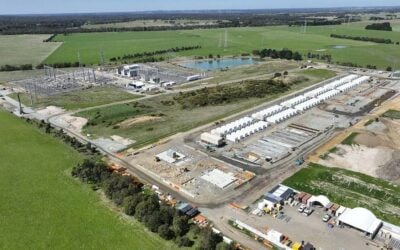
CEFC invests in initiatives to lower emissions in Australia, responsible for investing AU$10 billion on behalf of the government. Previous milestones for the group include helping to finance Australia’s first-ever unsubsidised grid-scale battery energy storage system at Lincoln Gap windfarm in South Australia in 2017. In what will be the Corporation’s first-ever major grid infrastructure investment play, the CEFC has opened a corporate debt facility with transmission network operator TransGrid Services to support the latter’s design, construction and operations and maintenance (O&M) for a 330kV switching station and transmission lines for the project. TransGrid has a 30-year agreement in place to provide Snowy Hydro with connection services.
“Investment in new storage, transmission and related infrastructure is essential to support the security and reliability of the grid during Australia’s clean energy transition,” CEFC CEO Ian Learmouth said.
“Our ability to offer investment certainty in challenging market conditions is evidence of the critical role the CEFC can play in supporting grid related developments. Snowy 2.0 offers large scale energy storage and quick start electricity generation during peak demand, providing critical security and reliability services to the NEM.”
In addition to the AU$10 billion capital allocation that CEFC is already tasked with investing towards Australia’s clean energy transition, the Australian government is also creating a new Grid Reliability Fund, worth AU$1 billion, which CEFC will administer. The fund will be supporting investment in new energy generation capacity, energy storage and in transmission infrastructure.
Another 600MW / 7200MWh pumped hydro project planned in NSW, Oven Mountain Pumped Hydro, was recently declared to be Critical State Significant Infrastructure by the state’s government, effectively fast-tracking its development. Snowy 2.0 was also given that status back in 2018. While new pumped hydro sites are often difficult to site in many parts of the world due to the specific geographical need for two large bodies of water, one above the other, a 2017 study by the Australian National University identified 20,000 potential sites for developing large-scale pumped hydro in the country.
Elsewhere, fund management company Copenhagen Infrastructure Partners (CIP) recently acquired two large-scale pumped hydro projects under development in the US. Meanwhile, one of the lowest cost bids for renewables-plus-storage in the world to date was entered by developer Greenko in a competitive tender in India, with Greenko proposing and winning with a project combining solar, wind energy and pumped hydro.