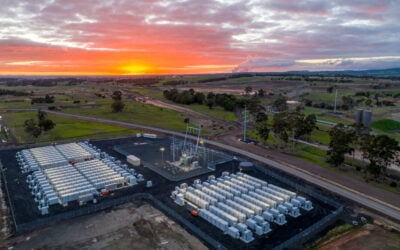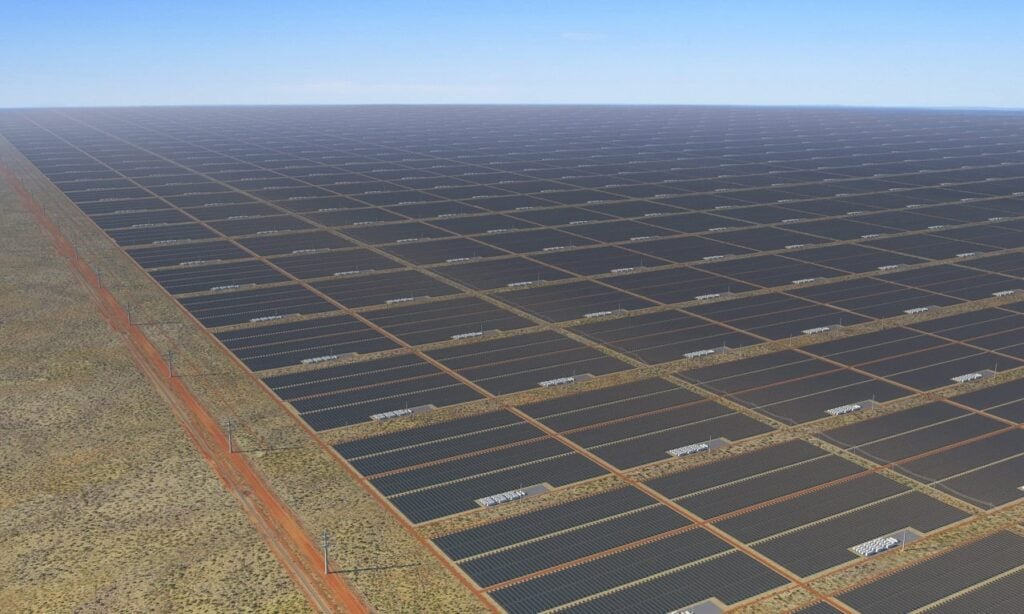
Renewable energy developer Sun Cable has secured approval from the Australian government for the Australian element of its Australia-Asia Power Link (AAPowerLink) interconnector.
In a statement made yesterday (20 August), Sun Cable said the project has been assessed and approved by Tanya Plibersek, the Commonwealth’s minister for the Environment and Water, under the Environment Protection and Biodiversity Conservation Act (EPBC). This approval follows the previous one secured from the Northern Territory government and NT Environment Protection Authority for the interconnector last month.
It is worth noting that the project received approval from Indonesian authorities in 2021.
The AAPowerLink project is set to deploy between 17GW and 20GW of solar capacity and between 36.42GWh and 42GWh of energy storage to connect Australia’s Northern Territory with Singapore via 4,300km of subsea cable and supply power to the territory’s capital, Darwin, and the surrounding region.
Try Premium for just $1
- Full premium access for the first month at only $1
- Converts to an annual rate after 30 days unless cancelled
- Cancel anytime during the trial period
Premium Benefits
- Expert industry analysis and interviews
- Digital access to PV Tech Power journal
- Exclusive event discounts
Or get the full Premium subscription right away
Or continue reading this article for free
The project aims to deliver up to 4GW of green electricity to Darwin’s green industrial customers over two stages of development. 900MW will be provided in stage one and approximately 3GW in stage two. 1.75GW will also be supplied to customers in Singapore.
Once complete, it will be capable of delivering up to 15% of Singapore’s total electricity needs via a 2GW high-voltage direct current (HVDC) subsea cable, Sun Cable said. Electricity supply is anticipated to commence in the early 2030s.
In Singapore, Sun Cable is working with the Singapore Energy Market Authority on the conditional approval application for the project’s subsea cable interconnector component. Sun Cable is also engaging with the Indonesian government on regulatory and permitting matters to prove that the subsea route includes knowledge and hydrographic data sharing.
To read the full version of this story, visit PV Tech.