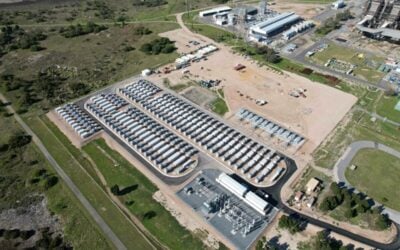
Australia’s Clean Energy Council has joined calls for the country to adopt a deployment target for energy storage, while arguing that a proposed capacity mechanism plan be scrapped.
The national Energy Security Board (ESB) published a draft high-level design proposal for a capacity mechanism earlier this month and is seeking input from stakeholders until 25 July.
Amid concerns Australia’s energy crisis won’t be solved in a business-as-usual scenario, the mechanism would be introduced into the National Electricity Market (NEM) which covers six Australian states.
Last week, Energy-Storage.news reported that the Clean Energy Council trade body had warned against including coal generators in the capacity mechanism as proposed. Australia’s energy policies should squarely focus on driving investment in renewable energy and energy storage, the council said.
Try Premium for just $1
- Full premium access for the first month at only $1
- Converts to an annual rate after 30 days unless cancelled
- Cancel anytime during the trial period
Premium Benefits
- Expert industry analysis and interviews
- Digital access to PV Tech Power journal
- Exclusive event discounts
Or get the full Premium subscription right away
Or continue reading this article for free
Another trade group, Smart Energy Council, said something similar, with the group’s CEO John Grimes emphasising that any capacity mechanism should be focused on zero emissions generation.
Environment Victoria, an advocacy group, said paying “aging and polluting” fossil fuel generators to keep running would be a dangerously retrograde step.
Capacity mechanism is ‘unnecessary’
Yesterday, Clean Energy Council announced a four-point plan which it said could accelerate the transition to renewables and storage, replace fossil fuels and make the grid more reliable and protect customers from energy price rises and volatility.
Along with introducing a storage target and dropping the capacity mechanism proposal, the other two points the council suggested would be to support solar and batteries for households, especially those with low incomes, or that live in public housing or rent their homes, and to more broadly modernise the grid.
“Australian households and businesses have just borne the brunt of an energy system built around the failing dirty technologies of the past – unreliable coal and expensive gas,” Clean Energy Council chief executive Kane Thornton said.
The energy crisis saw the Australian Energy Market Operator (AEMO) temporarily suspend all spot market trading in the NEM wholesale market from 15 June. Prices had soared, AEMO had introduced a price cap and energy supply was in a perilous situation.
The suspension was finally lifted on 24 June. Incidentally, battery storage in the NEM typically makes about 80% to 90% of its revenues from frequency control ancillary services (FCAS) and only a small portion from energy trading at present.
Thornton said that the introduction of a capacity mechanism in response to the crisis was unnecessary.
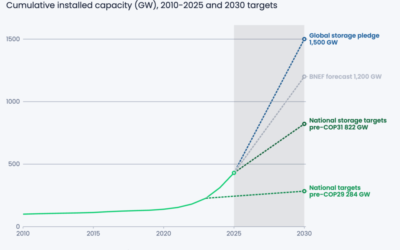
Instead, as suggested by academics at the Victoria Energy Policy Centre, a target for energy storage deployment could enable Australia to achieve its clean energy transition.
“Clean energy and storage can meet our energy and capacity needs and the technology is here now. A storage target can accelerate the deployment of batteries, pumped hydro and other means of storing energy when it’s needed,” Thornton said.
“A target worked for renewable energy in its formative years and can do the same for storage.”
If a capacity mechanism were to be introduced, it should certainly be designed to include and promote energy storage participation, according to the CEO at PXiSE, a grid control software firm headquartered in the US but with a growing involvement in the Australian market.
“With Australia’s recent power crisis caused in part by a loss in coal generation, it’s more pertinent than ever that the country adds greater and more flexible energy capacity,” PXiSE’s Patrick Lee said.
“The recent proposal from the ESB to add a capacity mechanism to the country’s National Electricity Market demonstrates Australia is taking steps to address generation shortfalls, and this could be an opportunity to add energy storage to the mechanism.”
Lee argued that the proposed capacity mechanism design would pay coal power plants to keep generating on “irregular and unprofitable dispatch schedules”. Instead, the ESB should support the deployment of energy storage at coal power plants.
“In this way, the country can gradually transition away from coal while maintaining sufficient generation capacity maximising the use of existing infrastructures, and energy providers can operate their storage and plant facilities at financially reasonable levels of generation. The capacity mechanism could also offer more financial support to renewable energy storage, to better support the ability of renewables to offset a loss in coal.”