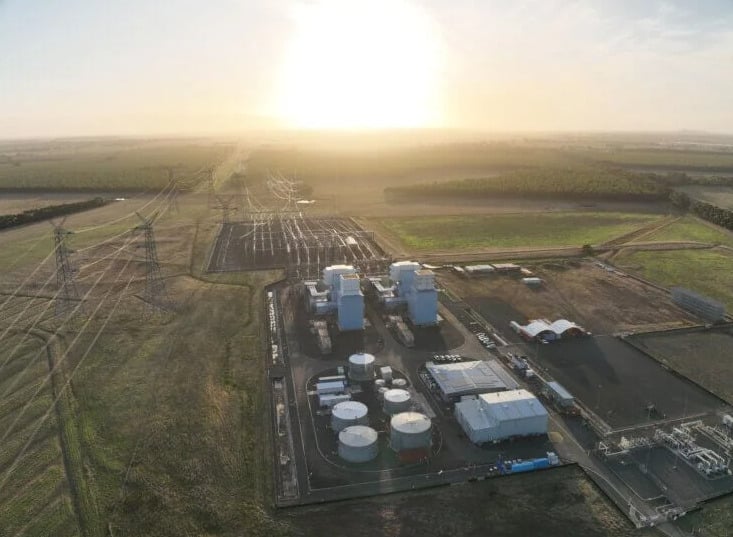
3.56GW of solar PV, wind generation and battery energy storage systems (BESS) have been selected to connect to the South West Renewable Energy Zone (REZ) in New South Wales, Australia.
Following a competitive tender process led by AEMO Services, the Energy Corporation of New South Wales (EnergyCo) confirmed that Origin Energy, Spark Renewables, Someva Pty, AGL Energy and BayWa r.e. have successfully secured access to the REZ.
The successful projects are mostly dominated by wind generation, with each of the four projects incorporating the technology into its designs. Only one site has a form of solar PV generation, whilst battery energy storage will be stationed at two of the sites.
Origin Energy’s Yanco Delta wind farm, Spark Renewables’ Dinawan Energy Hub, Someva’s Pottinger Energy Park and BayWa’s Bullawah Wind Farm have been announced as the successful projects.
Try Premium for just $1
- Full premium access for the first month at only $1
- Converts to an annual rate after 30 days unless cancelled
- Cancel anytime during the trial period
Premium Benefits
- Expert industry analysis and interviews
- Digital access to PV Tech Power journal
- Exclusive event discounts
Or get the full Premium subscription right away
Or continue reading this article for free
The Yanco Delta wind farm, with a generation capacity of 1,460MW, was acquired in April 2024 from Virya Energy. It is located on a 33,000-hectare site 10km north-west of Jerilderie in the Riverina district.
The other solely wind generation project is BayWa r.e. Australia’s Bullawah Wind Farm, with a generation capacity of 262.3MW. The project could be scaled to include around 1,000MW of generation.
The only project to incorporate solar PV is Spark Renewables’ Dinawan Energy Hub, which will have a capacity of 1,007MW spread across solar, wind and battery energy storage.
The hybrid site, located within the Riverina region of New South Wales, will be within the heart of the REZ. According to the project’s website, there will be around 800MW of solar PV, 1,200MW of wind and a 300MW/600MWh BESS. It has not been specified how much of the awarded REZ capacity will be allocated to each technology.
The last successful project granted the right to connect to the REZ is Someva’s Pottinger Energy Park, which is being developed with AGL Energy. With a capacity of 832.1MW having been awarded, this will be spread across wind generation and a co-located BESS.
Penny Sharpe, the New South Wales minister for climate change and energy, said the REZ will unlock around AU$17 billion (US$10.85 billion) in private investment across solar, wind and energy storage.
“These projects will help ensure New South Wales has enough renewable energy generation and storage when coal-fired power stations retire. They also give certainty to host communities, who will directly benefit from the fees paid by these companies to connect to the REZ,” Sharpe added.
The first projects are expected to come online from 2027 to 2030.
To read the full article, please visit PV Tech.