“Policy and market frameworks must evolve” in ASEAN countries to unlock the full value of energy storage in the region’s energy transition, according to a new report.
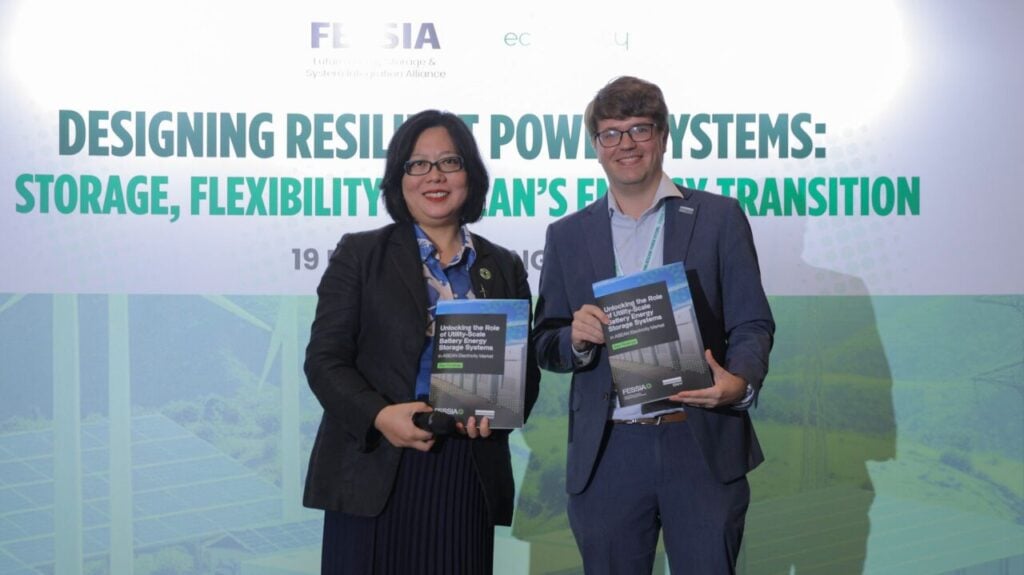
The Future Energy Storage & System Integration Alliance (FESSIA), a new non-profit industry alliance formed last year, has just released its first report, ‘Unlocking the role of battery energy storage systems (BESS) in ASEAN electricity markets.’
It notes that while high-value use cases already exist for BESS to deliver ancillary services in the Philippines and Vietnam, due to evolved market frameworks and policy support, other countries in the 11-strong intergovernmental Association of Southeast Asian Nations (ASEAN) have yet to follow suit.
The report, developed in collaboration with DNV, describes BESS as the “missing link” in ASEAN’s energy transition. It argues that with electricity demand and renewable energy deployment rising across the region and battery storage increasingly adopted around the world, the ability of regulatory frameworks to keep pace with market and technology transformation is now the main issue, not technology readiness.
Try Premium for just $1
- Full premium access for the first month at only $1
- Converts to an annual rate after 30 days unless cancelled
- Cancel anytime during the trial period
Premium Benefits
- Expert industry analysis and interviews
- Digital access to PV Tech Power journal
- Exclusive event discounts
Or get the full Premium subscription right away
Or continue reading this article for free
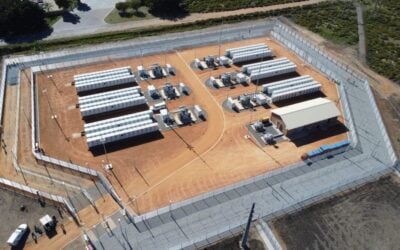
Despite global trends, such as a near-90% reduction in BESS costs since 2013 and the large-scale deployment of solar PV and wind, FESSIA has counted just 1.4GW of BESS in operation across ASEAN countries and around 400MW of operational projects.
BESS does not fit neatly into existing regulatory classifications, given its unique characteristics, such as ultra-fast response times and the ability to stack revenues from different use cases. However, the regulatory environment is more developed in mature markets elsewhere, and ASEAN countries could learn from these and from the early-adopter examples of the Philippines and Vietnam within their region, FESSIA said.
BESS ‘must become central’ in planning, operations and market design
FESSIA was launched last year by Global Wind Energy Council (GWEC) chief strategy officer Liming Qiao, a clean energy strategist based in Singapore. Its partners include the Asian Photovoltaic Industry Association (APVIA), the Global Solar Council, the renewable energy policy network REN21, the Philippine Solar and Storage Energy Alliance (PSSEA), and the global coalition Utilities for Net Zero Alliance (UNEZA).
In announcing the new report, Qiao said that the value of flexibility in the power system, which BESS can help provide, “must become central to power-system planning, operations, and market design.”
“The first phase of the transition is focused on deploying renewable energy. The last 10% will depend on whether power systems can integrate renewables reliably at scale,” Qiao said, adding that energy storage should “not be viewed simply as a power bank.”
“Its real value lies in the broader flexibility and system services it can provide, including ancillary services, energy shifting, renewable energy hybridisation, and transmission and distribution deferral. To unlock the full value of BESS, policy and market frameworks must evolve to properly value flexibility and create stronger investment signals for the next generation of energy infrastructure,” Qiao said.
Regional first-movers: Philippines, Vietnam
In the Philippines, the wholesale electricity market combined with government policy support have enabled initial investments in BESS, while a draft framework for regulation is passing through legislative chambers.
In Vietnam, a recent government decree defining BESS applications and pricing mechanisms is an “important first step” toward unlocking the market.
In both instances, there are still gaps and uncertainties in regulation that prevent the countries from fully benefiting from BESS resources. DNV found that, if scaled up, co-located solar and BESS could deliver US$2.25 billion in yearly revenues in the Philippines by 2030, and making BESS the cornerstone of the Philippines ancillary services market could cut system costs by up to US$275 million annually.
In Vietnam, more than US$750 million in investment could be attracted into battery storage this year, given the business case across multiple use cases. This figure could scale to US$5.7 billion by 2030, the report found.
The report makes a full assessment of current conditions in each market, including the profitability of different applications from ancillary services to hybridisation with renewable energy, energy shifting and transmission and distribution (T&D) investment deferral.
It then identifies regulatory gaps and recommends improvements to the regulatory framework, finding that, even for these regional leaders, current market conditions fall well short of optimal.
For instance, while ancillary services opportunities are profitable in the Philippines, there is a lack of ability to stack those revenues with energy shifting, given that current regulations do not recognise batteries as a bi-directional asset for the network’s benefit.
Revenue stacking, the FESSIA report argues, is essential to unlocking the full economic and system value of storage, as seen in mature markets.
Stacking revenues strengthens project economics, improves investment certainty and reduces exposure to market volatility and regulatory changes. At the same time, that versatility enables energy storage resources to respond dynamically to the system’s changing needs.
“Accelerating the energy transition across ASEAN requires electricity markets and regulatory frameworks to evolve to fully realise the system value that BESS can provide,” Dr Matthew Rowe, director for power grids Asia-Pacific at DNV Energy Systems, said.
“In both the Philippines and Vietnam, many of the highest-value use cases for storage depend on clearer operational rules and mechanisms that properly recognise the fast-response and flexibility capabilities of BESS, with revenue stacking offering additional upside by strengthening project economics and reducing investment risk.”
FESSIA has published a summary of the report’s key findings, while the full report is currently undergoing peer review and will be available soon, the organisation said.
Energy-Storage.news publisher Solar Media (part of the Informa Group) will host the Energy Storage Summit Asia 2026 on 1-3 July at QSNCC, Bangkok, Thailand. The conference takes place during ASIA Sustainable Energy Week 2026 (ASEW), the region’s most influential platform for driving clean energy. For more information, visit the official website.