Australian energy major AGL Energy has submitted a 3,200MWh pumped hydro energy storage (PHES) project in New South Wales to the Australian government’s Environment Protection and Biodiversity Conservation (EPBC) Act.
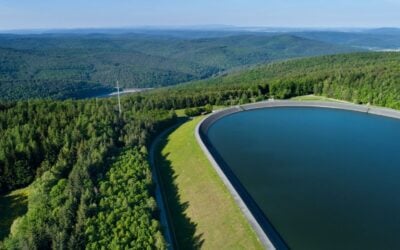
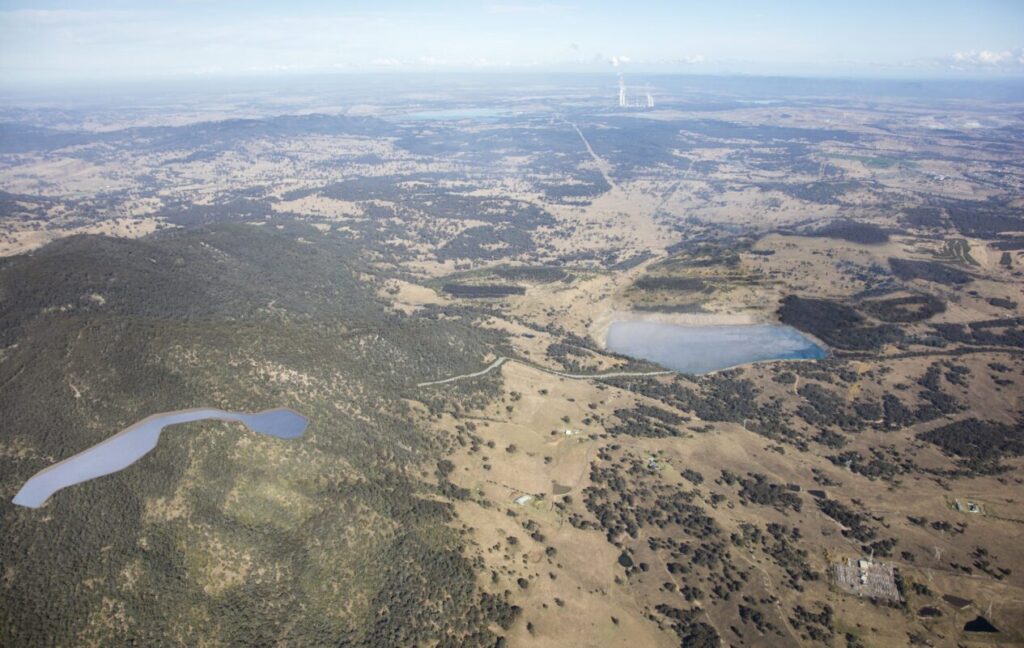
The Muswellbrook pumped hydro project will be located in the Upper Hunter region of New South Wales. The site will comprise a lower reservoir within an existing coal mine void owned by the Muswellbrook Coal Company and an upper reservoir located at Bells Mountain.
The 400MW 8-hour duration pumped hydro project will source water from the Hunter River, a 300km network that rises in the Liverpool Range and flows south and then east before reaching the Tasman Sea at Newcastle.
It is worth noting that the proponent pursuing the project is Muswellbrook Pumped Hydro Ltd, a joint venture between AGL Energy and Idemitsu Renewable Developments Australia, a subsidiary owned by coal mining company Idemitsu Australia.
Try Premium for just $1
- Full premium access for the first month at only $1
- Converts to an annual rate after 30 days unless cancelled
- Cancel anytime during the trial period
Premium Benefits
- Expert industry analysis and interviews
- Digital access to PV Tech Power journal
- Exclusive event discounts
Or get the full Premium subscription right away
Or continue reading this article for free
The companies confirmed in its EPBC Act application that the power waterway tunnels connecting upper and lower reservoirs will be approximately 2km in length. If approved, an underground hydroelectric power station complex containing turbines with up to 400MW of electricity generation capacity, with associated infrastructure, water and access tunnels, surge tanks, and inlet and outlet structures, will also be developed.
It will feed into the National Electricity Market (NEM) with direct transmission linked to Newcastle and Sydney.
Muswellbrook pumped hydro deemed ‘critical’ to New South Wales
The project’s potential caught the eye of the New South Wales government’s eye last year, including the Muswellbrook pumped hydro project among three designated Critical State Significant Infrastructure (CSSI) last year for economic, social, and environmental reasons.
Other projects included in this CSSI categorisation were energy generator and retailer Alinta Energy’s 7,200MWh Oven Mountain site and the 3,600MWh Stratford Pumped Hydro and Solar project.
The project’s scoping report outlined that the site would “provide significant scale, deep storage and flexible, dispatchable generation and is aligned with New South Wales’ energy reliability needs and the objectives of the New South Wales Electricity Strategy and the New South Wales Electricity Infrastructure Roadmap.”
This Roadmap intends to support the private sector in delivering 12GW of new renewable energy generation and 2GW of long-duration energy storage (LDES) capabilities.
It would also support the development of Renewable Energy Zones (REZs) in New South Wales, specifically the Hunter-Central Coast REZ, where the project will be located.
Queensland Hydro pushes on with 48GWh PHES despite government scrutiny
Despite mixed signals in New South Wales’ northern neighbour, Queensland, the state-owned pumped hydro developer Queensland Hydro said last month it would progress the development of its 2GW/48GWh Borumba site despite state government concerns about its viability.
As reported by Energy-Storage.news in February, the developer is inviting comments on its draft preliminary documentation, which the Commonwealth government is assessing as part of the approval process for the Borumba project’s proposed exploratory works.
This is despite the Queensland government having said it was set for crunch talks with Queensland Hydro to “save the project” in December, citing that the project’s cost had increased to AU$18 billion (US$11.3 billion) and had been delayed by three years.
The crunch talks came soon after the right-wing Liberal National Party (LNP) of Queensland, led by Premier David Crisafulli, which won the state election in October 2024, cancelled the 5GW/120GWh Pioneer-Burdekin Pumped Hydro Project.
Our publisher, Solar Media, will be hosting the Energy Storage Summit Australia 2025 in Sydney from 18-19 March. You can get 20% off your ticket by following the link here.