A project to integrate electric vehicle fast-chargers into ancillary services markets in Austria could be widely replicated, according to technology provider ADS-TEC Energy.
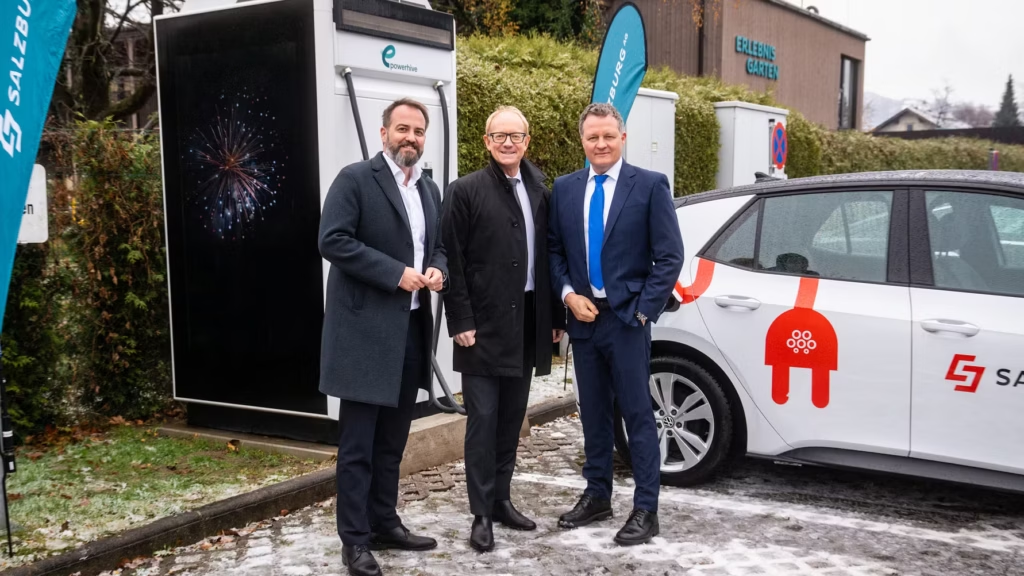
The prequalification of fast-charging technology for participation in grid balancing was announced in late November by Salzburg AG, a utility, and ADS-TEC Energy, a developer and manufacturer of battery storage-based electric vehicle (EV) charger platforms.
Austria’s ancillary markets see bidders vye to provide frequency and voltage regulating services, including frequency containment reserve (FCR, also known as primary control reserve, or PCR), automated frequency restoration reserve (aFRR) and manual frequency restoration reserve (mFRR).
ADS-TEC’s ChargePost EV fast charger is now cleared to participate in Salzburg AG’s virtual power plant (VPP) pool, where it will join other assets, including small hydropower systems, in supplying “positive and negative reserves” to the balancing market, a Salzburg AG spokesperson told Energy-Storage.news.
Try Premium for just $1
- Full premium access for the first month at only $1
- Converts to an annual rate after 30 days unless cancelled
- Cancel anytime during the trial period
Premium Benefits
- Expert industry analysis and interviews
- Digital access to PV Tech Power journal
- Exclusive event discounts
Or get the full Premium subscription right away
Or continue reading this article for free
Salzburg AG has been operating the VPP since 2013 with its hydroelectric fleet.
“With the continued rollout of battery-equipped charging stations, the company aims to build an additional battery pool with a dedicated operating strategy,” the utility spokesperson said in a brief interview.
Locations for the chargers are determined using AI-based backtesting to assess the possible return on investment (ROI). The integration of aggregated VPP resources is enabled through Salzburg AG’s energy storage and VPP optimisation platform, Powerhive.
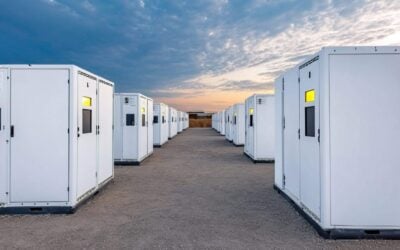
ChargePost, which ADS-TEC describes as an all-in-one solution with 201kWh capacity per unit, now offers three revenue streams for its utility partner: its primary EV charging function, ancillary services, and digital screen advertising on the units’ facades.
“Technically, dual-use setups like this are fully transferable to other regions,” ADS-TEC Energy director of product marketing for charging, Sascha König, told Energy-Storage.news.
“The key factor is market access: systems need to be prequalified for ancillary service participation in each country before such applications can scale.”
In other words, while dual use could be replicated, the “decisive factor” is whether the systems or aggregated clusters of systems can be prequalified for ancillary services provisions in the respective markets.
ADS-TEC’s technology is designed to be deployed across Europe, but the scalability of this type of project depends primarily on local frameworks and prequalification processes.
Optimisation for dual use
One challenge that the dual use of EV chargers might face is optimising the systems’ use across the different applications.
This is a challenge shared by providers of VPPs looking to utilise residential battery systems or vehicle-to-grid (V2G) bidirectional charging for grid services in addition to their usual behind-the-meter (BTM) applications.
The utility spokesperson said that the system is “generally operated using prediction models to ensure an optimal balance between EV charging and feed-in for ancillary services.”
“Simultaneous EV charging and feed-in is technically possible for certain periods, but charging points are currently not made available during a feed-in call in order to ensure infrastructure security. Salzburg AG is still collecting the necessary empirical data for this operating mode,” the spokesperson told Energy-Storage.news.
ADS-TEC Energy has scored EV charger orders in the past few months in Germany and Belgium, entering the Austrian market in May. It also has a US arm. ADS-TEC Energy, established around 10 years ago as an offshoot of ADS-TEC Group, builds battery storage-based platforms that include battery energy storage system (BESS) solutions as well as its e-mobility products.
In September, the company claimed it intends to deploy a 1GW/2GWh stationary BESS project in southern Germany, hoping to finalise project development and financing by mid-2026. The project would be co-located with large-scale solar PV and ADS-TEC said that, based on 2024 market data from management consultancy P3 Group, could earn more than €230 million (US$268.4 million) per year.
While details were not disclosed, ADS-TEC said the local city council has approved the project, and the relevant transmission system operator (TSO) has granted formal grid connection approval.
Listed on the NASDAQ, ADS-TEC Energy released its first-half financial results for 2025 in September, noting that despite “some delays” impacting its legacy EV charging business, “no significant business opportunities have been lost.”
The company reported €14.6 million revenue for the six months ending 30 June 2025, including €4.6 million in service revenues—which was year-over-year a near-tripling of service revenues from €1.6 million in the equivalent period of 2024.
Reported gross profit ran at a loss of €6.7 million, a significant improvement from €15.7 million loss in H1 2024. In May, ADS-TEC raised US$50 million in financing from institutional investors in the US and ended the first half of the year with what it said was a solid cash position, holding €37.9 million.