Australia’s New South Wales will require 56GWh of energy storage by 2030, amounting to 40% more than projected just six months ago, as the state’s renewable energy mix shifts dramatically toward solar generation.
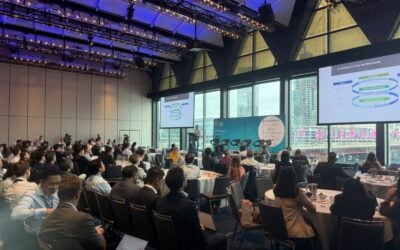
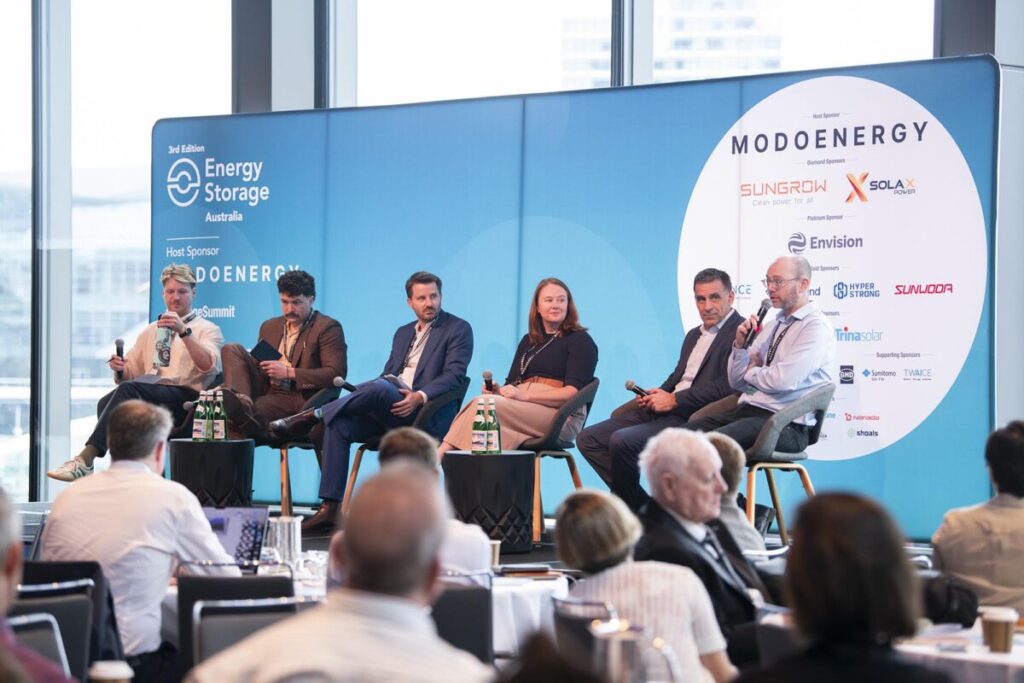
Australia’s energy storage market faces an urgent deployment challenge that has intensified significantly in recent months, according to a panel discussion this morning at the Energy Storage Summit Australia 2026 in Sydney.
The state of New South Wales alone must now deliver 56GWh of storage capacity by 2030, up from 40GWh projected in mid-2025, yet currently has only 12.5GWh contracted or in delivery.
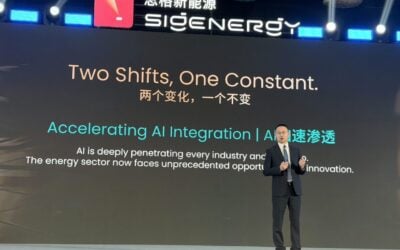
Speaking on the second day of the conference hosted by our publisher Solar Media (part of the Informa Group), Paul Peters, CEO of the Energy Security Corporation, New South Wales’ government investment platform for the energy transition, explained that the dramatic revision stems from fundamental changes in the state’s generation mix.
Try Premium for just $1
- Full premium access for the first month at only $1
- Converts to an annual rate after 30 days unless cancelled
- Cancel anytime during the trial period
Premium Benefits
- Expert industry analysis and interviews
- Digital access to PV Tech Power journal
- Exclusive event discounts
Or get the full Premium subscription right away
Or continue reading this article for free
The Australian Energy Market Operator’s (AEMO’s) draft Integrated System Plan, released late last year, shifted assumptions about renewable energy deployment from a 50-50 split between solar and wind to approximately 75% solar and 25% wind.
“The sun doesn’t shine as much as the wind blows, and so you need 40% more storage operational by 2030,” Peters said. “We’ve moved 10TWh to 20TWh, or 10.5GWh of new generation into solar that wasn’t there. That’s to 2030 in the ISP, not even a 2035 number.”
The implications extend beyond simple capacity requirements. The shift toward solar generation changes the role storage must play in the grid, moving from primarily arbitrage assets that capture price differentials to genuine reliability and security assets that underpin system stability.
Peters noted that, where the first dozen batteries in New South Wales were mainly 2-hour duration systems, most of the required 40GWh must now be 8-hour or longer, with a legislative target of 16GWh at that extended duration.
Thimo Mueller, general manager, commercial, at ASL, which administers New South Wales’ Electricity Infrastructure Roadmap tender programs, confirmed that the market is responding to these signals.
“What we see now is a lot of the bids that we’re seeing in tenders, also for hybrid projects, are at the four-hour mark,” Mueller said. “The gap is actually between the 4-hours and 8-hours.”
He credited the state’s long-duration energy storage (LDES) tender programme with making 8-hour projects bankable, noting that without policy support, market settings alone would not yet justify the investment.
The deployment bottleneck
Despite the hot market conditions and abundant capital interest, getting projects from development to financial investment decision remains the critical constraint.
Tom Best, chief operating officer of Eku Energy, a pure-play energy storage developer operating across Australia and internationally, identified three certainty gaps blocking faster deployment: revenue certainty, planning certainty, and grid connection certainty.
“It’s not just a short-term revenue line, it’s a long-term revenue line,” Best explained. “By securing a long-term revenue line, you’re able to bring the lowest or cheapest form of capital into your project and ultimately deliver energy storage to the lowest cost to consumers.”
He noted that planning regime changes are adding six-month delays to projects, while the transition from open access to transmission rights schemes in New South Wales and Victoria creates uncertainty for projects outside designated renewable energy zones.
Peters emphasised that the challenge extends beyond individual project risks to the sequencing and timing of multiple interdependent elements. Traditional project finance requires everything to align simultaneously: bankable engineering, procurement and construction contracts, sufficient offtake agreements, planning approvals, and grid connection certainty.
Yet the timeline from securing offtake to reaching financial close can stretch 12 to 18 months, during which market conditions and project economics can shift significantly.
“The ability to sequence that and hold the numbers together through a long period of time while you’re waiting for all of that, they move from the time you get an offtake to the time you get to contract,” Peters said.
The Energy Security Corporation’s role includes providing flexible capital that can unbundle these risks, supporting projects through grid connection processes, ordering long-lead equipment items ahead of traditional financing timelines, and accepting lower debt service coverage ratios to accelerate deployment.
Technology mix and market evolution
The panel discussion revealed a nuanced view of how different energy storage technologies will complement each other in Australia’s future grid.
Erin van Maanen, executive general manager of Strategy at Hydro Tasmania, emphasised that the question is not batteries versus pumped hydro but rather how much of each technology the system requires.
“When I say batteries, I’m generalising kind of storage up to that 8-hour level, that’s going to play a really important role in terms of that shifting of solar generation around to the parts of the day that it’s needed,” van Maanen said.
“But it’s largely going to do that quite right-sized to that task.”
She explained that batteries will be optimised for the average daily storage requirement, not the tail events that occur during extended periods of low renewable energy generation or high demand.
“When we’re talking about the tails of the distribution, when we’re talking about the balancing of wind between periods of days that are windy, periods of days that are not windy, parts of the season in winter, that’s really the role of longer duration storage,” van Maanen continued.
Pumped hydro becomes cost-effective for durations from 8-20 hours and beyond, as battery costs scale linearly with duration while pumped hydro’s energy storage costs are largely decoupled from power capacity.
Peters reinforced the continued importance of wind generation despite the solar-heavy trajectory, noting that defending 24/7 loads for data centres and industrial facilities requires energy availability around the clock.
“Even if you have an 8-hour battery and 8-hours of sun, you don’t have enough energy. The wind tends to blow at night, and so that’s what I was like, just doubling down on. We still need the wind in a renewable energy system to defend a 24/7 load for the state’s consumption.”
Mueller announced that AEMO Services will launch a hybrid-specific tender this year following extensive industry consultation on commercial structures.
With 25GW of hybrid projects identified in New South Wales alone, the tender will allow both solar and wind projects with co-located storage to compete, recognising the complementarity between seasonal generation patterns and the value of integrated development.