
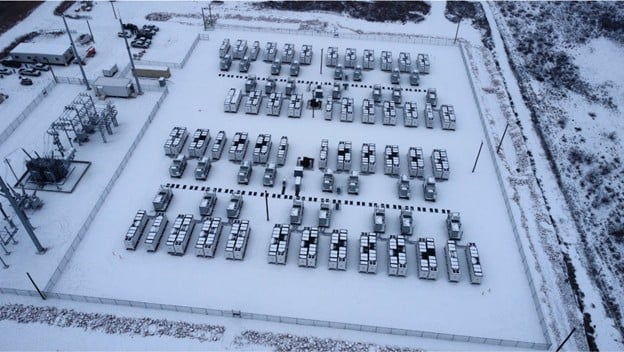
Winter Storms cause major disruptions, but Texas’s fleet of battery storage plays an increasing role in grid resilience, writes Randolph Mann, CEO of esVolta.
It’s a great time to take note of how battery energy storage has helped improve ERCOT’s grid resilience since 2021, when the devastation and power outages caused by Winter Storm Uri shocked the nation. Energy storage demonstrated its ability to meet critical peak power demands during Winter Storm Fern in late January this year, and underscored that the discussion around energy storage in Texas is steadily shifting to ensuring continued resource adequacy in the face of booming electricity demand.
Today, Texas’ large-scale battery fleet can respond almost instantaneously, deploying power to the grid if thermal plants trip offline or generation resources are in short supply. Now, batteries can supply hours of support, helping avoid shortfalls that can cascade into costly or even dangerous power outages.
Over the span of the five-day Winter Storm Fern event, esVolta’s fleet of battery energy storage projects delivered more than 5,500MWh of energy and over 5,000MWh of ancillary services to the ERCOT power grid.
Try Premium for just $1
- Full premium access for the first month at only $1
- Converts to an annual rate after 30 days unless cancelled
- Cancel anytime during the trial period
Premium Benefits
- Expert industry analysis and interviews
- Digital access to PV Tech Power journal
- Exclusive event discounts
Or get the full Premium subscription right away
Or continue reading this article for free
The energy we discharged was concentrated in the most critical intervals—when power supply was tightest, and reliability needs were most acute—and was sufficient to meet the equivalent needs of millions of Texas homes. The ancillary services were provided throughout the event, supplying reserves that are critical to keeping the grid stable and reliable during periods of extreme volatility.
Since Uri, Texas has quickly emerged as the nation’s leader in energy storage. Entering 2026 with 13.9GW and 22.9GWh of commercially operational grid-scale BESS capacity, the Lone Star State now boasts more storage resources than any other state, according to market intelligence firm Modo Energy.
It is also using them more efficiently with the new Real-Time Co-optimization Plus Batteries (RTC+B) market design, which optimises energy reserves against real-time energy needs to advance cost-effective grid flexibility and stability. In the wake of Winter Storm Fern, ERCOT acknowledged the success of RTC+B, which had only just been deployed in December 2025.
But it’s important not to become complacent. As always, Texas is open for business! This will lead to big increases in electricity demand from new data centres, greater building and vehicle electrification, industrial expansion and population growth. Infrastructure upgrades will need to keep pace.
While Texas benefits from its ‘all-of-the-above’ energy strategy, we see energy storage as the most viable and financeable near-term tool to minimise the negative planning reserve margins forecasted over the next couple of years. This is doubly true, as many other traditional energy resources face complex constraints, including permitting, supply chains, and uncertainties around tariffs and foreign entities of concern (FEOCs).
Fundamental needs of the market must be backed by investor confidence
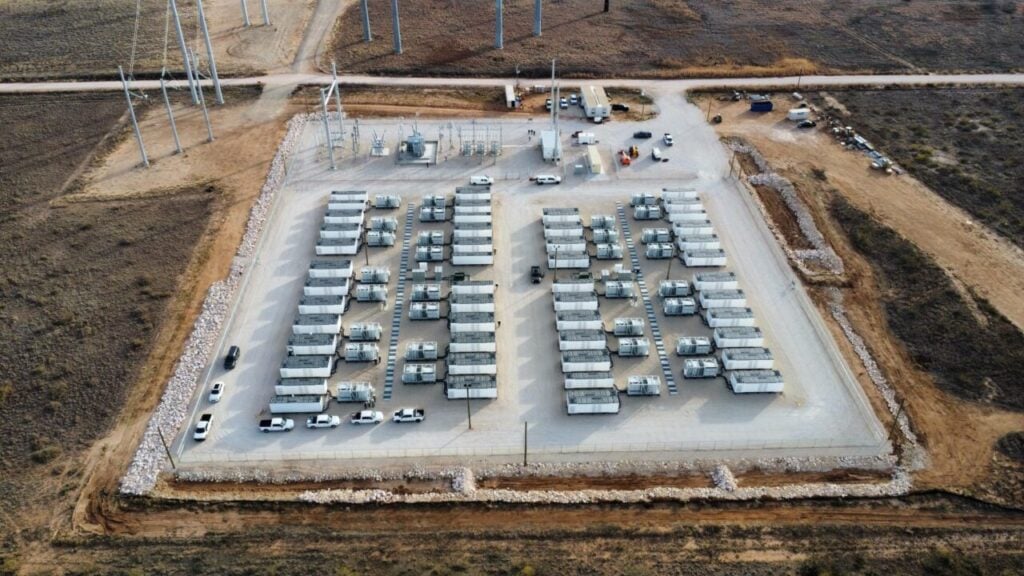
The Texan energy storage fleet has not disappointed – it nearly doubled in 2025. Yet Texas will need to add even more capacity in the coming years, and rising to the challenge will require improvements in storage economics, duration, and market rules.
Recent research from Modo Energy shows that interconnection queues are lengthening, fewer new projects are applying, and more projects are falling into the pre-Notice To Proceed (NTP) development crevasse.
Without greater certainty around energy storage project economics, this trend is likely to continue. The key is that, despite the coming demand growth and occasional price spikes during events like Fern, forward power prices remain low. This sounds great for affordability, but the reality is it doesn’t send a strong enough signal yet to motivate the new resource builds, which will be needed to meet the coming demand.
Our company is building two new large storage projects in Texas today, and these assets are supported by innovative long-term offtake agreements we executed with large corporate energy users. More of this type of contracted offtake – from utilities, retailers, and corporates – will be needed to support big capital investment decisions to deploy new storage resources.
In December 2025, ERCOT reported that most new storage resources connecting to the grid are now 2-hour duration. From a grid reliability perspective, this is a material improvement on the old de facto standard: 1-hour duration. But as we saw vividly during Winter Storm Fern, peak demand periods are getting longer in ERCOT.
Our company is already developing several new Texas storage projects that are planned for 4-hour duration. But even so, 4-hour projects are predicted to make up less than 10% of capacity additions through 2029, according to market risk management experts Pexapark.
Again, economics are key – longer duration storage requires more capex, and this investment needs to be supported by greater revenue opportunities. We’re optimistic that ERCOT’s new Dispatchable Reliability Reserve Service (DRRS) product will help. It’s an ancillary service designed for dispatchable generation resources capable of starting rapidly and sustaining their maximum output for at least 4 hours.
Storage can absolutely perform this service, and it’s critical that it’s allowed to participate from the outset.
Energy storage industry must continue to advocate and educate
Shifting focus to the third element: system balance, Texas Senate Bill 6 (SB6) was designed to reduce the risk of blackouts during extreme demand peaks by tightening interconnection requirements for large loads and giving ERCOT the power to curtail large loads before and during grid emergencies. And by 2030, one-third of Texan data centres are expected to have on-site power, further helping ensure sufficient resources will be available to meet all Texans’ electricity needs.
These factors will be helpful, but enabling new large load and data centre development is important to economic growth in Texas. Our company believes that grid-connected energy storage assets will provide critical infrastructure that will facilitate faster and greater buildout of data centres, while also ensuring grid reliability and affordability needs are achieved.
It’s up to the energy storage industry to continue advocating and educating stakeholders on these issues and the importance of taking their foot off the brake pedal in deploying energy storage. This means we must continue to earn the trust and understanding of community members and local and state policymakers through transparency and a steadfast commitment to safe operations.
Ultimately, Texas’ ability to withstand the next Fern— or an even more severe storm —will hinge not on whether energy storage works, but on whether the state can continue to align market design, finance, policy, and community trust quickly enough to deploy it at the scale, duration, and speed the future grid demands.
About the Author
Randolph Mann is the founder and CEO of esVolta, an integrated developer of energy storage assets active in the industry since 2017 with capabilities spanning development, engineering, financing, and construction, as well as ownership, management, and optimisation. Mann has over thirty years of experience identifying, creating, and scaling strategic growth initiatives in the energy business. Prior to founding esVolta, Randolph served as President of Salt Creek Energy Advisors, which provided energy clients with services including strategy consulting, transaction diligence and execution, project development, and economic analysis.
Randolph Mann is among the speakers at Energy Storage Summit USA, which will be held from 24-25 March 2026, in Dallas, TX. It features keynote speeches and panel discussions on topics like FEOC challenges, power demand forecasting, and managing the BESS supply chain. ESN Premium subscribers can get an exclusive discount on ticket prices. For complete information, visit the Energy Storage Summit USA website.