Residential energy storage in Germany for PV self-consumption could be handed a boost in 2020, as some of the earliest premium feed-in tariffs (FiTs) begin to expire.
Representatives of Israeli solar inverter, power optimiser and energy management specialist SolarEdge and Germany’s residential energy storage market leader Sonnen recently told Energy-Storage.News of their hopes for the sector.
Germany, the earliest adopter of a successful FiT programme with over 40GW of installed PV generation capacity across the various scales, brought the policy in as part of its Renewable Energy Sources Act (EEG; Erneuerbare-Energien-Gesetz) in 2000.
At the Intersolar Europe / ees Europe trade shows in Munich at the beginning of this month, Sonnen’s sales director Philipp Schröder – formerly with Tesla – explained that his company is gunning for a market opportunity that is likely to fall into place. FiT agreements were valid for 20 years, guaranteeing PV systems top prices for electricity generated or put into the grid.
Try Premium for just $1
- Full premium access for the first month at only $1
- Converts to an annual rate after 30 days unless cancelled
- Cancel anytime during the trial period
Premium Benefits
- Expert industry analysis and interviews
- Digital access to PV Tech Power journal
- Exclusive event discounts
Or get the full Premium subscription right away
Or continue reading this article for free
As Schröder pointed out, this means they will begin to expire in less than three years, leaving system owners with the choice of continuing to generate power for nothing, or install a battery and make sure they get the maximum value from utilising that power on-site themselves.
“There are 1.6 million assets in Germany. Hundreds of thousands of them will fall out of the FiT and they will literally produce electricity for free – and we are taking that market,” Schröder said.
“When a customer gets a system from us, we leave him or her with a fully-functioning power plant that can do negative electricity, positive electricity and when it’s written off, it produces free electricity.”
Philipp Schröder claimed that Sonnen’s investment in the grid services and metering and monitoring aspects of its offerings put it in a good position to squeeze long-term value out of those assets.
“You get these smart boxes [cloud-connected smart meters and energy management] for free and they will refinance the system entirely – and you get the energy saving from the electricity bill for free. You have your own consumption advantage; let’s say 70% of what you consume you can generate and store just with this box. Then you get the additional smart meters and they will give you free electricity for another 30%. In value, Tesla cannot do it, LG cannot do it – it’s refinancing the system.”
SolarEdge VP of marketing and product strategy, Lior Handelsman, agreed that “of course”, the expiration of FiTs presented an inflection point, adding that “in three years’ time, storage will be much cheaper too”.
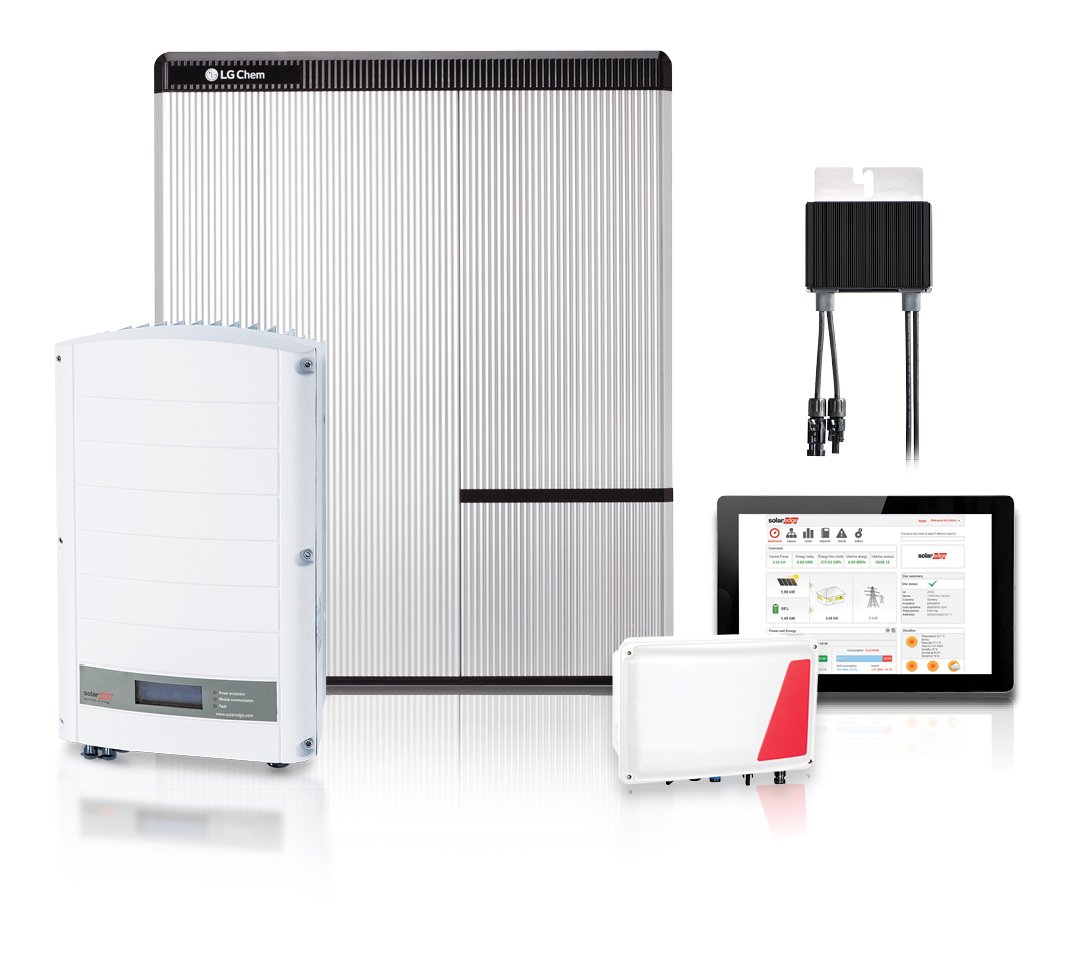
SolarEdge was presenting its LG Chem high-voltage battery-compatible inverters at the show, modelled on groundwork the company had put in making its systems compatible with Tesla’s Powerwall a while ago.
“Of course we see that [2020] as an inflection point. The same thing has happened in the US and Australia. FiTs for very old systems expiring and some of the system owners are looking to add storage to get back revenue,” Handelsman said, although he qualified that statement by saying he didn’t expect a “stampede” but that demand would rise accordingly.