
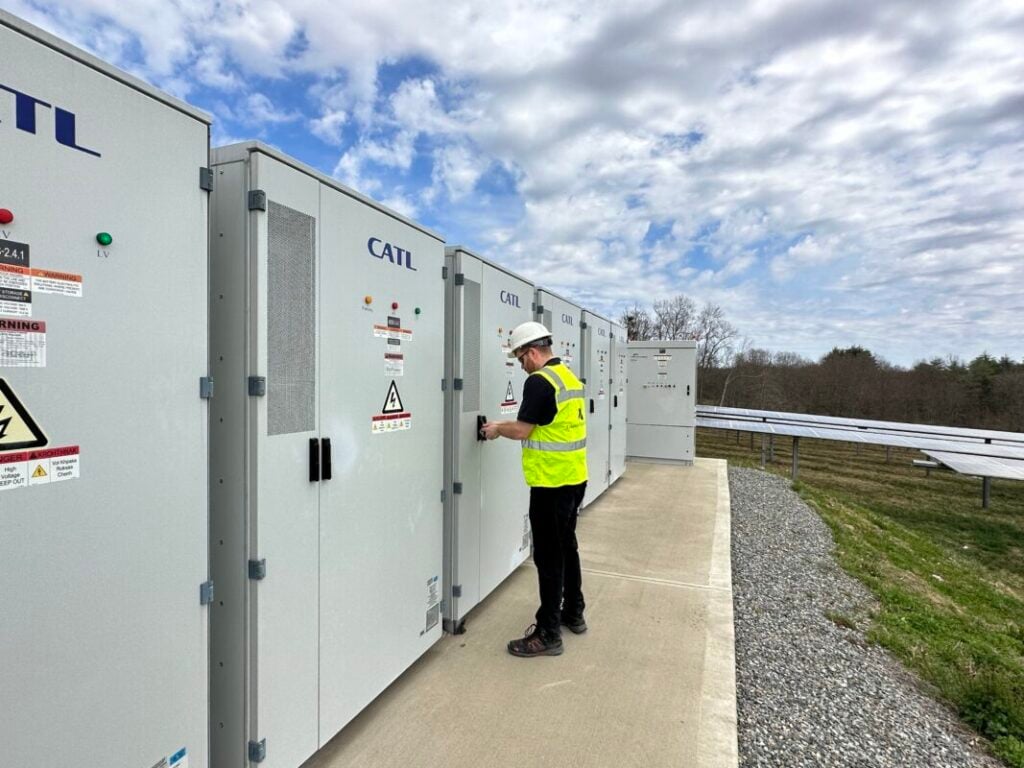
Commissioning is often an underestimated final step in the hard work it takes to bring a BESS project online, writes Lynn Appollis-Laurent of Camelot Energy.
Teams often treat the commissioning of battery energy storage systems (BESS) as a late-stage checkbox rather than a project-defining discipline. Projects can succeed or fail during commissioning. However, most commissioning failures stem from organisational, contractual, and procedural lapses rather than technical issues.
While many engineers and project managers bring deep experience in solar and wind, you can’t apply the same approaches to energy storage. Energy storage systems are more complex — both technically and commercially — and require a higher degree of integration, training, and engineering discipline to commission a battery energy storage system successfully.
A structured, phased commissioning plan brings every discipline together from the outset, with clear tasks, ownership, and dependencies in their sequential order, minimising surprises and delays. This approach not only safeguards project integrity and compliance but also establishes clear responsibilities, fosters ownership, collaboration, and accountability among project stakeholders.
Try Premium for just $1
- Full premium access for the first month at only $1
- Converts to an annual rate after 30 days unless cancelled
- Cancel anytime during the trial period
Premium Benefits
- Expert industry analysis and interviews
- Digital access to PV Tech Power journal
- Exclusive event discounts
Or get the full Premium subscription right away
Or continue reading this article for free
Ownership, transparency, and accountability are non-negotiable
Commissioning is not simply that final checkbox at the end of the project. Instead, effective commissioning begins at project initiation and continues as an ongoing process, overlapping with construction, through to acceptance testing.
Risks from early decisions made in isolation are often overlooked. However, their impacts become evident later in the project — triggering delays and costly fixes precisely when the schedule can least absorb them.
Commissioning problems often result from a lack of a cohesive, integrated plan that considers all stakeholders. While each contractor may have its own comprehensive Responsible, Accountable, Consulted, and Informed (RACI) matrix, minimising commissioning risks requires a single, fully integrated RACI matrix that addresses all the project’s components and phases.
Defining ownership, clear roles, responsibilities, accountabilities, and dependencies at the outset of the project ensures smooth handovers. EPCs, subcontractors, OEMs, owners, and other involved parties often identify scope gaps too late to avoid scheduling delays. These details, although small, are easily overlooked, yet can cause massive headaches and costs.
A fully integrated commissioning may seem prohibitively long, detailed, and too complicated for practical use. However, the lack of a master plan often results in rework, confusion, back-and-forth, and ultimately, schedule delays and liquidated damages.
Planning for the entire commissioning sequence from the beginning through to project final acceptance reduces surprises later in the project. A good rule of thumb is to plan for the worst and be pleasantly surprised at the end.
From silos to signal: coordinating the whole commissioning team
Facilitating communication across the entire team helps close gaps. While large calls with multiple parties may seem inefficient, so are commissioning delays!
As painful as these calls may be, they remain a necessary investment of time to catch inconsistencies and miscommunication. Daily check-ins focused on commissioning and testing serve as essential touchpoints, breaking down silos, synchronising activities, and clarifying accountability.
At this stage, a third-party commissioning expert becomes invaluable. A seasoned facilitator knows which questions to ask, spots potential red flags long before they turn into schedule killers, and guides both live discussions and asynchronous communication to keep progress on track.
Robust standards exist, but compliance doesn’t always follow
A common misconception is that BESS is too new and lacks robust regulatory standards, especially for fire risk and safety compliance.
In reality, the National Fire Protection Association (NFPA) and the National Electrical Code (NEC) have evolved in step with the industry, with meaningful updates such as UL9540A (5th edition), UL9540 (3rd edition), and new ESS-specific requirements in the upcoming 2026 NEC edition.
Additionally, long-standing international standards, like IEC 62619 and the IEC 62933 Series, provide comprehensive safety and performance codes and standards that are well-established, vetted, and globally referenced for decades.
The real issue with standards isn’t their existence — it lies in how seriously they are taken. It may be tempting to accelerate the design or testing process by selectively interpreting statutes and accepting the “minimum viable compliance” rather than delivering true industry best practices and high-quality adherence.
This pressure often stems from the substantial financial incentives tied to the contractual completion milestones. When completion milestones trigger large contractor payments and give owners progress to report to investors, both sides feel the pull to “just get it done.” Under pressure, shortcuts can start to look appealing.
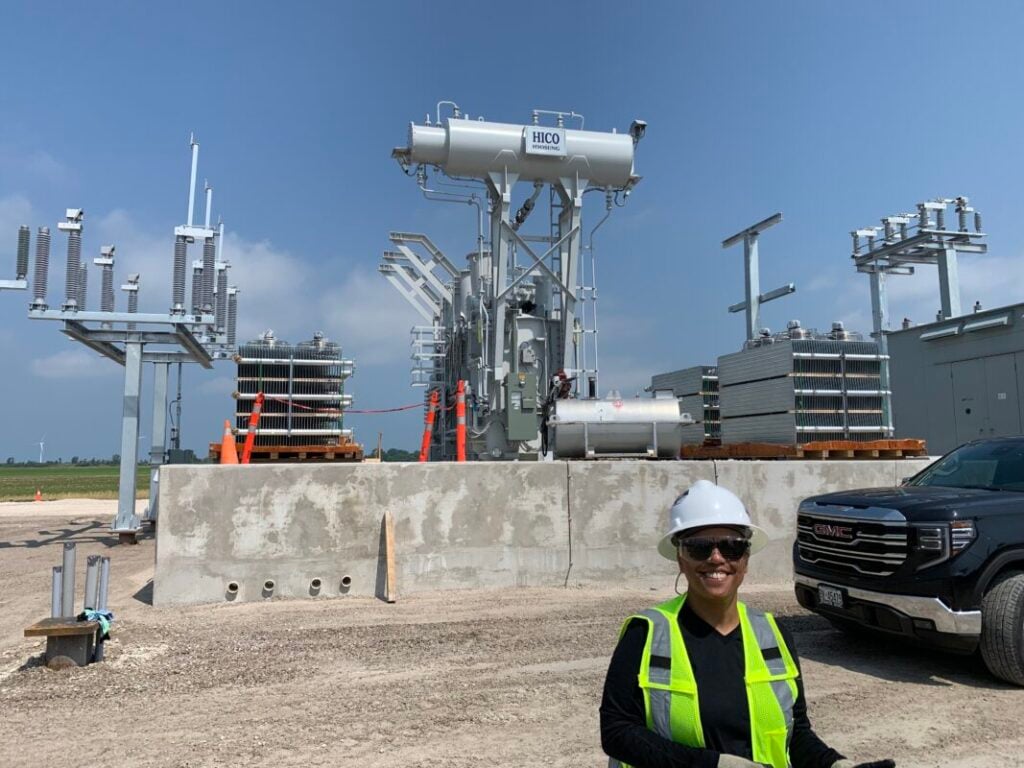
Common shortcuts I’ve seen include incomplete test reports, missing serial numbers and calibration certificates, omitted verification steps, and insufficient photographic documentation. In the worst cases, critical equipment such as medium‑voltage transformers or battery modules — impacting system capacity — end up on the punch list. Once that happens, the finger-pointing begins, or worse, teams walk away assuming “someone else will deal with it.”
Experienced contractors know the compliance standards. Shortcuts rarely result from ignorance — they come from gaps in structure, accountability, and oversight. A robust, well-designed commissioning plan is the strongest tool you have to minimise the opportunity for mistakes, both intentional and unintentional.
Common shortcuts I’ve seen include incomplete test reports, missing serial numbers and calibration certificates, omitted verification steps, and insufficient photographic documentation.
In the worst cases, critical equipment such as medium‑voltage transformers or battery modules — impacting system capacity — end up on the punch list. Once that happens, the finger-pointing begins, or worse, teams walk away assuming “someone else will deal with it.”
Experienced contractors know the compliance standards. Shortcuts rarely result from ignorance — they come from gaps in structure, accountability, and oversight. A robust, well-designed commissioning plan is the strongest tool you have to minimise the opportunity for mistakes, both intentional and unintentional.
Commissioning ultimately tests project leadership, and many projects stumble right at the final stages. Yours does not have to be one of them. Don’t let your project fall into these preventable pitfalls; develop a well-informed plan from the beginning.
About the Author
Lynn Appollis-Laurent is director of owners’ engineering at Camelot Energy Group, a strategic and technical advisory group serving the clean energy industries. Appollis-Laurent has over two decades of experience in the power, utility, and renewable energy industries and has successfully directed the development and implementation of utility-scale battery energy storage systems, as well as provided high-level technical and due diligence advisory services for more than 55 unique battery energy storage projects in recent years.
Camelot Energy Group CEO Shawn Shaw is taking part in the upcoming free Energy-Storage.news webinar, ‘The Gap Between Data and Insights in Bess Operations,’ sponsored by TWAICE. This session will spotlight key findings from TWAICE’s new 2026 BESS Pros Survey and translate them into practical takeaways for owners, operators, and teams responsible for performance, availability, safety, and revenue.
It takes place Wednesday 11 February 2026 at 2pm EST/11am PST and can be registered for here.